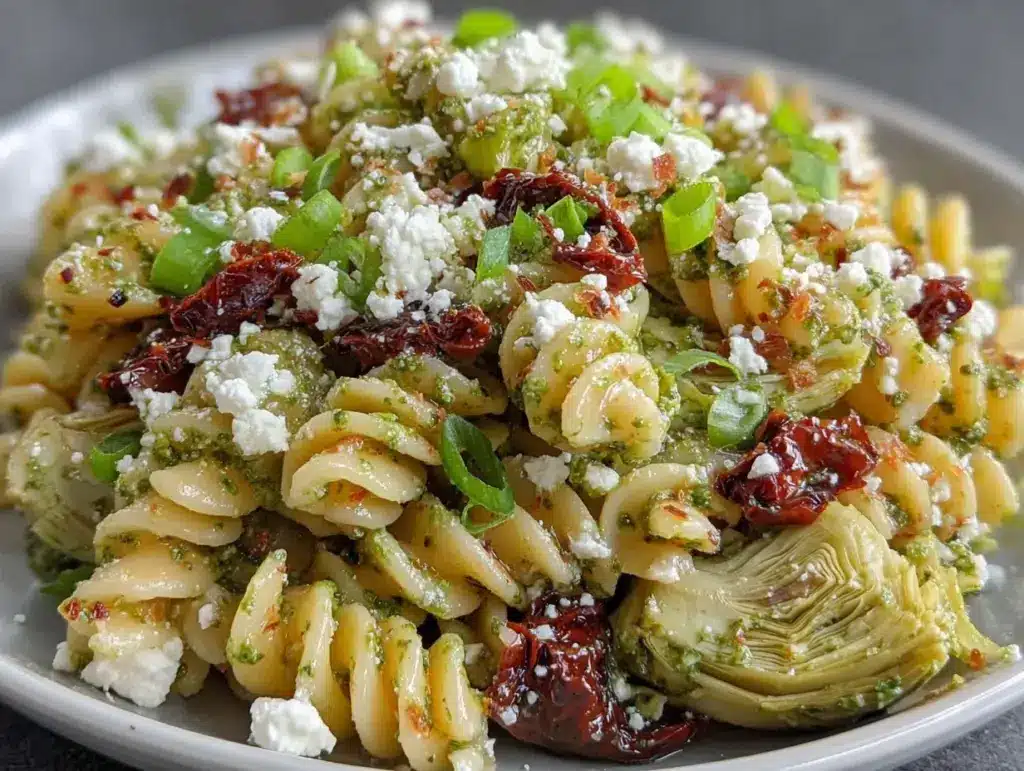
“You’ve got to try this—trust me, it’s unlike anything you’ve had before,” my neighbor called over one sunny Saturday afternoon. I was skeptical at first, honestly. Pasta salad is pasta salad, right? But as I took the first bite of this fresh spring pesto pasta salad with artichokes and feta, something clicked. The tangy feta and tender artichokes against the bright, herbaceous pesto made me pause.
That afternoon, I was juggling a mountain of errands and hadn’t planned dinner yet. I rummaged through my fridge and pantry, throwing together what I had on hand—rotini pasta, jarred pesto, canned artichoke hearts, and a block of feta cheese I’d bought on a whim. This salad came from a simple, unintentional moment, but it quickly became my go-to for easy, satisfying meals when life’s pace picks up.
Since then, I’ve made this fresh spring pesto pasta salad with artichokes and feta multiple times in the span of a week (not kidding) because honestly, it’s that good and versatile. It’s light enough for warmer days but filling enough to make a meal on its own or a side for a casual get-together. Plus, the layers of flavor—herbal, creamy, tangy—always get a thumbs-up.
What I love most is how it’s unpretentious yet feels like a little celebration in a bowl. Every bite reminds me that sometimes the best recipes come from the simplest moments and ingredients you already trust to be in your kitchen. This salad stuck around because it delivers that fresh, bright taste that summer dishes crave, without any complicated steps or fuss.
Why You’ll Love This Fresh Spring Pesto Pasta Salad Recipe with Artichokes and Feta
After countless trials and a few happy accidents in my kitchen, this pasta salad recipe has earned a special spot on my table. Here’s why it’s a winner every time:
- Quick & Easy: Ready in about 25 minutes, it’s perfect for those busy afternoons or last-minute plans when you want something fresh and satisfying fast.
- Simple Ingredients: No need for exotic items; most are pantry or fridge staples, like jarred pesto and canned artichokes, making it super accessible.
- Perfect for Summer: It’s light, refreshing, and served cold or at room temperature—ideal for picnics, potlucks, or casual dinners.
- Crowd-Pleaser: Kids and grown-ups alike are fans. The feta adds just the right tang without overpowering, and the artichokes bring a pleasant bite.
- Unbelievably Delicious: The combination of creamy pesto with salty feta and tender pasta creates a comforting yet vibrant flavor profile that feels anything but ordinary.
This isn’t just another pesto pasta salad. I blend the pesto with a splash of lemon juice and a touch of olive oil to brighten it up, giving a fresh twist that wakes up every ingredient. Plus, the artichokes aren’t just an afterthought—they soak up the pesto flavor beautifully, making each forkful exciting.
It’s the kind of recipe that makes you close your eyes after the first bite and think, “Yeah, this is exactly what I wanted.” Whether you’re hosting a casual brunch or craving a light dinner, this salad fits right in—effortless but memorable.
What Ingredients You Will Need
This fresh spring pesto pasta salad uses simple, wholesome ingredients to deliver bold flavor and a satisfying texture without any fuss. Most of these are pantry staples, so you’re likely to have them on hand already.
- Rotini pasta (about 12 oz / 340 g) – I prefer rotini for its twists that hold onto the pesto well, but penne or fusilli work great too.
- Jarred basil pesto (¾ cup / 180 ml) – I recommend Barilla or Trader Joe’s for a well-balanced, fresh flavor.
- Canned artichoke hearts (1 can, ~14 oz / 400 g), drained and quartered – These add a tender, slightly tangy bite that pairs perfectly with pesto.
- Feta cheese (6 oz / 170 g), crumbled – Look for block feta for the best texture; I like President brand.
- Cherry tomatoes (1 cup / 150 g), halved – Adds juicy bursts of sweetness, optional but recommended during summer.
- Fresh spinach leaves (2 cups / 60 g), roughly chopped – For a fresh, leafy crunch that complements the flavors.
- Extra-virgin olive oil (2 tbsp / 30 ml) – To toss and loosen the pesto coating, plus a fruity finish.
- Fresh lemon juice (1 tbsp / 15 ml) – Brightens the salad and balances the richness.
- Salt and freshly ground black pepper – To taste, enhancing all the ingredients.
- Optional fresh basil leaves (for garnish) – Adds a fragrant, herbal note.
Feel free to swap the canned artichokes with marinated ones for an extra tangy kick, or use dairy-free feta to keep it vegan-friendly. If you want a gluten-free option, penne made from chickpeas or rice flour works well here.
Equipment Needed
- Large pot – For boiling the pasta; choose a pot with plenty of room to avoid sticky noodles.
- Colander – To drain the pasta and rinse it under cold water, which helps cool it quickly and stops cooking.
- Large mixing bowl – For tossing the salad and evenly distributing the pesto coating.
- Measuring cups and spoons – To keep the ingredient portions balanced.
- Sharp knife and cutting board – For slicing tomatoes and chopping spinach.
- Wooden spoon or silicone spatula – Helps mix the salad gently without breaking the pasta.
If you don’t have a colander, a slotted spoon can help scoop out the pasta in batches. For chopping, I like a chef’s knife with a comfortable grip—makes prep faster and less tiring. A good set of measuring spoons also saves me from guessing, especially when balancing flavors in dressings or pesto blends.
Preparation Method
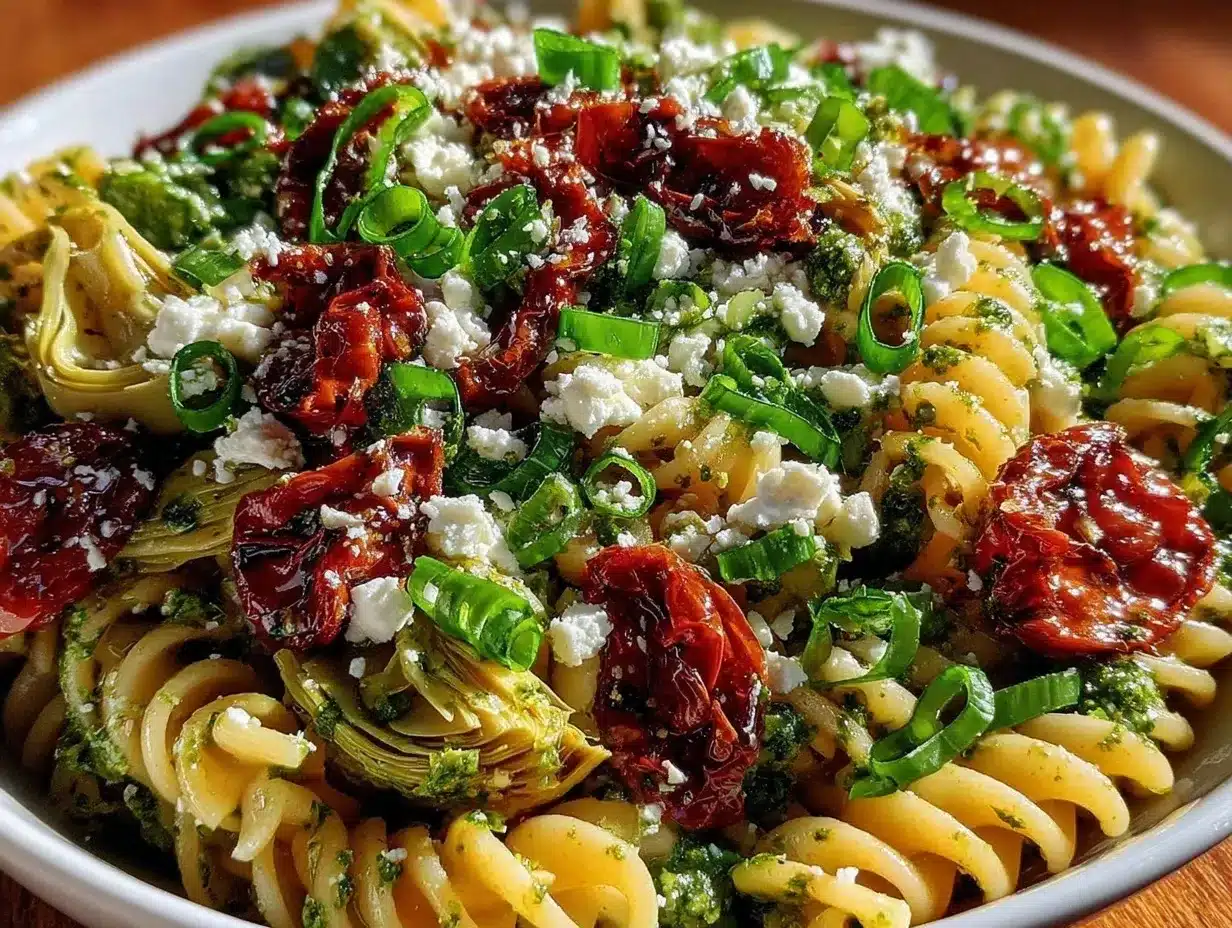
- Cook the pasta: Bring a large pot of salted water to a boil (about 4 quarts / 3.8 liters). Add 12 oz (340 g) rotini and cook according to package instructions, usually around 9-11 minutes, until al dente. Stir occasionally to prevent sticking.
- Drain and rinse: Drain the pasta in a colander, then rinse under cold water for about 30 seconds to cool it down and stop cooking. Shake off excess water thoroughly.
- Prepare the dressing: In a large mixing bowl, combine ¾ cup (180 ml) jarred basil pesto with 2 tbsp (30 ml) extra-virgin olive oil and 1 tbsp (15 ml) fresh lemon juice. Whisk lightly to blend flavors and loosen the pesto texture.
- Toss pasta with dressing: Add the cooled pasta to the bowl and gently toss using a wooden spoon until every piece is coated with the pesto mixture. The pasta should glisten but not be swimming in sauce.
- Add veggies and cheese: Fold in 1 can (14 oz / 400 g) drained, quartered artichoke hearts, 1 cup (150 g) halved cherry tomatoes, and 2 cups (60 g) chopped fresh spinach. Sprinkle 6 oz (170 g) crumbled feta over the top, then gently mix to combine without breaking the cheese.
- Season to taste: Add salt and freshly ground black pepper, starting conservatively (about ½ tsp salt and ¼ tsp pepper), then adjust as needed. Remember, feta adds saltiness, so taste before adding more.
- Chill or serve: For best flavor, refrigerate the salad for at least 30 minutes to let the flavors meld. Serve chilled or at room temperature, garnished with fresh basil leaves if desired.
Quick tip: Don’t skip rinsing the pasta—it really keeps the salad from turning mushy and helps the pesto cling better. If you want to prep ahead, this salad stores well for up to 2 days in the fridge, making it a perfect make-ahead option.
Cooking Tips & Techniques
One of the trickiest parts of pasta salad is balancing moisture so it’s not soggy but still flavorful. I’ve learned the hard way that overcooked pasta ruins the whole dish—so timing is key. Stick to al dente and rinse promptly with cold water to halt cooking.
Using jarred pesto is a huge time saver, but not all brands are created equal. I usually keep a couple of trusted brands on hand and taste-test before deciding which to buy. If pesto feels too thick, adding a little olive oil or lemon juice brightens it up and makes it easier to toss.
When mixing in the feta, be gentle; crumbled feta can break down quickly and turn the salad grainy. Instead, fold it in at the end to keep nice chunks that add texture and bursts of flavor.
Multi-tasking tip: While the pasta cooks, prep your veggies and crumble the feta so once the pasta is drained, everything comes together quickly. This keeps your kitchen time efficient and stress-free.
Finally, let the salad chill for at least 30 minutes before serving. This resting time lets the pesto soak into the pasta and the flavors marry, making every bite richer.
Variations & Adaptations
This fresh spring pesto pasta salad is a flexible canvas you can tweak to your taste or dietary needs.
- Grain Swap: Swap pasta for quinoa or couscous for a gluten-free or higher-protein version. Cooking times and liquid ratios will differ, so follow package directions.
- Vegan Version: Use vegan pesto (made without cheese), swap feta for marinated tofu cubes or vegan cheese crumbles, and double-check that your pesto is nut-free if allergies are a concern.
- Seasonal Boost: In spring and summer, toss in fresh peas or asparagus tips for extra crunch and color. In fall, roasted butternut squash or pumpkin seeds add warmth and texture.
- Protein Add-In: Grilled chicken strips or chickpeas make this salad heartier for a full meal. I once added leftover grilled shrimp, which was a hit at a backyard party.
One personal favorite is swapping out cherry tomatoes for sun-dried tomatoes when I want a deeper, more intense flavor—especially in winter. It’s a subtle change that adds a new dimension without complicating the recipe.
Serving & Storage Suggestions
This pasta salad shines served chilled or at room temperature, making it a breeze for picnics or casual family dinners. I like to plate it with a sprinkle of fresh basil leaves and an extra drizzle of olive oil to make it look inviting.
Pair it with grilled meats, like chicken or salmon, or alongside lighter dishes such as a crisp green salad or crusty bread. It also complements Mediterranean-inspired meals beautifully.
To store, keep the salad in an airtight container in the refrigerator for up to 2 days. The flavors actually deepen after sitting, but the spinach might wilt slightly, which you can freshen up with a quick toss before serving.
When reheating, just let it come to room temperature or enjoy it cold. If you want to warm it, gently toss in a skillet over low heat for a few minutes—though I usually prefer it as a cool, refreshing side.
Nutritional Information & Benefits
This fresh spring pesto pasta salad packs a nutritional punch while still feeling light and fresh. A typical serving (about 1 ½ cups) provides roughly:
| Calories | 320 kcal |
|---|---|
| Protein | 10 g |
| Fat | 18 g |
| Carbohydrates | 28 g |
| Fiber | 4 g |
Thanks to the artichokes and spinach, you’re getting a good dose of fiber and antioxidants. Feta provides calcium and protein, while the olive oil and pesto add heart-healthy fats. This salad fits nicely into vegetarian diets and can be made gluten-free with simple swaps.
For those mindful of sodium, be cautious with added salt since feta and pesto have salt content already. Overall, it’s a balanced, wholesome dish that feels indulgent but supports well-rounded eating.
Conclusion
If you’re after a fresh, flavorful, and fuss-free summer dish, this fresh spring pesto pasta salad with artichokes and feta is a winner. It’s one of those recipes that feels generous without being complicated—perfect for busy days or relaxed weekends alike.
Feel free to play around with the ingredients to suit your taste or pantry, and don’t be shy about making it your own. I love how this salad brings a little bit of brightness and comfort in every bite, a gentle reminder that good food doesn’t have to be complicated.
Give it a try and share how you customize it—I’m always curious about new twists! This recipe has earned a permanent spot in my rotation, and I hope it finds a place on your table too.
Frequently Asked Questions About Fresh Spring Pesto Pasta Salad with Artichokes and Feta
Can I make this pasta salad ahead of time?
Yes! It actually tastes better after sitting for at least 30 minutes in the fridge to let the flavors meld. You can prepare it up to 2 days in advance.
What’s the best pasta to use for this salad?
Rotini is ideal because its twists hold the pesto well, but penne, fusilli, or even farfalle work perfectly too.
Can I freeze this pasta salad?
Freezing isn’t recommended as the fresh veggies and feta may become watery or grainy after thawing.
Is there a vegan way to make this salad?
Absolutely! Use a vegan pesto without cheese and swap feta for marinated tofu or vegan cheese alternatives.
How do I prevent the pasta from becoming mushy?
Cook pasta al dente, rinse it under cold water immediately after draining, and toss with olive oil or pesto while still slightly warm to prevent sticking and sogginess.
By the way, if you enjoy recipes with vibrant, fresh ingredients like this, you might appreciate the fresh apple pecan salad with maple vinaigrette or the flavorful easy garlic butter noodles recipe for quick dinners. Both share that same balance of simple ingredients and big taste.
Pin This Recipe!
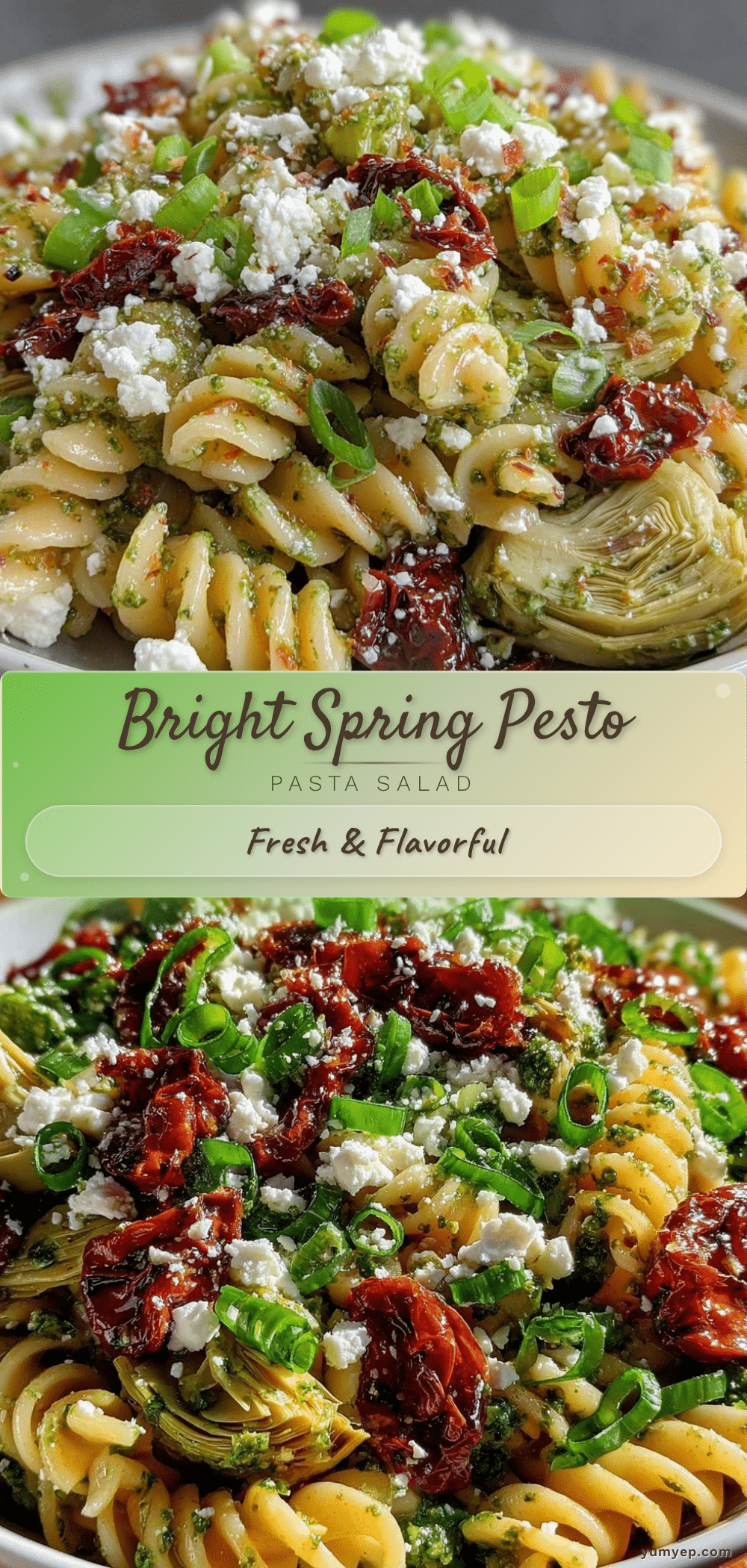
Fresh Spring Pesto Pasta Salad Recipe with Artichokes and Feta

A light and refreshing pasta salad featuring rotini tossed in basil pesto with artichokes, feta, cherry tomatoes, and fresh spinach. Perfect for summer meals, served chilled or at room temperature.
- Prep Time: 10 minutes
- Cook Time: 11 minutes
- Total Time: 31 minutes
- Yield: 4 servings 1x
- Category: Main Course, Salad
- Cuisine: Mediterranean
Ingredients
- 12 oz rotini pasta
- 3/4 cup jarred basil pesto
- 1 can (14 oz) canned artichoke hearts, drained and quartered
- 6 oz feta cheese, crumbled
- 1 cup cherry tomatoes, halved (optional)
- 2 cups fresh spinach leaves, roughly chopped
- 2 tbsp extra-virgin olive oil
- 1 tbsp fresh lemon juice
- Salt and freshly ground black pepper to taste
- Optional fresh basil leaves for garnish
Instructions
- Bring a large pot of salted water to a boil (about 4 quarts). Add 12 oz rotini and cook according to package instructions, usually 9-11 minutes, until al dente. Stir occasionally to prevent sticking.
- Drain the pasta in a colander, then rinse under cold water for about 30 seconds to cool and stop cooking. Shake off excess water thoroughly.
- In a large mixing bowl, combine 3/4 cup jarred basil pesto with 2 tbsp extra-virgin olive oil and 1 tbsp fresh lemon juice. Whisk lightly to blend flavors and loosen the pesto texture.
- Add the cooled pasta to the bowl and gently toss using a wooden spoon until every piece is coated with the pesto mixture.
- Fold in 1 can drained, quartered artichoke hearts, 1 cup halved cherry tomatoes, and 2 cups chopped fresh spinach. Sprinkle 6 oz crumbled feta over the top, then gently mix to combine without breaking the cheese.
- Add salt and freshly ground black pepper to taste, starting with about 1/2 tsp salt and 1/4 tsp pepper, then adjust as needed.
- Refrigerate the salad for at least 30 minutes to let the flavors meld. Serve chilled or at room temperature, garnished with fresh basil leaves if desired.
Notes
Rinse pasta under cold water immediately after draining to prevent mushiness and help pesto cling better. Fold in feta gently to keep chunks intact. Salad stores well up to 2 days refrigerated. For vegan version, use vegan pesto and substitute feta with marinated tofu or vegan cheese. For gluten-free, swap pasta with quinoa or chickpea/rice flour penne.
Nutrition
- Serving Size: About 1 1/2 cups per
- Calories: 320
- Fat: 18
- Carbohydrates: 28
- Fiber: 4
- Protein: 10
Keywords: pesto pasta salad, artichokes, feta, summer salad, rotini pasta, easy pasta salad, vegetarian, quick meal