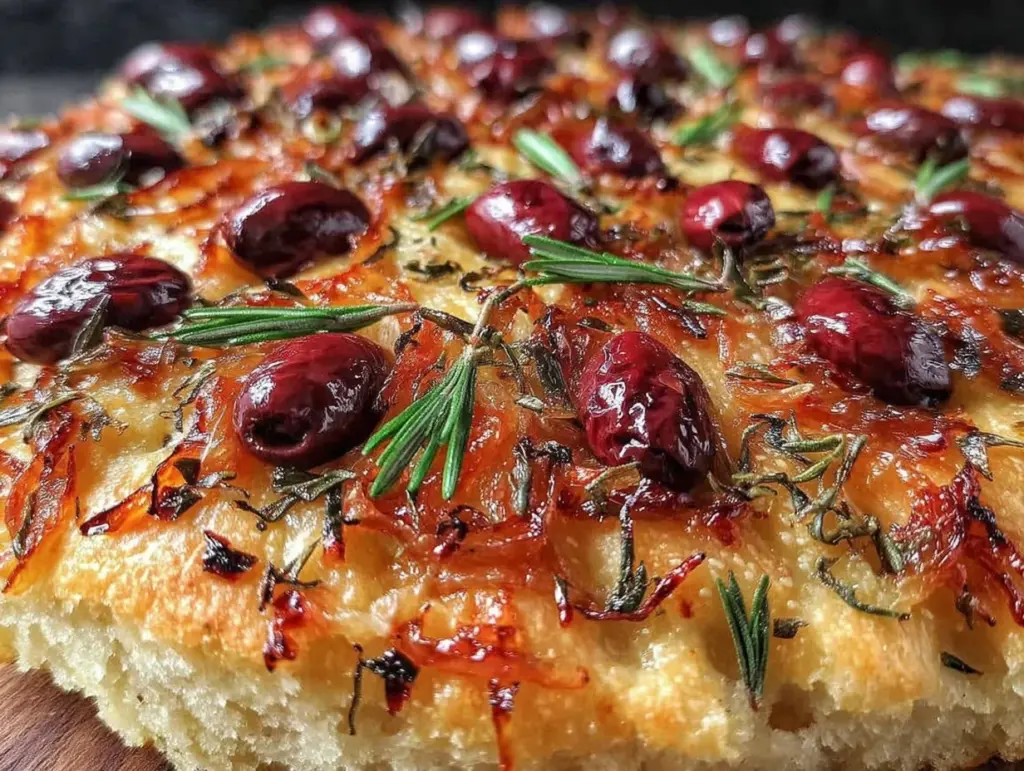
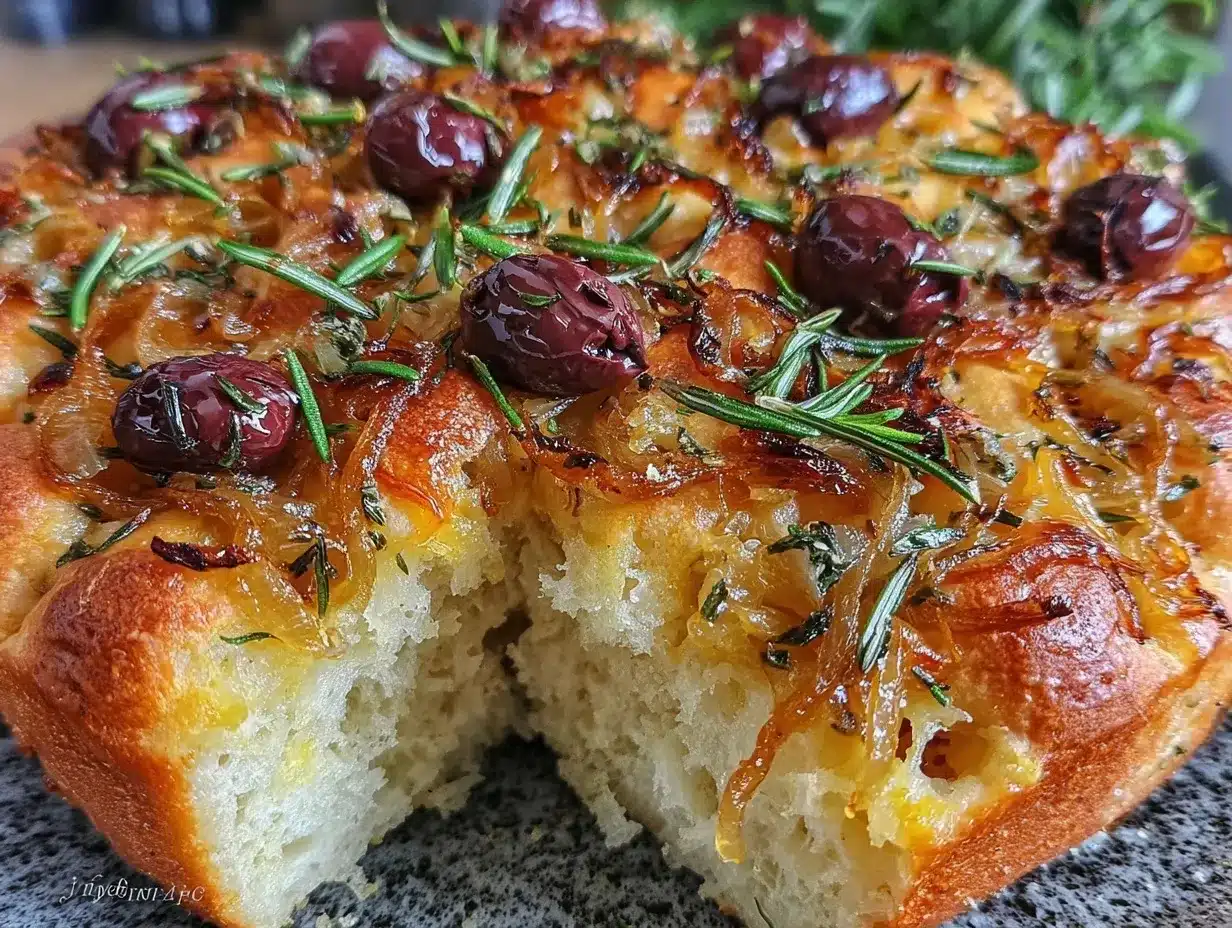
That crackling crust — the way it snaps and shatters under your fingertips before giving way to a pillowy, airy crumb — is what I made this crispy rosemary garlic sourdough focaccia with caramelized onions & olives for. The surface, dimpled and glistening with olive oil, holds each little pool of golden garlic bubbles and fragrant sprigs of rosemary that look almost too good to eat. Honestly, I find myself just pressing my fingers into the dough after baking, feeling that perfect balance between crisp and softness, like a tactile promise of the flavors to come.
It wasn’t always this way. Early attempts at focaccia often left me with doughy or flat results, but once I locked into the sourdough starter’s rhythm and let the onions caramelize slowly to amber perfection, everything clicked. The olives add that salty pop, breaking through the mellow sweetness of the onions, while the garlic-infused oil seeps into every crevice, making the bread almost addictive. It’s a texture-lover’s dream come true.
Making this focaccia became a small obsession in my kitchen, a way to slow down and appreciate the feel of dough stretching, the shine of oil pooling in dimples, and the crunch that you just can’t fake. It’s not just bread — it’s a sensory experience that reminds me why I keep baking. This recipe stuck with me because it’s the kind of bread that feels alive, you know? Every bite reveals layers of texture and care, and that quiet satisfaction is why I keep coming back to this focaccia.
Why You’ll Love This Recipe
After countless batches and tweaks, I’ve landed on this recipe for crispy rosemary garlic sourdough focaccia with caramelized onions & olives that really hits all the marks. It’s not just any focaccia — it’s the one that yields that coveted crackly crust and tender crumb every time, with flavor layers that feel both rustic and refined.
- Quick & Easy: While sourdough takes some patience, the hands-on time is minimal — about 20 minutes to prepare, perfect for fitting baking into a busy day.
- Simple Ingredients: No weird or hard-to-find stuff here — just staples like flour, fresh rosemary, garlic, onions, and olives, many of which you probably already have.
- Perfect for Entertaining: This bread shines at any gathering, be it a casual dinner or a holiday spread. It pairs beautifully with soups and salads, or can stand on its own as a snack.
- Crowd-Pleaser: I’ve served this to everyone from picky kids to seasoned foodies, and it’s always a hit. The combo of caramelized onions and salty olives surprises and delights.
- Unbelievably Delicious: The textural contrast — crisp outside, soft inside — combined with that herbal-garlic aroma makes it downright irresistible.
This recipe isn’t just another focaccia; it’s the version where I’ve learned to coax out the perfect moisture and air bubbles from the sourdough starter, and caramelizing the onions slowly brings a natural sweetness that balances the savory notes brilliantly. Plus, the olives aren’t just tossed on — they’re nestled into the dough for bursts of briny flavor that keep each bite interesting. This is the kind of bread that makes you pause and savor, closing your eyes with the first bite, feeling like you’ve just discovered something special.
What Ingredients You Will Need
This focaccia recipe uses straightforward, wholesome ingredients to create a flavor-packed, texturally satisfying bread without fuss. Most items are pantry staples or easy to find at any grocery store.
- For the Dough:
- 500g (about 4 cups) bread flour, preferably unbleached for best texture
- 350ml (1 1/2 cups) water, lukewarm (around 75°F/24°C)
- 150g (2/3 cup) active sourdough starter (fed and bubbly; I like using a white or whole wheat starter)
- 10g (2 tsp) fine sea salt
- 30ml (2 tbsp) extra virgin olive oil, plus extra for drizzling
- For the Topping:
- 2 large onions, thinly sliced (yellow onions work best for caramelizing)
- 3 garlic cloves, thinly sliced or minced (fresh and pungent!)
- 2 tbsp olive oil (for caramelizing)
- 2 tbsp fresh rosemary leaves, roughly chopped (look for bright green, fragrant sprigs)
- 1/2 cup pitted Kalamata olives, halved (or green olives if preferred)
- Coarse sea salt or flaky Maldon salt, for finishing
Ingredient tips: When caramelizing onions, patience is key — low and slow is the way to get that deep golden color without burning. For the olives, I recommend Kalamata for their rich, fruity flavor, but feel free to swap with Castelvetrano for a milder, buttery note. If you need a gluten-free option, substituting almond or chickpea flour won’t work here, but you can experiment with a gluten-free sourdough starter and a blend of gluten-free flours for a similar effect.
For olive oil, I prefer a fruity, peppery brand like California Olive Ranch that holds up well to baking and adds an aromatic layer. The fresh rosemary is the kind that fills the kitchen with piney goodness as you scatter it on top.
Equipment Needed
- Large mixing bowl — for dough mixing and bulk fermentation. Glass or stainless steel works well.
- Dough scraper or bench scraper — to handle sticky dough without frustration.
- Kitchen scale — essential for measuring flour and water accurately, especially with sourdough.
- Cast iron skillet or rimmed baking sheet — I find a cast iron skillet gives an extra-crisp bottom, but a heavy baking sheet lined with parchment paper works too.
- Plastic wrap or a clean kitchen towel — for covering dough during fermentation to keep it from drying out.
- Skillet or sauté pan — for caramelizing the onions.
- Cooling rack — to let the focaccia cool evenly and maintain crispness.
If you don’t have a kitchen scale, measuring cups are okay, but the texture might vary slightly. I also recommend keeping your dough scraper sharp and clean for smooth handling. I once tried caramelizing onions in a microwave (don’t), so trust me—using a skillet and stirring patiently makes all the difference.
Preparation Method
- Mix the Dough: In your large mixing bowl, combine 500g bread flour and 10g salt. In a separate container, mix 150g active sourdough starter with 350ml lukewarm water until smooth. Pour the starter mixture into the flour and stir with a wooden spoon until a shaggy dough forms. This should take about 5 minutes.
- Autolyse & First Rest: Cover the bowl loosely with plastic wrap or a damp towel and let it rest for 30 minutes. This rest helps hydrate the flour and jumpstarts gluten development.
- Add Olive Oil & Stretch & Folds: Drizzle 30ml olive oil over the dough. Wet your hands to prevent sticking and perform a series of stretch and folds directly in the bowl: pull one side of the dough up and fold it over the center, rotating the bowl and repeating 4-6 times. Do this every 30 minutes for 2 hours to build dough strength and elasticity.
- Bulk Fermentation: After the stretch and folds, cover the dough again and let it ferment at room temperature for 4-6 hours, or until nearly doubled. You’ll notice the dough becomes more airy and bubbly.
- Caramelize Onions: While the dough ferments, heat 2 tbsp olive oil in a skillet over medium-low heat. Add thinly sliced onions and a pinch of salt. Stir frequently and cook slowly for 30-40 minutes until deep golden brown and sweet. Stir in sliced garlic during the last 5 minutes to soften without burning.
- Shape the Focaccia: Once the dough has risen, gently transfer it to a well-oiled cast iron skillet or baking sheet. Using your fingers, press the dough out to fill the pan, making characteristic dimples by poking all over the surface. Don’t deflate too much — those bubbles are your friends!
- Add Toppings: Evenly spread the caramelized onions, halved olives, and chopped rosemary over the dough. Drizzle a little more olive oil on top and sprinkle with coarse sea salt.
- Final Proof: Cover the pan loosely and let the dough rise again for 30-45 minutes. It will puff slightly but keep those dimpled pockets intact.
- Bake: Preheat oven to 450°F (230°C). Bake the focaccia for 20-25 minutes until the crust is deeply golden and crisp. The edges should pull away slightly from the pan.
- Cool & Serve: Remove from oven and let cool on a rack for 10 minutes before slicing. This rest helps the crumb set and the crust stay crisp.
Pro tip: If you notice the focaccia is browning too fast, tent a piece of foil loosely over the top during the last 5-10 minutes. Also, try to use room-temperature ingredients to keep fermentation consistent.
Cooking Tips & Techniques
Getting that perfect crispy crust and tender crumb involves a few tricks, many of which I learned the hard way. First, never rush the fermentation. The sourdough starter needs time to bubble and develop flavor—cutting corners here leads to a dense, flavorless bread. I always watch the dough more than the clock.
When stretching the dough into the pan, don’t be afraid to use your fingertips for those dimples. They help trap olive oil and toppings, creating those signature crisp pockets. Plus, they give you a tactile connection to the dough, which helps you know when it’s ready.
Caramelizing onions is a slow process but worth every minute. High heat scorches and ruins the sweetness. I stir every few minutes, watching the color deepen from translucent to golden amber. Adding garlic too early will burn it, so I toss it in near the end for a mellow garlic aroma.
Lastly, baking in a cast iron skillet is a game-changer for crispness. The heat retention crisps the bottom beautifully. If you don’t have one, a heavy baking sheet will work, but preheating the pan in the oven before adding the dough can help mimic this effect.
One mistake I made early on was overloading the focaccia with toppings, which weighed down the dough and made it soggy. Balance is key—just enough to complement the bread without drowning it.
Variations & Adaptations
- Vegan Version: This recipe is naturally vegan, but make sure your sourdough starter is maintained without dairy. Use olive oil generously for richness.
- Seasonal Toppings: Swap caramelized onions for roasted cherry tomatoes or sautéed mushrooms for an autumn twist. In summer, fresh heirloom tomatoes and basil make a bright, fresh focaccia.
- Cheese Addition: Sprinkle crumbled feta or grated Parmesan on top before baking for a salty, melty upgrade. I’ve done this with great success, especially paired with olives.
- Herb Variations: Try thyme or sage instead of rosemary for a different herbal profile. Fresh herbs tossed into the dough itself add another layer of flavor.
- Gluten-Free Adaptation: While tricky, you can use a gluten-free sourdough starter with a blend of rice flour, tapioca starch, and potato starch. Expect a denser crumb but still delicious.
Personally, I once swapped olives for thinly sliced roasted red peppers and paired the focaccia with a lemony garlic dip — it was a hit at a casual dinner party. This flexibility means you can customize this bread to your mood or pantry with little fuss.
Serving & Storage Suggestions
This focaccia is best enjoyed warm or at room temperature, just out of the oven or within the first day. The crust is at its crispiest then, and the aroma is intoxicating. Serve it alongside a fresh salad or alongside a hearty soup for a cozy meal.
For leftovers, wrap the focaccia tightly in plastic wrap or place in an airtight container. Store at room temperature for up to two days or refrigerate for up to a week. To revive the crust, reheat in a 375°F (190°C) oven for 5-7 minutes — this brings back the crunch without drying it out.
Focaccia also freezes beautifully. Slice it first, then wrap pieces individually in foil and place in a freezer bag. Thaw overnight and reheat to enjoy again. Over time, the flavors of the rosemary and garlic deepen, making day-old slices even more savory.
If you want to serve it as part of a spread, pairing this focaccia with a creamy dip like a whipped goat cheese spread or alongside a bowl of olive oil and balsamic for dipping is fantastic. I often serve a slice with a side of marinated olives or alongside a rich stew — the texture contrast is unbeatable.
Nutritional Information & Benefits
Each serving of this sourdough focaccia (about 1/8th of the pan) provides roughly 250-300 calories, with healthy fats from olive oil and moderate protein from the bread flour. The sourdough fermentation helps break down gluten and makes the bread easier to digest for many people. Plus, the rosemary adds antioxidants, and the garlic has natural anti-inflammatory properties.
This recipe is naturally free of dairy and refined sugars, making it suitable for many dietary preferences. The olives contribute heart-healthy monounsaturated fats and a good dose of vitamin E. Overall, it’s a flavorful bread that feels indulgent but can fit into a balanced diet.
From my experience, sourdough bread like this one is gentler on the stomach compared to commercial yeast breads, thanks to the long fermentation process. It’s satisfying and nourishing, perfect for those who want real bread without additives.
Conclusion
This crispy rosemary garlic sourdough focaccia with caramelized onions & olives has become one of my go-to recipes whenever I want a bread that’s more than just a side — it’s a centerpiece. The crunchy crust, tender crumb, and the symphony of savory toppings make it a standout, whether for a simple lunch or an impressive dinner.
Feel free to make it your own — swap toppings, adjust herbs, or experiment with different olives. That’s part of the joy here: the dough is forgiving and open to interpretation. I love how this recipe marries rustic charm with homey comfort, and I hope it finds a spot in your kitchen too.
When you try it, let me know how it goes — I always enjoy hearing your twists and how this focaccia fits into your meals. Happy baking, and may your kitchen fill with that irresistible crackle and golden glow!
Frequently Asked Questions
- Can I use store-bought yeast instead of sourdough starter?
Yes, you can substitute about 2 1/4 tsp (one packet) of active dry yeast, but the flavor and texture will be different—less tangy and more yeasty. - How do I know when the dough has fermented enough?
It should roughly double in size and look bubbly with a slightly domed surface. The dough will feel airy and light when gently poked. - Can I make the focaccia dough ahead of time?
Absolutely! You can refrigerate the dough after the first rise for up to 24 hours. Just bring it back to room temperature before shaping and baking. - What’s the best way to store leftover focaccia?
Wrap it tightly and store at room temperature for two days or freeze sliced pieces for longer storage. Reheat in the oven to restore crispness. - Are there gluten-free options for this recipe?
While challenging, you can try using a gluten-free sourdough starter and gluten-free flours, but expect a different texture. This recipe is best suited for wheat-based flours.
By the way, if you enjoy baking breads like this, you might find the cranberry orange bread recipe a delightful companion for your bread basket. Or for a cozy brunch, the cinnamon roll casserole offers that same comforting homemade vibe but on the sweeter side.
Pin This Recipe!
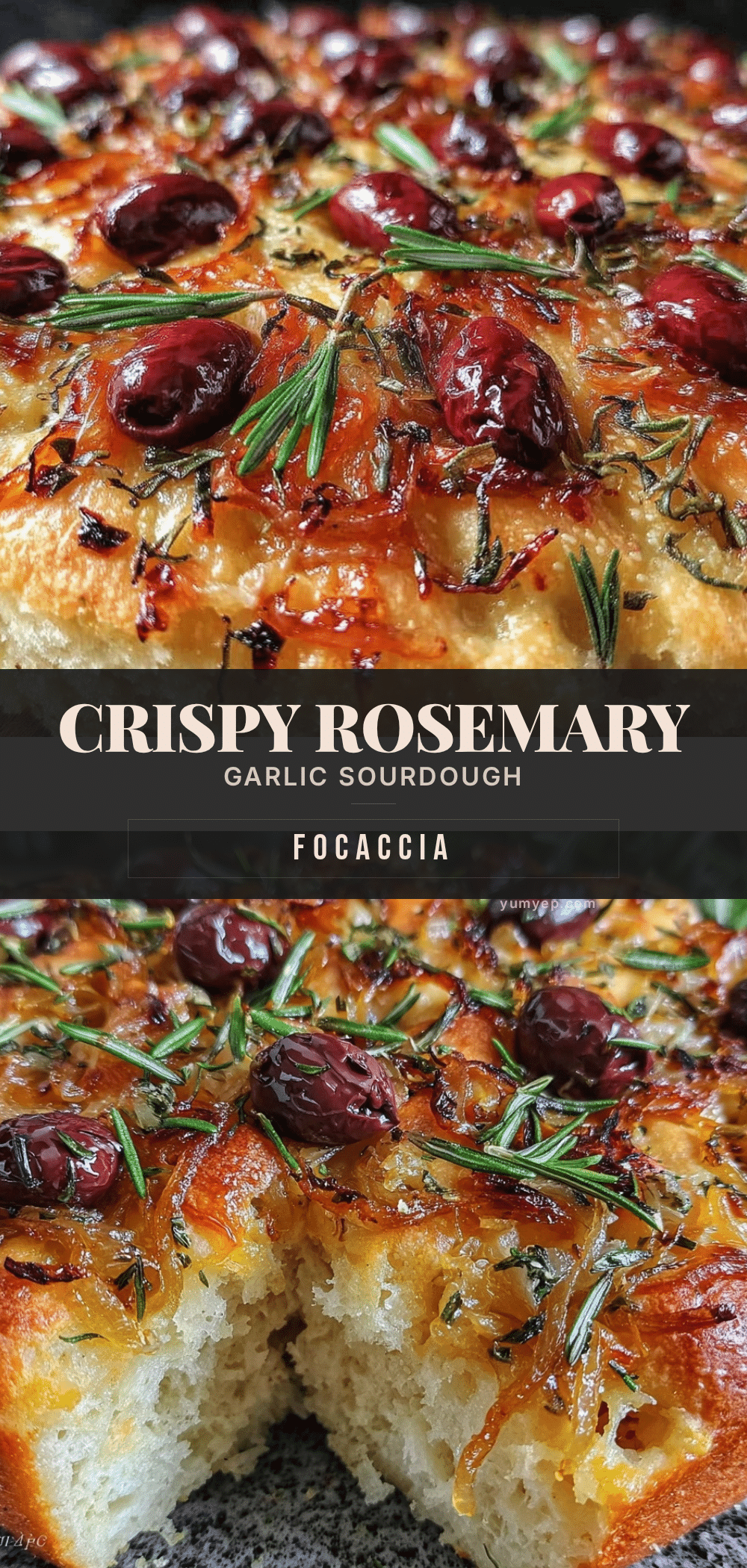
Crispy Rosemary Garlic Sourdough Focaccia

A flavorful sourdough focaccia with a crackling crust, tender crumb, caramelized onions, olives, and fresh rosemary, perfect for any occasion.
- Prep Time: 20 minutes
- Cook Time: 25 minutes
- Total Time: 6 hours 20 minutes
- Yield: 8 servings 1x
- Category: Bread
- Cuisine: Italian
Ingredients
- 500g (about 4 cups) bread flour, preferably unbleached
- 350ml (1 1/2 cups) lukewarm water (around 75°F/24°C)
- 150g (2/3 cup) active sourdough starter (fed and bubbly)
- 10g (2 tsp) fine sea salt
- 30ml (2 tbsp) extra virgin olive oil, plus extra for drizzling
- 2 large onions, thinly sliced (yellow onions preferred)
- 3 garlic cloves, thinly sliced or minced
- 2 tbsp olive oil (for caramelizing)
- 2 tbsp fresh rosemary leaves, roughly chopped
- 1/2 cup pitted Kalamata olives, halved
- Coarse sea salt or flaky Maldon salt, for finishing
Instructions
- In a large mixing bowl, combine 500g bread flour and 10g salt.
- In a separate container, mix 150g active sourdough starter with 350ml lukewarm water until smooth.
- Pour the starter mixture into the flour and stir with a wooden spoon until a shaggy dough forms (about 5 minutes).
- Cover the bowl loosely with plastic wrap or a damp towel and let it rest for 30 minutes.
- Drizzle 30ml olive oil over the dough. Wet your hands and perform stretch and folds every 30 minutes for 2 hours (4-6 times each session).
- Cover the dough and ferment at room temperature for 4-6 hours until nearly doubled and bubbly.
- While dough ferments, heat 2 tbsp olive oil in a skillet over medium-low heat. Add sliced onions and a pinch of salt. Cook slowly for 30-40 minutes until golden brown.
- Add sliced garlic during the last 5 minutes of caramelizing to soften without burning.
- Transfer risen dough to a well-oiled cast iron skillet or baking sheet. Press dough out to fill pan and create dimples with your fingers.
- Spread caramelized onions, halved olives, and chopped rosemary evenly over the dough. Drizzle with olive oil and sprinkle coarse sea salt.
- Cover loosely and let dough rise again for 30-45 minutes until puffed but dimples remain.
- Preheat oven to 450°F (230°C). Bake focaccia for 20-25 minutes until crust is deeply golden and crisp.
- Remove from oven and cool on a rack for 10 minutes before slicing.
Notes
Patience is key when caramelizing onions; cook low and slow to avoid burning. Use fingertips to dimple dough to trap olive oil and toppings. Baking in a cast iron skillet enhances crispness. Tent with foil if browning too fast. Use room-temperature ingredients for consistent fermentation.
Nutrition
- Serving Size: 1/8th of the pan
- Calories: 275
- Sugar: 3
- Sodium: 400
- Fat: 10
- Saturated Fat: 1.5
- Carbohydrates: 38
- Fiber: 3
- Protein: 7
Keywords: focaccia, sourdough, rosemary, garlic, caramelized onions, olives, bread, crispy crust, homemade bread