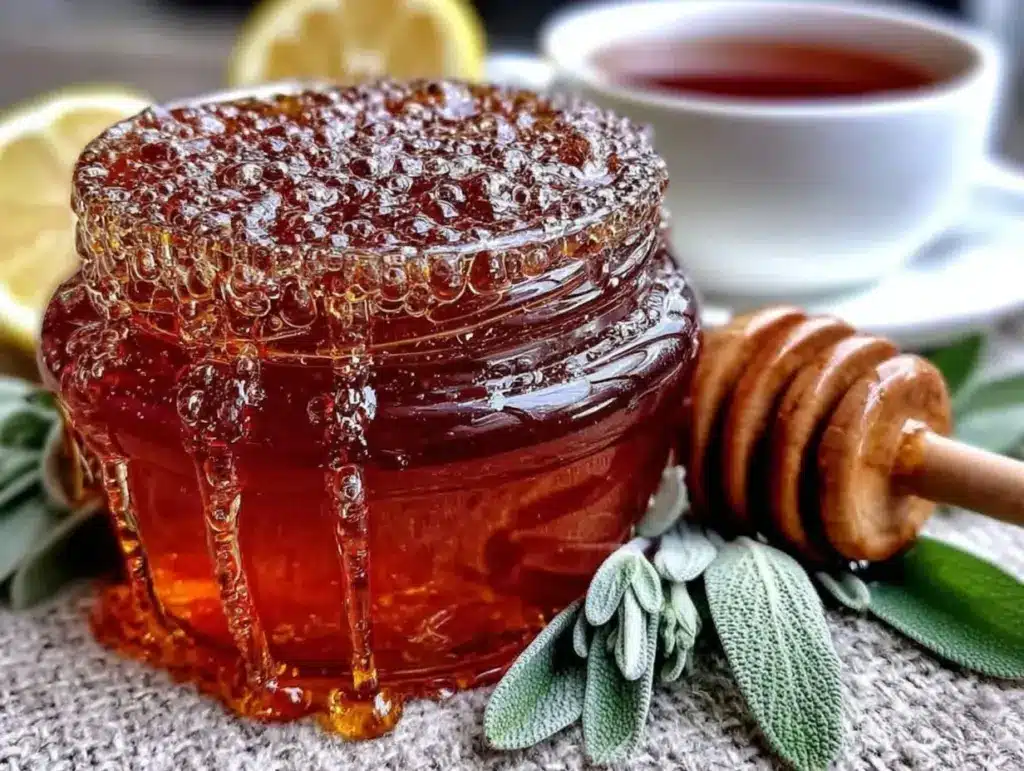
Imagine the earthy aroma of fresh sage blending harmoniously with the sweet, golden richness of honey. It’s the kind of scent that instantly transports you to a cozy kitchen on a crisp fall day, where the kettle is humming and the promise of a soothing, herbaceous tea awaits. The first time I made sage-infused honey, I was completely captivated—this simple yet magical recipe became my go-to for adding a comforting twist to my favorite teas. And let me tell you, my family couldn’t get enough of it! We drizzled it on everything from biscuits to yogurt, savoring every golden spoonful. Honestly, I wish I had discovered this years ago!
This recipe for sage-infused honey is perfect for those moments when you need a little extra warmth and sweetness during the chilly months. Whether you’re cozying up with a book or hosting friends for an autumn brunch, this honey brings a touch of elegance to any occasion. It’s dangerously easy to make, and once you’ve tried it, you’ll want to keep a jar handy for everything from soothing sore throats to adding a flavorful twist to dressings and marinades. Trust me—you’re going to want to bookmark this one!
Why You’ll Love This Recipe
- Quick & Easy: This recipe takes just 10 minutes to prepare, and then the honey does all the work as it infuses.
- Minimal Ingredients: All you need are two simple ingredients—honey and fresh sage. No fancy tools required!
- Perfect for Fall: Sage has a cozy, earthy flavor that pairs perfectly with the crisp, cool days of autumn.
- Versatile and Delicious: Use it to sweeten tea, drizzle over toast or baked goods, or add a touch to savory dishes for a unique twist.
- Impressive Yet Simple: It’s the kind of treat that will wow your friends and family while being ridiculously easy to make.
What makes this sage-infused honey stand out is the perfect balance of flavors. The herbal notes of the sage aren’t overpowering; instead, they add a subtle depth to the sweetness of the honey. It’s like fall in a jar—comforting, warm, and with just the right amount of sophistication. Plus, it’s a great way to add a homemade touch to your tea time or gift baskets. You’ll love how this recipe turns a simple pantry staple into something extraordinary.
What Ingredients You Will Need
This recipe uses simple, wholesome ingredients to create a flavorful honey infusion. You might already have everything you need in your kitchen!
- Honey: 1 cup. Choose a high-quality raw honey for the deepest flavor. Local honey is always a great option!
- Fresh Sage: 6-8 sprigs. Pick fresh sage for the most vibrant flavor. If you grow your own, even better! (If you don’t have fresh sage, you can use dried sage, but fresh is ideal.)
- Lemon Zest: Optional, but adds a lovely citrus note that complements the sage beautifully.
That’s it—just two main ingredients and a little optional zest to elevate the flavor even further. Feel free to adjust the amount of sage to suit your taste. If you prefer a stronger herbal kick, add an extra sprig or two!
Equipment Needed
- Small saucepan: Perfect for gently heating the honey and allowing the flavors to infuse.
- Wooden spoon: For stirring the honey without altering its flavor.
- Fine-mesh strainer: Essential for removing the sage leaves and any solids once the infusion is complete.
- Clean glass jar: A mason jar or any airtight container works great for storing your finished honey.
- Zester: If you’re adding lemon zest, this tool will make it easy to get fine shreds of flavorful peel.
If you don’t have a fine-mesh strainer, you can use cheesecloth as an alternative—it’s just as effective for straining out the sage leaves and any impurities.
Preparation Method
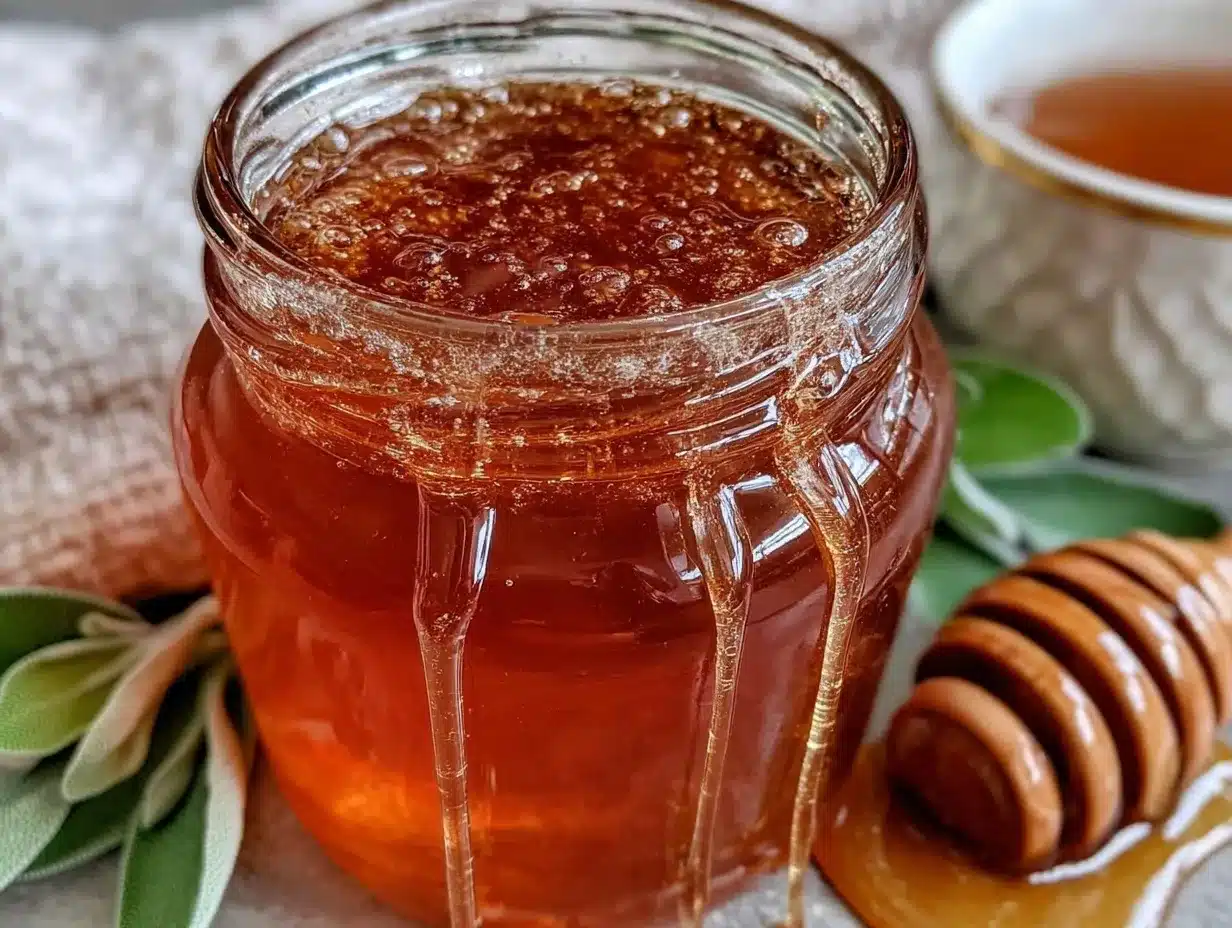
- Start by washing the sage sprigs thoroughly under cold water to remove any dirt or debris. Pat them dry with a paper towel or let them air dry completely.
- In a small saucepan, pour 1 cup of honey and set the heat to low. You don’t want to boil or overheat the honey—just warm it gently until it’s thin and easy to stir. This should take about 3-4 minutes.
- Add the fresh sage sprigs to the honey. Stir gently with a wooden spoon to ensure the leaves are fully submerged. If using lemon zest, add it at this stage for a citrusy kick.
- Allow the mixture to heat on low for another 5-7 minutes. Be sure to keep an eye on it—overheating can alter the flavor and texture of the honey. You should start to smell the aromatic sage blending with the sweetness of the honey.
- Remove the saucepan from the heat and let the honey cool for 10-15 minutes. This resting time allows the sage to continue infusing into the honey.
- Once the honey has cooled, use a fine-mesh strainer to remove the sage leaves and any lemon zest. Pour the strained honey into a clean glass jar. Make sure the jar is completely dry to prevent any spoilage.
- Seal the jar tightly and store your sage-infused honey in a cool, dark place. It will keep for several weeks and develop an even deeper flavor over time.
Cooking Tips & Techniques
Here are some tried-and-true tips to ensure your sage-infused honey turns out perfectly:
- Low and slow: Avoid boiling the honey, as high heat can change its flavor and destroy some of its natural enzymes.
- Choose fresh ingredients: Fresh sage leaves have a brighter, more robust flavor compared to their dried counterparts. If using dried sage, use only about 1-2 teaspoons.
- Be patient: Letting the honey cool slowly with the sage still steeping is crucial for a deep infusion of flavor.
- Taste test: Before straining, give the honey a little taste to ensure the flavor is to your liking. If you want a stronger sage note, leave the sprigs in a bit longer.
- Use the right honey: Light and mild honey varieties such as clover or wildflower honey work best for this recipe. They allow the sage flavor to shine without overpowering it.
One thing I’ve learned from experience—don’t skimp on the quality of your honey. The better the honey, the better your infusion will taste!
Variations & Adaptations
This recipe is delightfully versatile! Here are a few ways you can tweak it to suit your taste or dietary needs:
- Herb Swaps: Don’t have sage on hand? Try rosemary for a woodsy, aromatic twist or thyme for a subtle and slightly floral flavor.
- Seasonal Twists: For a winter variation, add a cinnamon stick or a few whole cloves to the honey for a warm, spiced infusion.
- Vegan Option: Substitute honey with agave syrup, and follow the same process. The flavor will be slightly different, but still delicious!
- Citrus Infusion: Experiment with orange zest instead of lemon for a bright, sunny flavor that pairs beautifully with sage.
- Spicy Kick: Add a pinch of crushed red pepper flakes to the honey while it warms for a subtle heat that contrasts beautifully with the sweetness.
One variation I tried added a sprig of fresh rosemary alongside the sage—let me tell you, the result was a sophisticated, complex flavor that was perfect for drizzling over roasted vegetables!
Serving & Storage Suggestions
This sage-infused honey is incredibly versatile and can be used in countless ways:
- Serving Suggestions: Stir a teaspoon into hot tea for a calming, aromatic drink. It’s also heavenly drizzled over pancakes, waffles, or toast with butter. Feeling fancy? Swirl it into yogurt or oatmeal for a sweet herbal boost.
- Pair with Savory Dishes: Use it as a glaze for roasted chicken or drizzle it over baked brie for an elegant appetizer.
- Storage: Store the honey in an airtight glass jar in a cool, dry place. It will keep for 4-6 weeks, but I doubt it’ll last that long!
- Reheating: If your honey crystallizes, warm the jar gently in a bowl of hot water until it returns to liquid form. Avoid microwaving as it can damage the flavor.
- Flavors Over Time: The sage flavor will deepen the longer the honey infuses, so use it as soon as you like or let it sit for a week for a stronger taste.
Nutritional Information & Benefits
Sage-infused honey isn’t just delicious—it’s good for you, too! Here’s why:
- Calories: Approximately 64 calories per tablespoon.
- Rich in Antioxidants: Both sage and honey contain antioxidants that help fight free radicals in the body.
- Supports Digestion: Sage is known for its anti-inflammatory properties, which can support digestion and overall gut health.
- Sore Throat Remedy: Honey is a natural soother for irritated throats, and sage may help ease respiratory discomfort.
- Diet-Friendly: Naturally gluten-free and dairy-free, this recipe is suitable for most dietary needs.
If you have allergies to pollen or bees, or if you’re vegan, make sure to opt for alternative sweeteners like agave syrup or consult a medical professional before consuming.
Conclusion
If you’re looking for a recipe that will warm your soul and brighten your day, this sage-infused honey is it. I love how it transforms a simple tea into something so special, and it’s always a hit with friends and family. The best part? It’s so easy to make, yet feels like a luxurious treat.
Make it your own by experimenting with different herbs or flavors, and let me know in the comments how you used your sage-infused honey. Did you drizzle it over pancakes or stir it into a cozy tea? Whatever you do, I know this recipe will become a seasonal favorite in your kitchen—just as it has in mine.
Now, go on and give this recipe a try! You deserve a spoonful of comfort today.
FAQs
Can I use dried sage instead of fresh?
Yes, you can use dried sage, but keep in mind the flavor won’t be as vibrant. Use about 1-2 teaspoons of dried sage instead of fresh sprigs.
How long does sage-infused honey last?
When stored in a clean, airtight jar in a cool, dark place, sage-infused honey can last for 4-6 weeks. Just make sure the jar is completely dry before storing.
What kind of honey should I use?
Use a high-quality raw honey for the best flavor. Local honey is always a great choice, as it often has unique floral notes.
Can I use other herbs for infusion?
Absolutely! Rosemary, thyme, lavender, or even mint can be used for different flavor profiles. Feel free to experiment with your favorites.
Is sage-infused honey safe for children?
Honey is not safe for children under 12 months due to the risk of botulism. For older kids, this honey is a delicious and safe treat.
Pin This Recipe!
Irresistible Sage-Infused Honey Recipe for Cozy Fall Teas

A simple yet magical recipe that combines the earthy aroma of fresh sage with the sweet richness of honey, perfect for cozy fall teas and versatile enough for sweet and savory dishes.
- Prep Time: 10 minutes
- Cook Time: 10 minutes
- Total Time: 20 minutes
- Yield: 1 cup 1x
- Category: Condiment
- Cuisine: American
Ingredients
- 1 cup raw honey
- 6–8 sprigs fresh sage
- Optional: Lemon zest
Instructions
- Wash the sage sprigs thoroughly under cold water to remove any dirt or debris. Pat them dry with a paper towel or let them air dry completely.
- In a small saucepan, pour 1 cup of honey and set the heat to low. Warm it gently until it’s thin and easy to stir, about 3-4 minutes.
- Add the fresh sage sprigs to the honey. Stir gently with a wooden spoon to ensure the leaves are fully submerged. If using lemon zest, add it at this stage.
- Allow the mixture to heat on low for another 5-7 minutes, ensuring it doesn’t boil or overheat.
- Remove the saucepan from the heat and let the honey cool for 10-15 minutes to allow the sage to continue infusing.
- Once cooled, use a fine-mesh strainer to remove the sage leaves and any lemon zest. Pour the strained honey into a clean glass jar.
- Seal the jar tightly and store your sage-infused honey in a cool, dark place. It will keep for several weeks and develop a deeper flavor over time.
Notes
[‘Avoid boiling the honey as high heat can change its flavor and destroy natural enzymes.’, ‘Fresh sage leaves provide a brighter, more robust flavor compared to dried sage.’, ‘Let the honey cool slowly with the sage still steeping for a deeper infusion of flavor.’, ‘Taste the honey before straining to ensure the flavor is to your liking.’, ‘Light and mild honey varieties like clover or wildflower honey work best for this recipe.’]
Nutrition
- Serving Size: 1 tablespoon
- Calories: 64
- Sugar: 16
- Carbohydrates: 17
Keywords: sage-infused honey, fall recipe, tea sweetener, herbal honey, cozy recipes