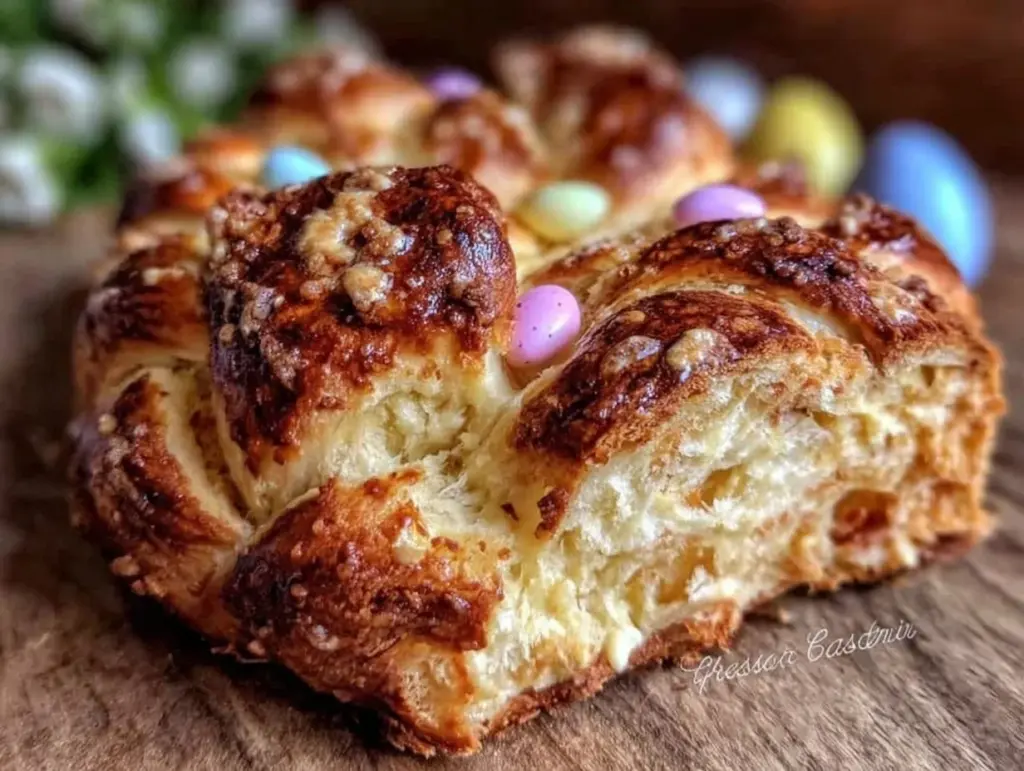
“Hey, did you try weaving the eggs into the dough yet?” my sister texted me one chilly Saturday morning. I’d just pulled my third failed attempt at a fancy Easter bread from the oven, crust too thick, crumb too dense, and honestly, I was ready to toss the whole idea out the window. But that message sparked something — a tiny challenge, a nudge to keep going.
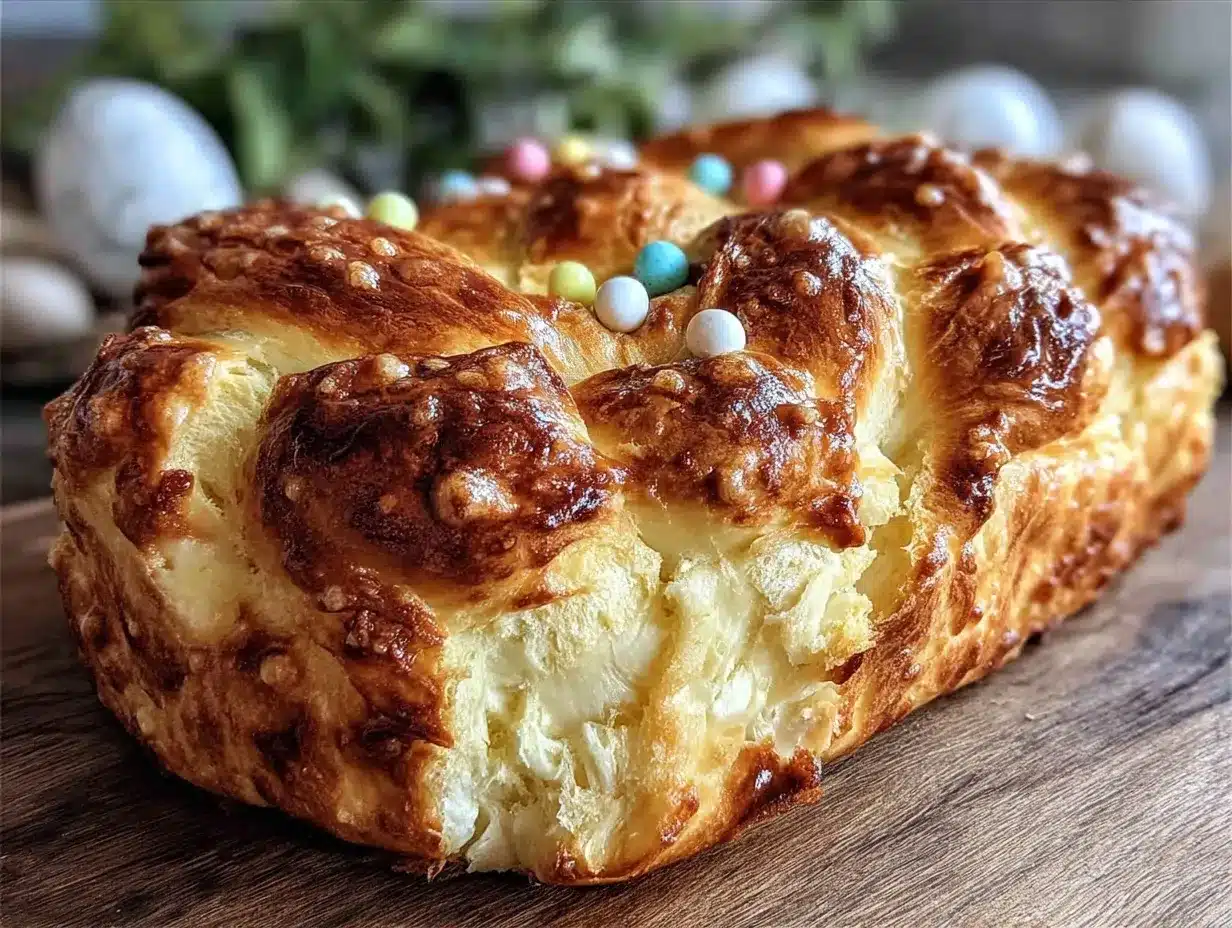
So there I was, flour dusting my countertops, hands sticky with dough, and colorful little eggs tucked inside braided strands of soft, golden bread. The kitchen smelled like warm vanilla and a hint of citrus zest, a cozy contrast to the blustery spring wind outside. The braided Easter bread with colorful woven eggs wasn’t just a festive treat; it became a quiet victory after a morning full of trial, error, and stubborn hope.
What surprised me most was how the simple act of weaving those vivid eggs into the dough transformed the whole loaf — it looked like a little work of art, and the taste? Soft, lightly sweet, with just enough richness to feel like a treat but still comforting enough for an early breakfast. I found myself making it again and again that week, tweaking the braid, playing with egg colors, and sharing slices with friends who kept asking for the recipe.
There’s something about this cozy braided Easter bread that turns a kitchen into a warm gathering place, even if it’s just you nibbling on a piece while sipping coffee. It’s the kind of recipe that sticks with you, quietly promising a bit of tradition and color whenever you need it most.
Why You’ll Love This Recipe
Honestly, this cozy braided Easter bread with colorful woven eggs has been a staple in my kitchen for years now, and here’s why it’s such a keeper:
- Quick & Easy: It comes together in under 2 hours, including rising time — perfect for last-minute Easter prep or a weekend baking session without the fuss.
- Simple Ingredients: No need to hunt down anything exotic; most of the ingredients are pantry basics like flour, yeast, sugar, and eggs you probably already have on hand.
- Perfect for Easter Brunch: This bread adds just the right festive touch, and the colorful eggs woven inside make it a centerpiece that sparks conversation.
- Crowd-Pleaser: Kids love spotting the eggs as they pull apart the bread, and adults appreciate the soft, slightly sweet crumb that pairs well with butter and jam.
- Unbelievably Delicious: The texture is pillowy soft with a subtle buttery flavor, and the hint of lemon zest makes it feel fresh and springy — not overly sweet, just right.
What really sets this recipe apart is the woven eggs technique — it’s a charming twist that turns a simple braided loaf into something visually striking. I’ve tried other Easter breads before, but weaving the eggs into the dough gives it that extra wow factor without any complicated decorating skills.
Plus, it’s flexible! Whether you want to make it traditional with just plain eggs or get playful with dyed ones, the bread still shines. It’s a recipe that makes you want to slow down, savor the process, and enjoy the small, colorful moments that come with it.
What Ingredients You Will Need
This cozy braided Easter bread recipe uses straightforward ingredients that come together to create that soft, tender crumb and beautiful golden crust. Most are pantry staples, so you won’t have to run to a specialty store.
- All-purpose flour (4 cups / 480 grams) – I prefer King Arthur for consistent texture, but any unbleached flour works great.
- Active dry yeast (2 ¼ teaspoons / 1 packet) – Fresh yeast works too, but dry is more convenient and reliable.
- Granulated sugar (½ cup / 100 grams) – Adds just the right touch of sweetness without overpowering.
- Salt (1 teaspoon) – Balances flavor and strengthens the dough.
- Whole milk (1 cup / 240 ml), warmed to about 110°F (43°C) – Use whole or 2% for a richer crumb, but skim works in a pinch.
- Unsalted butter (¼ cup / 56 grams), melted and cooled slightly – Adds tenderness and flavor.
- Large eggs (3, room temperature) – Two for the dough, one for egg wash; plus 4-6 hard-boiled eggs for weaving (dyed or plain).
- Lemon zest (1 teaspoon) – Brightens the flavor with a subtle citrus note, but orange zest is a nice alternative.
- Vanilla extract (1 teaspoon) – For a hint of warmth and depth.
Optional:
- Food coloring (gel or natural) – If you want to dye your woven eggs with vibrant colors.
- Sesame or poppy seeds – For sprinkling on top before baking, adding a little crunch and visual interest.
When picking eggs for dyeing, I prefer farm-fresh or organic if possible, especially since they’ll be nestled right in the dough. For the milk, warming it gently helps activate the yeast faster, so don’t skip that step.
If you want a gluten-free version, swapping out the flour for a 1:1 gluten-free blend is doable, but note the texture will be a bit different — still delicious, just less stretchy for braiding.
Equipment Needed
- Mixing bowls: One large for mixing the dough, and a smaller one for proofing the yeast.
- Stand mixer with dough hook (optional): Makes kneading easier, especially if you’re making multiple loaves or want to save your hands.
- Kitchen scale: Highly recommended for measuring flour and other ingredients precisely — baking’s a science, after all.
- Measuring cups and spoons: For liquids and smaller quantities.
- Rolling pin (optional): Helpful for shaping the dough strands evenly before braiding.
- Baking sheet: For the final bake; line it with parchment paper to avoid sticking.
- Pastry brush: To apply the egg wash and get that beautiful golden crust.
- Small saucepan: For warming milk gently without scorching.
Personally, I’ve found that a stand mixer with a dough hook really cuts down on the kneading time, but I’ve also hand-kneaded this recipe plenty of times — it’s a great arm workout! If you don’t have a kitchen scale, spooning and leveling the flour carefully works too, but it’s less precise.
Preparation Method
- Activate the yeast: In a small bowl, whisk together 1 cup (240 ml) warmed milk (about 110°F / 43°C), 1 tablespoon (12 grams) sugar, and 2 ¼ teaspoons (7 grams) active dry yeast. Let it sit for 5-10 minutes until foamy. If it doesn’t foam, your yeast might be dead, so start over with fresh yeast.
- Mix dry ingredients: In a large mixing bowl, combine 4 cups (480 grams) all-purpose flour, ½ cup (100 grams) sugar, 1 teaspoon salt, and 1 teaspoon lemon zest. Stir to blend evenly.
- Combine wet and dry: Add the yeast mixture, 2 large eggs (room temperature), ¼ cup (56 grams) melted butter, and 1 teaspoon vanilla extract to the dry ingredients. Stir with a wooden spoon or use a stand mixer fitted with a dough hook on low speed until a shaggy dough forms, about 2-3 minutes.
- Knead the dough: Turn the dough onto a floured surface and knead for 8-10 minutes until smooth and elastic. If using a mixer, knead on medium speed for 6-7 minutes. The dough should be soft but not sticky; add a little flour if needed in small increments.
- First rise: Shape the dough into a ball and place it in a lightly greased bowl. Cover with a damp kitchen towel or plastic wrap and let it rise in a warm spot until doubled in size, about 1 to 1.5 hours.
- Prepare eggs: While the dough rises, hard-boil 4-6 eggs. Once cooled, dye them using your favorite method or leave plain. Set aside.
- Shape and braid: Punch down the risen dough and divide it into three equal pieces. Roll each piece into a long rope, about 12-14 inches (30-35 cm) long. Place the dyed eggs along the center of one rope, then gently wrap the other two ropes around the eggs, weaving them in to secure. Braid the remaining length of dough as usual, tucking the ends under to seal.
- Second rise: Place the braided loaf on a parchment-lined baking sheet. Cover loosely with plastic wrap and let rise for 30-45 minutes until puffed.
- Egg wash: Beat 1 large egg with 1 tablespoon water and brush gently over the loaf for a shiny golden finish. Sprinkle with sesame or poppy seeds if desired.
- Bake: Preheat oven to 350°F (175°C). Bake the bread for 30-35 minutes until deep golden and hollow-sounding when tapped underneath. If the top browns too quickly, tent loosely with foil halfway through baking.
- Cool: Transfer the bread to a wire rack and let cool completely before slicing to enjoy the full flavor and texture.
Pro tip: If you find the dough tricky to handle when wrapping the eggs, chill it briefly after the first rise. It firms up and is easier to work with. Also, don’t rush the rises — patience here makes all the difference in softness and flavor.
Cooking Tips & Techniques
Getting this braided Easter bread just right takes a few little tricks I’ve learned over time. First, always check your yeast’s freshness — no foam means no rise, and that bread will be dense and disappointing.
Kneading is key, you know? You want that dough silky and springy but not sticky. A sticky dough usually means too much liquid or not enough flour, so add flour sparingly to avoid a tough loaf.
When braiding, keep the ropes even in thickness so the loaf bakes uniformly. Uneven strands can cause some parts to cook faster or dry out.
For the colorful woven eggs, I’ve found that using gel food coloring keeps the colors vibrant and prevents the eggshells from getting too wet or cracked. Let the dyed eggs dry thoroughly before weaving them into the dough.
Timing matters, too. Don’t skip the second rise! It helps the bread relax and puff up around those nestled eggs.
Last but not least, the egg wash is your golden ticket — it gives that beautiful sheen and rich color. If you want extra shine, add a teaspoon of honey to the wash.
Variations & Adaptations
This cozy braided Easter bread is wonderfully adaptable, so feel free to make it your own. Here are a few variations I’ve tried:
- Herb-infused: Add 1 tablespoon of finely chopped rosemary or thyme to the dough for a subtle savory twist that pairs beautifully with breakfast spreads.
- Sweet & nutty: Mix ½ cup chopped toasted pecans or walnuts into the dough for crunch and warmth, similar to the texture in my cranberry orange bread.
- Gluten-free: Swap all-purpose flour for a gluten-free blend designed for baking. Expect a slightly different texture but still delicious.
- Dairy-free: Replace milk with almond or oat milk, and butter with coconut oil or dairy-free margarine.
- Egg-free egg wash: Use a mixture of maple syrup and water brushed on before baking for a glossy finish without eggs, great for vegan adaptations.
One personal favorite is adding a dash of cinnamon and nutmeg to the dough, giving it a cozy warmth that reminds me of the cinnamon roll casserole I make during the holidays. It’s subtle but so comforting.
Serving & Storage Suggestions
This braided Easter bread is best served fresh and slightly warm, either sliced thick with butter melting on top or alongside a dollop of jam. It pairs nicely with a cup of tea or coffee for a relaxed morning treat.
If you want to make it part of a brunch spread, it complements egg dishes, fresh fruit, and even savory sides like a spinach dip breadstick appetizer.
To store, wrap the bread tightly in plastic wrap or place it in an airtight container. It stays fresh for 2-3 days at room temperature. For longer storage, slice and freeze it in batches; just toast slices straight from frozen for a quick snack.
Reheating in a low oven (around 300°F / 150°C) for 10 minutes restores that fresh-baked softness. Over time, the flavors mellow and the lemon zest becomes more pronounced, making leftovers just as enjoyable.
Nutritional Information & Benefits
Each slice of this cozy braided Easter bread (about 1/12th of the loaf) contains roughly 180-210 calories, with 6 grams of fat, 28 grams of carbohydrates, and 5 grams of protein. It’s a moderate source of energy perfect for a special breakfast or snack.
Using whole milk and eggs adds valuable protein, calcium, and vitamin D, while lemon zest provides a small boost of antioxidants and vitamin C. The bread is naturally free of preservatives and artificial additives, making it a wholesome option compared to store-bought varieties.
For those watching gluten or dairy, the recipe adapts well with substitutions. It’s a treat that balances indulgence with real ingredients, so you can feel good about enjoying a slice (or two!).
Conclusion
This cozy braided Easter bread with colorful woven eggs is more than just a festive loaf — it’s a comforting ritual that brings a little color and warmth into your kitchen. Whether you’re baking it for a holiday gathering or a quiet morning, it invites you to slow down, enjoy the textures and scents, and share a moment of simple joy.
Feel free to make it your own with variations that suit your tastes, and don’t stress if your first braid isn’t perfect — honestly, it’s the imperfect, homemade touches that make it special.
I love this bread because it’s a little project that rewards you with a stunning centerpiece and a delicious treat. If you give it a try, I’d love to hear how you styled your woven eggs or what twists you added!
Happy baking, and here’s to colorful, cozy mornings ahead.
FAQs
Can I use regular boiled eggs instead of dyed ones for the woven eggs?
Absolutely! Plain hard-boiled eggs work perfectly and can be a subtle, natural look. Just make sure they’re fully cooled before weaving.
How do I prevent the eggs from cracking while baking inside the bread?
Use room-temperature eggs and handle the dough gently when wrapping. Also, don’t over-tighten the braid around the eggs to avoid pressure.
Can I prepare the dough the night before?
Yes, after the first rise, punch down the dough, cover it tightly, and refrigerate overnight. Let it come to room temperature before shaping and baking.
Is it possible to make this bread vegan?
With some swaps — plant-based milk, vegan butter, and a flax egg for the dough and egg wash — you can get close. The texture changes a bit, but it’s still tasty.
How should I store leftover bread to keep it fresh?
Wrap tightly in plastic wrap or store in an airtight container at room temperature for up to 3 days. For longer storage, freeze slices and toast when ready to eat.
Pin This Recipe!
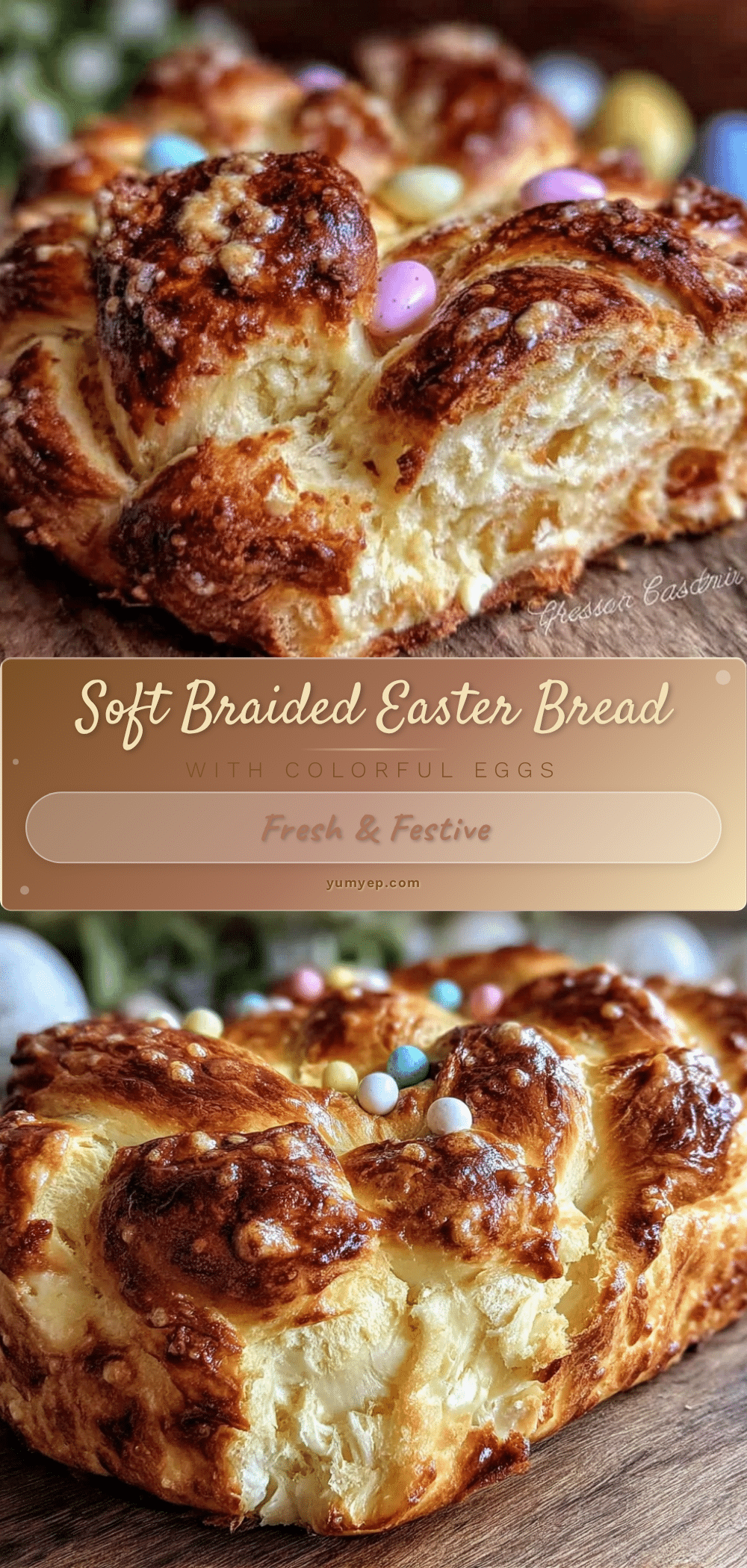
Cozy Braided Easter Bread Recipe with Easy Colorful Woven Eggs Tutorial

A soft, lightly sweet braided Easter bread with colorful woven eggs inside, perfect for festive brunches and cozy mornings. This recipe is easy to make with simple pantry ingredients and offers a charming twist with dyed or plain eggs woven into the dough.
- Prep Time: 30 minutes
- Cook Time: 30-35 minutes
- Total Time: 1 hour 45 minutes to 2 hours 10 minutes
- Yield: 1 loaf (about 12 servings) 1x
- Category: Bread
- Cuisine: American
Ingredients
- 4 cups (480 grams) all-purpose flour
- 2 ¼ teaspoons (1 packet) active dry yeast
- ½ cup (100 grams) granulated sugar
- 1 teaspoon salt
- 1 teaspoon lemon zest
- 1 cup (240 ml) whole milk, warmed to about 110°F (43°C)
- ¼ cup (56 grams) unsalted butter, melted and cooled slightly
- 3 large eggs (2 for dough, 1 for egg wash)
- 4–6 hard-boiled eggs (dyed or plain) for weaving
- 1 teaspoon vanilla extract
- Optional: gel or natural food coloring for dyeing eggs
- Optional: sesame or poppy seeds for sprinkling on top
Instructions
- Activate the yeast by whisking together warmed milk, 1 tablespoon sugar, and active dry yeast in a small bowl. Let sit for 5-10 minutes until foamy.
- In a large mixing bowl, combine flour, sugar, salt, and lemon zest.
- Add the yeast mixture, 2 large eggs, melted butter, and vanilla extract to the dry ingredients. Stir until a shaggy dough forms.
- Knead the dough on a floured surface for 8-10 minutes until smooth and elastic, or knead with a stand mixer for 6-7 minutes.
- Place dough in a greased bowl, cover, and let rise in a warm spot until doubled in size, about 1 to 1.5 hours.
- Hard-boil 4-6 eggs, dye if desired, and set aside once cooled.
- Punch down the dough and divide into three equal pieces. Roll each into 12-14 inch ropes.
- Place dyed eggs along the center of one rope, then wrap the other two ropes around the eggs, weaving them in to secure. Braid the remaining dough and tuck ends under.
- Place the braided loaf on a parchment-lined baking sheet, cover loosely, and let rise for 30-45 minutes until puffed.
- Beat 1 egg with 1 tablespoon water and brush over the loaf. Sprinkle seeds if desired.
- Bake at 350°F (175°C) for 30-35 minutes until golden and hollow sounding when tapped. Tent with foil if browning too fast.
- Cool completely on a wire rack before slicing.
Notes
If dough is tricky to handle when wrapping eggs, chill briefly after first rise. Use room-temperature eggs to prevent cracking. Don’t skip the second rise for best softness. Add a teaspoon of honey to egg wash for extra shine. For gluten-free, use a 1:1 gluten-free flour blend. For dairy-free, substitute milk and butter with plant-based alternatives. Egg-free egg wash can be made with maple syrup and water.
Nutrition
- Serving Size: 1 slice (1/12th of l
- Calories: 195
- Sugar: 6
- Sodium: 180
- Fat: 6
- Saturated Fat: 3.5
- Carbohydrates: 28
- Fiber: 1
- Protein: 5
Keywords: Easter bread, braided bread, woven eggs, festive bread, holiday bread, soft bread, colorful eggs, breakfast bread