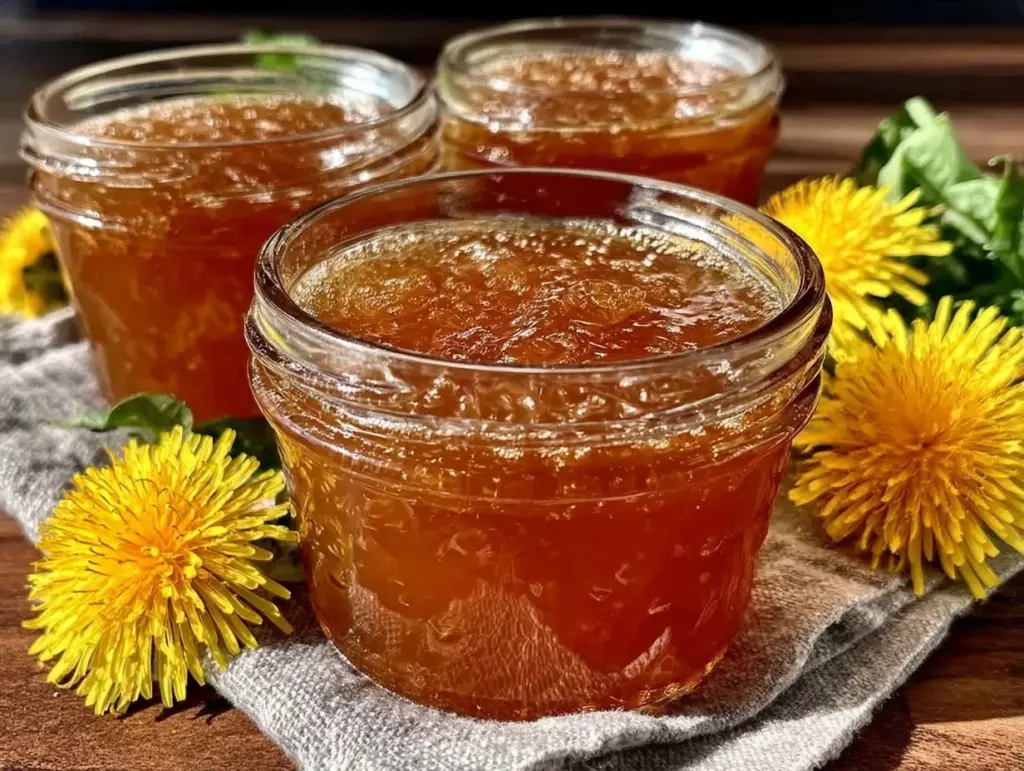
“You sure you want to eat that?” my friend asked, eyeing the bright yellow dandelion heads I had just plucked from the park lawn. Honestly, I was half skeptical myself. Foraging wasn’t something I ever thought I’d try—let alone turn those little weeds into something edible. But after a chaotic morning juggling work calls and a cranky toddler, I needed a reset, something simple and oddly satisfying. So, there I was, rinsing dandelion blossoms in my kitchen sink, wondering if this odd jelly idea was going to be a total flop.
What surprised me most was how quickly it came together, the kitchen filling with a subtle, sweet fragrance unlike anything I expected from those humble flowers. The honey adds a golden warmth, balancing the floral notes perfectly. I ended up making several small batches over a couple weeks, tweaking the sweetness until it hit that spot where you just want to spread it on everything. It’s not fancy, but it has this quiet charm that sticks with you.
There’s something wild about turning dandelions—often seen as pesky lawn invaders—into a little jar of sunshine. It’s calming, grounding, and honestly, a neat way to connect with the outdoors without leaving your kitchen too far behind. I’m not a forager expert by any means, but this easy small-batch dandelion honey jelly became my go-to project when the day felt too loud. It’s sweet, simple, and just a little surprising.
So, if you’ve ever paused before picking a dandelion, wondering if it’s more than just a weed, this recipe quietly promises a little discovery and a tasty reward in every spoonful.
Why You’ll Love This Recipe
After testing this small-batch dandelion honey jelly several times, I can say it’s one of those recipes that feels like a win no matter what. Here’s why it’s worth keeping in your kitchen rotation:
- Quick & Easy: You can have a fresh batch ready in under 45 minutes, perfect for squeezing into a busy afternoon or a spontaneous kitchen adventure.
- Simple Ingredients: No need to hunt down anything exotic—just dandelions, honey, lemon, and pectin. You probably already have most of these at home.
- Perfect for First-Time Foragers: If you’re new to wild food, this recipe gently introduces you to using nature’s bounty without overwhelming steps or complicated processes.
- Crowd-Pleaser: Friends and family have been genuinely curious and impressed, especially when paired with fresh bread or creamy cheeses.
- Unbelievably Delicious: The subtle floral notes mixed with honey’s warmth create a unique flavor your taste buds won’t forget.
This isn’t just any jelly—you know how some jams can be too sugary or one-note? This recipe balances the natural bitterness of the petals with the sweetness of honey and a hint of citrus. Also, the small-batch approach means you won’t feel pressured to make a huge quantity that might go to waste. It’s just enough to enjoy, share, or gift without stressing about storage.
On top of that, I love how it connects me to the seasons. When dandelions start popping up in spring, it feels like a gentle nudge to slow down, grab a jar, and savor something truly homemade. If you’re into other seasonal treats, you might appreciate the ease of this jelly alongside a slice of cranberry orange bread or a batch of crispy candied pecans.
What Ingredients You Will Need
This recipe uses simple, wholesome ingredients to deliver a bright, floral jelly with just the right touch of sweetness and tartness. Most of these are pantry staples or easy to source, and it’s forgiving if you need to swap a few out.
- Dandelion Blossoms – about 2 cups packed (fresh, bright yellow petals only; avoid stems and greens to prevent bitterness)
- Honey – 1 cup (raw or local honey adds depth; feel free to use your favorite brand)
- Water – 2 cups (filtered is best for clean flavor)
- Lemon Juice – 2 tablespoons (freshly squeezed; adds brightness and helps set the jelly)
- Liquid Pectin – 1/2 cup (I like using a trusted brand like Sure-Jell for consistent results)
- Granulated Sugar – 2 cups (balances the floral notes and helps the jelly gel)
Ingredient tips: When picking dandelions, choose petals from areas away from heavy traffic or pesticide use. If you want a slightly different twist, you can swap half the honey for pure maple syrup, but keep in mind that it will change the flavor profile.
Also, if you’re looking for a vegan alternative, try using a plant-based sweetener instead of honey, like agave nectar, though it may affect the set slightly. For a gluten-free diet, this recipe is naturally safe, and if you’re interested in other wild-harvested treats, you might enjoy trying a batch of snowball cookies to pair with your jelly for a cozy afternoon snack.
Equipment Needed
- Large Saucepan – for simmering the dandelions and cooking the jelly mixture
- Fine Mesh Strainer or Cheesecloth – to strain out the petals after infusion (a cheesecloth bundle works well to squeeze out every drop)
- Measuring Cups and Spoons – for precise ingredient amounts
- Heatproof Jar or Bowl – to collect the infused liquid
- Small Jelly Jars or Containers – for storing your finished jelly (4-ounce jars are perfect for small batches)
- Wooden Spoon or Silicone Spatula – for stirring
- Candy or Jelly Thermometer (optional) – helpful but not required if you follow timing and visual cues
If you don’t have specialized jelly jars, small glass jars with tight lids or even repurposed jam jars work just fine. I’ve found that a wide-mouth funnel makes filling jars less messy, but a steady hand does the trick too. For beginners, I recommend a sturdy saucepan with a thick bottom to prevent scorching when cooking the sugar mixture.
Preparation Method
- Harvest and prep the dandelion petals: Pick about 4 cups of fresh dandelion flowers, then gently pluck the yellow petals only, avoiding any green parts. This takes a bit of patience but keeps the jelly from developing a bitter taste. Rinse petals well in cold water to remove dirt or bugs. (10 minutes)
- Infuse the petals: Place the petals in a large saucepan with 2 cups of water. Bring to a gentle simmer over medium heat, then reduce heat and let simmer for 10 minutes. You’ll notice a subtle golden color emerging in the water and a light floral aroma filling the kitchen. (15 minutes)
- Strain the infusion: Pour the mixture through a fine mesh strainer lined with cheesecloth into a heatproof bowl or jar. Press on the petals to extract as much liquid as possible, then discard the solids. You should have about 2 cups of dandelion-infused liquid. (5 minutes)
- Prepare the jelly mixture: Return the dandelion liquid to the clean saucepan. Add the honey, granulated sugar, and lemon juice, stirring gently to combine. Bring to a boil over medium-high heat, stirring occasionally to dissolve the sugar completely. (10 minutes)
- Add the pectin: Once the mixture reaches a rolling boil, stir in the liquid pectin. Boil hard for 1 minute while stirring constantly. You’ll notice the liquid thickening slightly. Remove from heat immediately to avoid overcooking. (5 minutes)
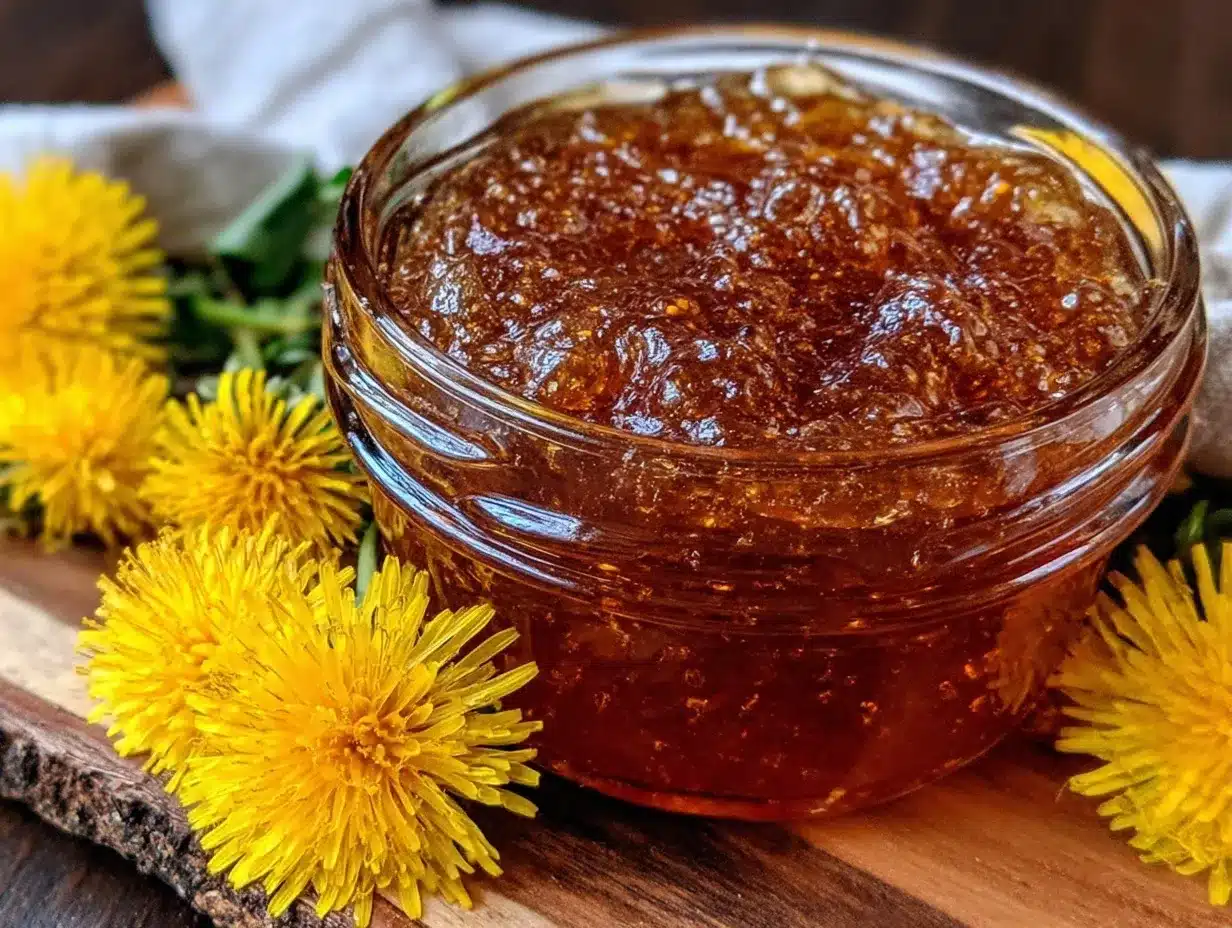
- Jar the jelly: Ladle the hot jelly carefully into sterilized small jars, leaving about 1/4 inch of headspace. Wipe rims clean and seal with lids. Let cool completely at room temperature until set. The jelly should firm up in a few hours or overnight. (15 minutes plus cooling)
Pro tip: If your jelly seems too runny after cooling, don’t panic. It might need a bit more pectin or cooking time next batch. I’ve found that using fresh lemon juice and good-quality pectin makes a noticeable difference.
Also, keep in mind that the flavor deepens after a day or two in the jar, so waiting really pays off here. If you want to learn more about other easy homemade spreads for your kitchen, you might like the spinach dip breadsticks recipe for a savory option to complement sweet jellies like this one.
Cooking Tips & Techniques
Making jelly might feel intimidating at first, but some simple techniques can take the stress out of the process. Here are a few things I’ve learned that make a big difference:
- Patience with petals: Removing the green parts from dandelions is the key to a clean, pleasant jelly. I usually enlist help or turn on a podcast to make this step less tedious.
- Temperature matters: Bring the mixture to a full rolling boil before adding pectin and boil for exactly one minute. This activates the pectin for proper gel formation. Too little boiling and you risk a runny jelly.
- Don’t rush jar filling: Use a ladle and steady hands. Hot jelly can splash and cause burns, so take your time and use oven mitts if needed.
- Test the set quickly: If you’re unsure whether the jelly is ready, drop a small spoonful onto a cold plate and let it sit for a minute. If it wrinkles when pushed with your finger, it’s good to go.
- Clean jars thoroughly: Sterilize jars by boiling or running through a dishwasher cycle. This prevents spoilage and keeps your jelly fresh longer.
I once tried skipping the lemon juice, thinking it was optional—big mistake. The jelly didn’t set well and tasted flat. Lesson learned: acid balances sweetness and helps the pectin do its job. Also, stirring constantly during the final boil prevents sugar from crystallizing on the pan.
For multitasking, I like to prepare the petals while simmering water for tea or even start a batch of butter chicken for dinner. The jelly making is a great way to keep busy hands without needing constant attention.
Variations & Adaptations
There’s room to play around with this recipe to suit your taste or dietary needs. Here are a few ideas I’ve tried or considered:
- Floral Mix: Add a handful of edible violets or elderflowers to the dandelion petals during infusion for a layered floral flavor.
- Lower Sugar: Decrease the sugar by 1/3 and increase honey slightly for a less sweet but still well-set jelly. Keep in mind the texture may be softer.
- Vegan Version: Replace honey with agave or maple syrup and use a plant-based pectin, though the set might take longer or be less firm.
- Savory Twist: Stir in a pinch of fresh rosemary or thyme before jarring for an herbal edge that pairs well with cheeses.
I once added a splash of fresh ginger juice during the cooking stage, which gave the jelly a subtle spicy warmth—unexpected but delightful. For different cooking methods, slow cookers aren’t ideal here because you need precise boiling temperatures to activate the pectin properly.
If you’re curious about other seasonal homemade treats, you might enjoy how a cinnamon roll casserole pairs well with a fruity jelly spread for holiday mornings.
Serving & Storage Suggestions
This dandelion honey jelly is best enjoyed at room temperature spread on warm toast, spooned over yogurt, or paired with creamy cheeses like brie or goat cheese. It also makes a charming gift tucked into a small jar with a handwritten label.
Store your jelly sealed in the refrigerator where it will keep well for up to 3 weeks. For longer storage, freeze in small airtight containers for up to 3 months; thaw in the fridge overnight before use. When reheating, warm gently in a saucepan or microwave to restore spreadable consistency without overheating and breaking down the jelly.
Flavor-wise, the jelly tends to mellow and deepen after a couple of days, so if you can wait, it’s worth it. Pair it with fresh baked goods like a cranberry orange bread for a lovely breakfast or snack.
Nutritional Information & Benefits
This small-batch dandelion honey jelly is a light treat with approximately 60 calories per tablespoon (15 ml), mostly from natural sugars in honey and added sugar. Dandelions themselves are a good source of antioxidants and vitamins A, C, and K, though in jelly form these benefits are mild but still present.
Honey adds antimicrobial properties and a complex flavor profile, and lemon juice contributes vitamin C and acidity for balance. This jelly is naturally gluten-free and can be made vegan by swapping honey.
From a wellness perspective, it’s a way to enjoy a bit of nature’s sweetness without the preservatives or artificial colors found in store-bought jellies. I find it a comforting, wholesome addition to my pantry when the spring dandelions arrive.
Conclusion
Making this easy small-batch dandelion honey jelly opened a new door in my kitchen—a simple recipe that invites you to slow down and notice the little wild things growing just outside your door. It’s approachable for first-time foragers, forgiving enough for beginners, and genuinely tasty enough to become a favorite.
Feel free to adjust the sweetness or try some of the suggested variations to suit your mood or pantry. I love this jelly because it’s a quiet way to celebrate spring’s arrival and share a little homemade goodness with friends and family.
Give it a try, and let yourself be surprised by how something so simple can brighten your day. If you experiment with your own twists or want to share how you enjoyed it, drop a comment below—I’d love to hear your story.
FAQs About Easy Small-Batch Dandelion Honey Jelly
Can I use whole dandelion flowers instead of just the petals?
It’s best to use only the yellow petals because the green parts and stems can add bitterness and affect the flavor and texture of your jelly.
How do I know when the jelly has set properly?
Once cooled, the jelly should be firm but spreadable. A quick test is to drop some on a cold plate and push gently—if it wrinkles, it’s set.
Is it safe to eat dandelions from my yard?
Only if you’re sure the area hasn’t been treated with pesticides or herbicides. Wild or organic areas are safest for foraging.
Can I make this jelly without pectin?
Traditional jelly requires pectin for proper setting. Without it, the jelly may be more like a syrup or jam with a looser texture.
How long does this jelly keep?
Refrigerated, it lasts about 3 weeks. Frozen jelly can be stored for up to 3 months. Always check for signs of spoilage before use.
Pin This Recipe!
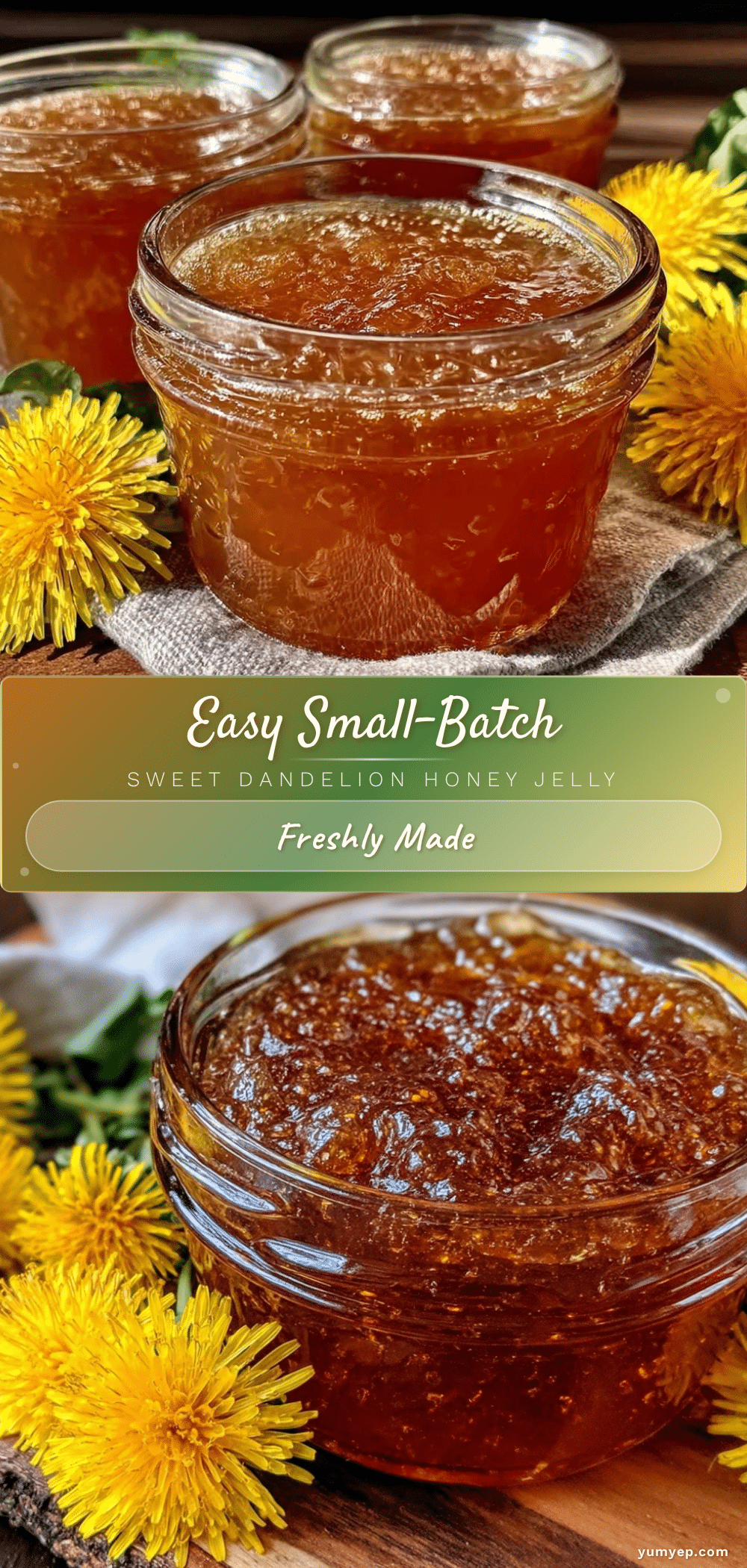
Easy Small-Batch Dandelion Honey Jelly Recipe for First-Time Foragers

A simple and quick recipe to make a sweet, floral dandelion honey jelly perfect for beginners and small batches. This jelly balances the natural bitterness of dandelion petals with honey and lemon for a unique homemade treat.
- Prep Time: 15 minutes
- Cook Time: 30 minutes
- Total Time: 45 minutes plus cooling time
- Yield: Approximately 4 small 4-ounce jars 1x
- Category: Preserves
- Cuisine: American
Ingredients
- 2 cups packed fresh dandelion blossoms (yellow petals only, no stems or greens)
- 1 cup honey (raw or local preferred)
- 2 cups water (filtered)
- 2 tablespoons freshly squeezed lemon juice
- 1/2 cup liquid pectin (such as Sure-Jell)
- 2 cups granulated sugar
Instructions
- Pick about 4 cups of fresh dandelion flowers and pluck the yellow petals only, avoiding green parts. Rinse petals well in cold water to remove dirt or bugs. (10 minutes)
- Place the petals in a large saucepan with 2 cups of water. Bring to a gentle simmer over medium heat, then reduce heat and let simmer for 10 minutes until the water turns a subtle golden color and floral aroma develops. (15 minutes)
- Pour the mixture through a fine mesh strainer lined with cheesecloth into a heatproof bowl or jar. Press on the petals to extract as much liquid as possible, then discard the solids. You should have about 2 cups of dandelion-infused liquid. (5 minutes)
- Return the dandelion liquid to the clean saucepan. Add honey, granulated sugar, and lemon juice, stirring gently to combine. Bring to a boil over medium-high heat, stirring occasionally to dissolve the sugar completely. (10 minutes)
- Once the mixture reaches a rolling boil, stir in the liquid pectin. Boil hard for 1 minute while stirring constantly. Remove from heat immediately to avoid overcooking. (5 minutes)
- Ladle the hot jelly carefully into sterilized small jars, leaving about 1/4 inch of headspace. Wipe rims clean and seal with lids. Let cool completely at room temperature until set, which may take a few hours or overnight. (15 minutes plus cooling)
Notes
Use only yellow dandelion petals to avoid bitterness. Fresh lemon juice and quality pectin improve jelly set. If jelly is too runny, increase pectin or cooking time next batch. Jelly flavor deepens after a day or two. Sterilize jars thoroughly to prevent spoilage. Vegan versions can use agave or maple syrup and plant-based pectin but may set less firmly.
Nutrition
- Serving Size: 1 tablespoon (15 ml)
- Calories: 60
- Sugar: 15
- Carbohydrates: 16
Keywords: dandelion jelly, honey jelly, wild food, foraging recipe, small-batch jelly, homemade jelly, floral jelly, easy jelly recipe