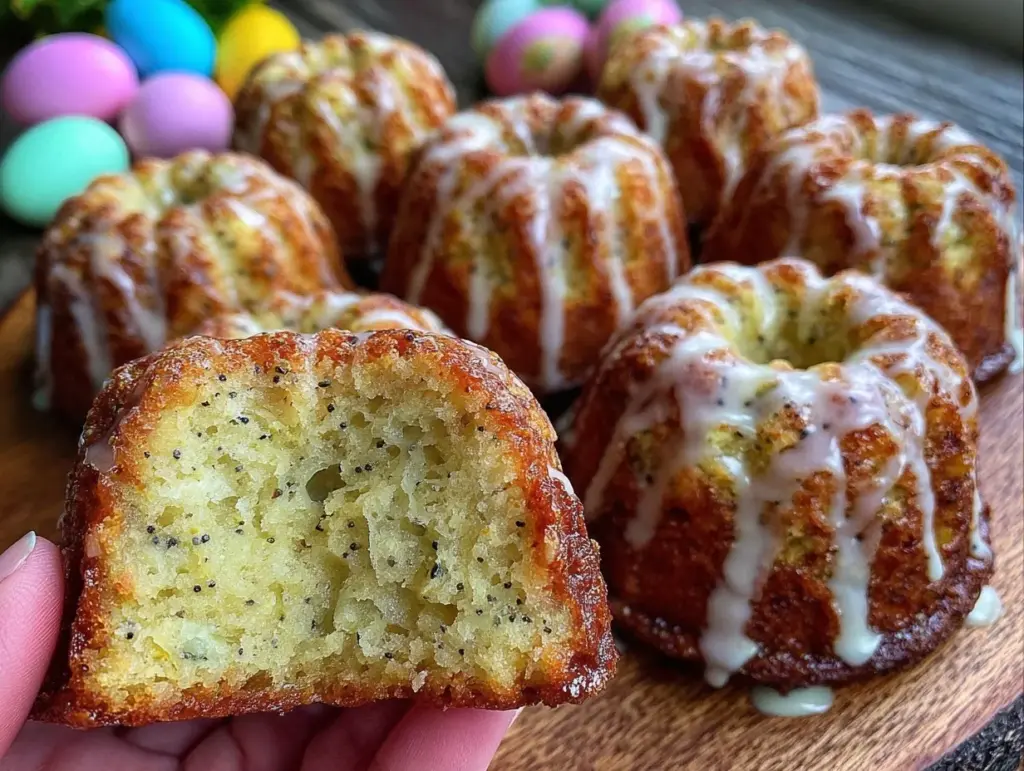
“You really think lemon and poppy seeds belong in tiny, fancy cakes?” my friend Lisa asked, raising an eyebrow as I pulled a tray of moist lemon poppy seed mini bundt cakes with glazed Easter drizzle from the oven. Honestly, I wasn’t sure either the first time I tried this combo. The idea came from a last-minute Easter brunch scramble—no time for a big dessert, but I wanted something that felt special.
What started as a half-experiment, using a few lemons left over from the week and a poppy seed jar lurking in the pantry, turned into an obsession. I made these mini bundt cakes three times that week alone, tweaking the drizzle each round until it landed just right—a little tangy, a little sweet, and glossy enough to catch the light in the morning sun. The texture surprised me too: light but satisfying, with tiny bursts of crunch from the poppy seeds.
There’s something about the quiet kitchen on a spring morning, the scent of lemon zest filling the air, that makes these cakes feel like a personal little celebration. They’re not just pretty; they’ve got that perfect balance of moistness and citrus zing that makes you want to close your eyes and savor each bite. If you ever find yourself needing a quick, cheerful dessert that’s both comforting and a bit fancy, this recipe is the one I keep coming back to.
Why You’ll Love This Recipe
This moist lemon poppy seed mini bundt cakes with glazed Easter drizzle recipe isn’t just another sweet treat — it’s been tested multiple times in my kitchen and has consistently wowed guests and family alike. Here’s why it’s worth your time:
- Quick & Easy: Comes together in under 45 minutes, which makes it perfect for those busy spring mornings or last-minute gatherings.
- Simple Ingredients: You probably have most of these right now—nothing fancy or hard to track down.
- Perfect for Easter or Spring Celebrations: The bright lemon flavor and elegant mini bundt shape make these ideal for holiday brunch or tea time.
- Crowd-Pleaser: Whether kids or adults, these cakes get rave reviews for their moist crumb and that addictive poppy seed crunch.
- Unbelievably Delicious: The glaze adds a sweet-tart finish that’s just the right touch—neither too sugary nor too bland.
What makes this recipe stand out? Honestly, it’s the little details: the way the batter folds poppy seeds uniformly without weighing down the cakes, and that glaze—balanced with just enough lemon juice and powdered sugar to create a shiny, drippy finish. It’s not overly sweet, so you don’t feel guilty indulging. This isn’t a cookie-cutter lemon cake; it’s the one I trust to bring smiles every time.
What Ingredients You Will Need
This recipe uses simple, wholesome ingredients to deliver bold flavor and a satisfying texture without fuss. Most are pantry staples, and substitutions are easy if you’re tweaking for diet or availability.
- All-purpose flour: 1 ¾ cups (220 g) — Look for a brand like King Arthur for consistent results.
- Baking powder: 2 teaspoons — helps the cakes rise nice and fluffy.
- Baking soda: ½ teaspoon — balances the acidity from the lemon juice.
- Salt: ¼ teaspoon — enhances the flavors.
- Granulated sugar: 1 cup (200 g) — sweetens the batter without overpowering.
- Unsalted butter: ½ cup (115 g), softened — adds richness and moisture.
- Large eggs: 2, room temperature — for structure and binding.
- Plain Greek yogurt: ½ cup (120 g) — keeps the cakes tender and moist (can swap with dairy-free coconut yogurt).
- Lemon zest: From 2 medium lemons — fresh zest really lifts the flavor.
- Lemon juice: ⅓ cup (80 ml), freshly squeezed — the star of the show for that bright citrus punch.
- Poppy seeds: 2 tablespoons — the crunch and tiny bursts of nutty flavor.
For the Glazed Easter Drizzle:
- Powdered sugar: 1 cup (120 g) — for smooth sweetness.
- Lemon juice: 2-3 tablespoons — adjust for desired drizzle consistency.
- Milk or cream: 1 tablespoon (optional) — adds silkiness if glaze is too thick.
If you want to try a little twist, swapping plain yogurt for vanilla yogurt adds a subtle sweetness, or using almond flour instead of all-purpose flour will make it gluten-free but denser. When I made these last Easter, I used cranberry-orange bread recipe’s fresh citrus zest technique to boost flavor, and it was a hit!
Equipment Needed
- Mini bundt cake pan: 6-cup capacity ideal for perfect mini cakes. If you don’t have one, standard muffin pans can work but won’t have the signature ring shape.
- Mixing bowls: One large for dry ingredients, one medium for wet.
- Electric mixer or stand mixer: Makes creaming butter and sugar easier, but a sturdy whisk and some elbow grease works too.
- Measuring cups and spoons: Precise measurements keep the cakes consistent every time.
- Microplane grater: Essential for zesting lemons finely without getting bitter pith.
- Cooling rack: Helps cakes cool evenly, preventing sogginess.
I’ve tried silicone mini bundt pans, but metal ones give a better crust and more even baking. When using nonstick pans, a light butter and flour dusting helps release the cakes easily. If you don’t have a microplane, a fine grater or sharp paring knife works for zesting but be careful to avoid the white pith.
Preparation Method

- Preheat your oven to 350°F (175°C). Grease your mini bundt pan thoroughly with butter or nonstick spray, then dust lightly with flour. This step is key to avoid sticking.
- Mix dry ingredients: In a large bowl, whisk together 1 ¾ cups (220 g) all-purpose flour, 2 teaspoons baking powder, ½ teaspoon baking soda, ¼ teaspoon salt, and 2 tablespoons poppy seeds until evenly combined.
- Cream butter and sugar: In a separate bowl, beat ½ cup (115 g) softened unsalted butter with 1 cup (200 g) granulated sugar using an electric mixer on medium speed until light and fluffy, about 3 minutes. This aerates the batter for a tender crumb.
- Add eggs: Beat in 2 large eggs, one at a time, mixing well after each addition. If the mixture looks curdled, don’t worry, that’s normal before adding the wet ingredients.
- Incorporate yogurt and lemon: Stir in ½ cup (120 g) plain Greek yogurt, zest of 2 lemons, and ⅓ cup (80 ml) freshly squeezed lemon juice. Mix on low speed until just combined—avoid overmixing to keep cakes tender.
- Combine wet and dry: Gradually add the dry ingredients to the wet mixture in three parts, folding gently with a spatula after each addition. The batter should be smooth but thick enough to hold shape when spooned.
- Fill the pans: Spoon the batter evenly into the prepared mini bundt pan cups, filling each about ¾ full to allow room for rising.
- Bake: Place the pan in the oven and bake for 18-22 minutes. Start checking at 18 minutes by inserting a toothpick in the center; it should come out clean or with a few moist crumbs.
- Cool cakes: Allow the cakes to cool in the pan for 10 minutes, then carefully invert onto a wire rack to cool completely before glazing.
- Prepare the glaze: Whisk together 1 cup (120 g) powdered sugar, 2-3 tablespoons lemon juice, and 1 tablespoon milk or cream (if needed) until smooth and pourable but not too runny.
- Glaze the cakes: Drizzle the lemon glaze over the cooled bundt cakes using a spoon or small piping bag. Let the glaze set for about 15 minutes before serving.
Pro tip: If your batter feels too thick after mixing, a splash of milk can help loosen it slightly. Also, don’t skip the cooling step before glazing—warm cakes will melt the glaze into a sticky mess.
Cooking Tips & Techniques
Getting that perfect moist crumb and balanced lemon flavor takes a bit of finesse, but these tips make it much easier:
- Room temperature ingredients: Eggs and butter at room temp blend better and create a smoother batter.
- Zesting lemons: Only zest the yellow part; the bitter white pith can ruin the flavor.
- Don’t overmix: Once you add flour, fold gently to avoid developing gluten, which can make the cakes tough.
- Measure flour correctly: Spoon and level your flour instead of scooping directly from the bag to avoid dense cakes.
- Watch baking time closely: Mini bundt cakes bake fast, so check early to prevent dryness.
- Glaze consistency: If the glaze is too thick, add lemon juice a few drops at a time; too thin, add powdered sugar gradually.
Once, I overbaked a batch and ended up with crumbly, dry cakes. Since then, I always rely on the toothpick test and err on the side of slightly underbaking. These cakes continue to remind me that a little patience makes all the difference. Also, while the poppy seeds might seem minor, they really add a wonderful texture contrast that you don’t want to skip.
Variations & Adaptations
This recipe is wonderfully flexible, making it easy to adjust for different tastes and dietary needs.
- Berry Burst: Stir in ½ cup fresh or frozen blueberries or raspberries to the batter for a fruity surprise.
- Gluten-Free Option: Swap all-purpose flour for a 1:1 gluten-free baking flour blend. The texture might be a tad denser but still delicious.
- Dairy-Free Version: Use coconut yogurt and dairy-free butter alternatives. The lemon flavor holds up well without dairy richness.
- Herbal Twist: Add 1 teaspoon finely chopped fresh thyme or rosemary to the batter for a subtle herbal note that pairs beautifully with lemon.
- Spiced Variation: Mix ½ teaspoon ground cardamom or cinnamon into the dry ingredients for a warmer flavor profile.
Personally, I love trying the berry version in spring alongside my snowball cookies recipe for a festive spread. The bright lemon and berry notes complement each other perfectly.
Serving & Storage Suggestions
These mini bundt cakes are best served at room temperature or slightly chilled, letting the lemon glaze gently set but remain glossy. They make a lovely centerpiece for brunch or afternoon tea, especially alongside light dishes like fresh fruit or a simple green salad.
Pair them with a hot cup of Earl Grey or a cold glass of sparkling lemonade for a refreshing combo. For Easter celebrations, they complement savory dishes such as creamy lemon chicken piccata beautifully.
To store, keep the cakes in an airtight container at room temperature for up to 2 days. For longer storage, refrigerate for up to 5 days or freeze unglazed cakes wrapped tightly in plastic wrap and foil for up to 3 months. When ready to serve, thaw overnight in the fridge and add the glaze fresh to keep that shiny finish.
Reheating is easy: pop the cakes in a 300°F (150°C) oven for 5-7 minutes to warm through without drying out. Over time, the lemon flavor actually deepens, making leftovers even tastier.
Nutritional Information & Benefits
Each mini bundt cake contains approximately:
| Nutrient | Amount per cake |
|---|---|
| Calories | 180 kcal |
| Fat | 8 g |
| Carbohydrates | 25 g |
| Protein | 3 g |
| Sugar | 14 g |
The lemon juice and zest offer a boost of vitamin C, a natural antioxidant. Poppy seeds contribute small amounts of calcium, iron, and fiber. Using Greek yogurt adds protein and keeps the cakes moist without extra fat. This recipe fits well within a balanced diet and can be modified easily for gluten-free or dairy-free needs.
For those mindful of allergens, note the presence of eggs, dairy, and gluten—though substitutions can be made to accommodate sensitivities. I find this recipe strikes a nice balance between indulgence and wholesome ingredients, perfect for a treat that doesn’t weigh you down.
Conclusion
These moist lemon poppy seed mini bundt cakes with glazed Easter drizzle have quietly become a favorite for any springtime gathering in my home. They’re simple enough to whip up on a whim but special enough to impress guests without fuss. I love how the bright lemon and subtle crunch make every bite feel fresh and satisfying.
Feel free to customize the glaze or try one of the variations to make the recipe your own. I always encourage a little kitchen creativity—sometimes the best desserts come from happy accidents or small tweaks.
When you give this recipe a try, I’d love to hear how you make it yours. Drop a comment, share your photos, or let me know your favorite pairings. Here’s to many cozy, joyful moments around the table with these delightful little cakes.
FAQs
- Can I make these mini bundt cakes ahead of time? Yes! You can bake them a day or two in advance and store in an airtight container. Add the glaze just before serving for the best look and taste.
- What if I don’t have a mini bundt pan? A standard muffin tin can work, though the shape won’t be the same. Baking time may vary slightly, so check with a toothpick.
- Can I freeze these cakes? Absolutely. Freeze unglazed cakes wrapped well, then thaw before glazing and serving.
- How do I prevent the cakes from sticking to the pan? Grease thoroughly with butter and dust with flour, or use a nonstick spray designed for baking. Let the cakes cool slightly before removing from the pan.
- Can I use dried lemon zest instead of fresh? Fresh zest is best for brightness, but if you must, use about half the amount of dried zest since it’s more concentrated.
Pin This Recipe!
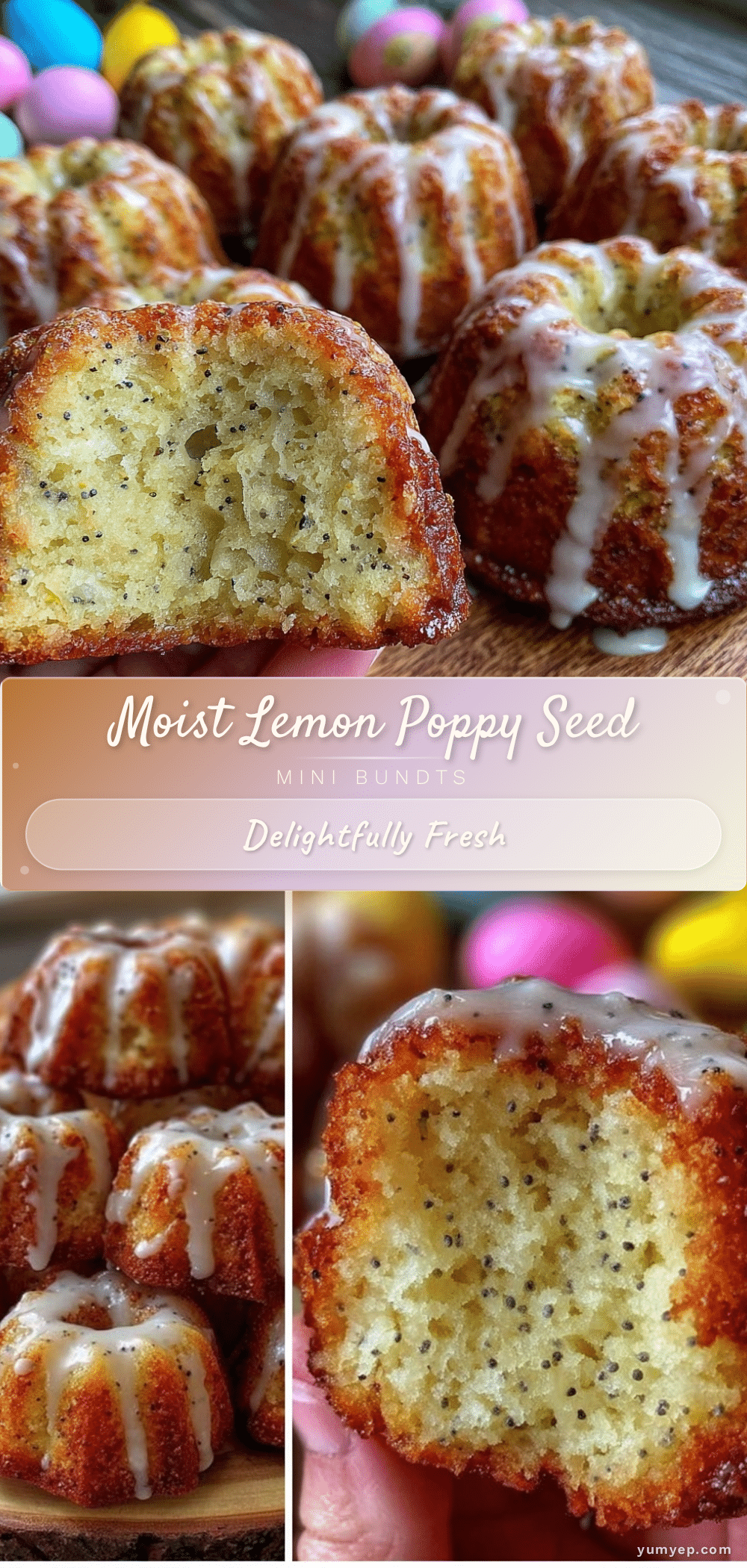
Moist Lemon Poppy Seed Mini Bundt Cakes with Glazed Easter Drizzle

These moist lemon poppy seed mini bundt cakes feature a bright citrus zing and a sweet-tart glaze, perfect for Easter or spring celebrations. They are quick to make, with a tender crumb and delightful poppy seed crunch.
- Prep Time: 15 minutes
- Cook Time: 22 minutes
- Total Time: 37 minutes
- Yield: 6 mini bundt cakes 1x
- Category: Dessert
- Cuisine: American
Ingredients
- 1 ¾ cups (220 g) all-purpose flour
- 2 teaspoons baking powder
- ½ teaspoon baking soda
- ¼ teaspoon salt
- 1 cup (200 g) granulated sugar
- ½ cup (115 g) unsalted butter, softened
- 2 large eggs, room temperature
- ½ cup (120 g) plain Greek yogurt (can substitute dairy-free coconut yogurt)
- Zest of 2 medium lemons
- ⅓ cup (80 ml) freshly squeezed lemon juice
- 2 tablespoons poppy seeds
- For the glaze:
- 1 cup (120 g) powdered sugar
- 2–3 tablespoons lemon juice
- 1 tablespoon milk or cream (optional)
Instructions
- Preheat your oven to 350°F (175°C). Grease your mini bundt pan thoroughly with butter or nonstick spray, then dust lightly with flour.
- In a large bowl, whisk together the flour, baking powder, baking soda, salt, and poppy seeds until evenly combined.
- In a separate bowl, beat the softened butter with granulated sugar using an electric mixer on medium speed until light and fluffy, about 3 minutes.
- Beat in the eggs one at a time, mixing well after each addition.
- Stir in the Greek yogurt, lemon zest, and lemon juice. Mix on low speed until just combined.
- Gradually add the dry ingredients to the wet mixture in three parts, folding gently with a spatula after each addition until smooth but thick.
- Spoon the batter evenly into the prepared mini bundt pan cups, filling each about ¾ full.
- Bake for 18-22 minutes, checking at 18 minutes with a toothpick; it should come out clean or with a few moist crumbs.
- Allow the cakes to cool in the pan for 10 minutes, then invert onto a wire rack to cool completely.
- Whisk together powdered sugar, lemon juice, and milk or cream (if needed) until smooth and pourable.
- Drizzle the lemon glaze over the cooled bundt cakes and let set for about 15 minutes before serving.
Notes
Use room temperature eggs and butter for better batter consistency. Only zest the yellow part of lemons to avoid bitterness. Fold dry ingredients gently to avoid tough cakes. Check baking time closely to prevent dryness. If glaze is too thick, add lemon juice gradually; if too thin, add powdered sugar gradually. Let cakes cool completely before glazing to avoid melting the glaze.
Nutrition
- Serving Size: 1 mini bundt cake
- Calories: 180
- Sugar: 14
- Fat: 8
- Carbohydrates: 25
- Protein: 3
Keywords: lemon poppy seed cake, mini bundt cakes, Easter dessert, glazed lemon cake, spring dessert, quick lemon cake