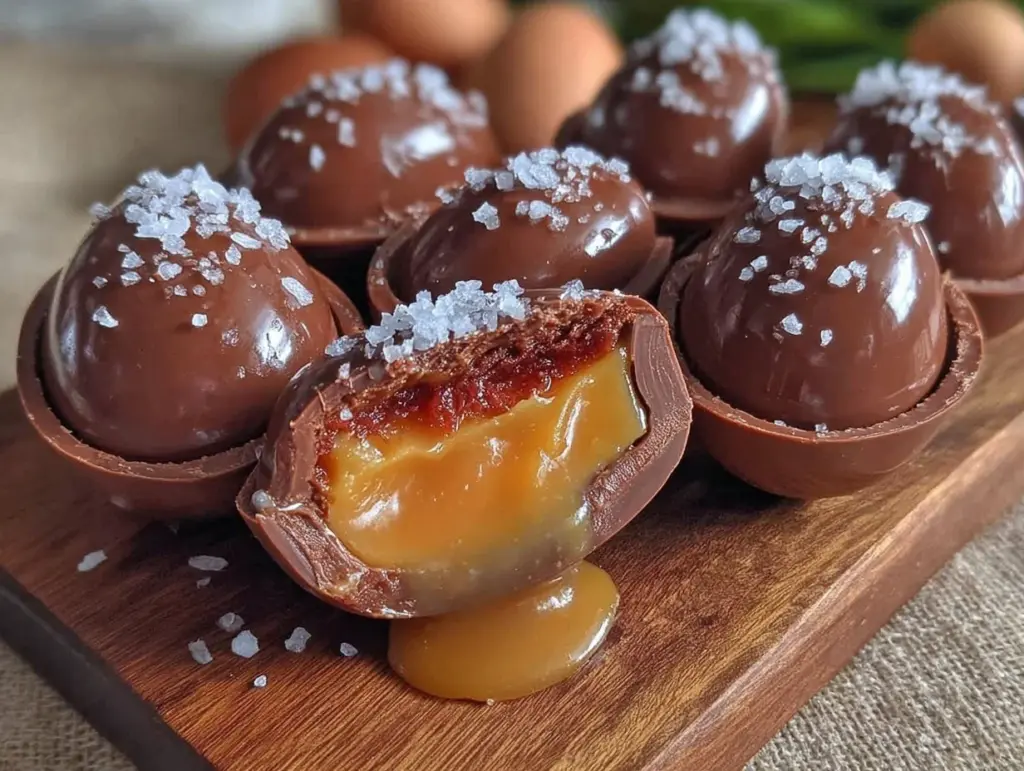
“You sure this will work?” my sister asked, eyeing the glossy caramel bubbling gently on the stove. Honestly, I wasn’t totally convinced either. I’d been fiddling with caramel for what felt like hours, trying to get it just right for these homemade chocolate caramel Easter eggs with sea salt. It was one of those late afternoons when the kitchen smelled like toasted sugar and chocolate, and the kids were buzzing around with eager, sticky fingers.
I’d stumbled onto this recipe almost by accident—trying to whip up a quick Easter treat without a trip to the store. The idea of combining silky caramel wrapped in rich chocolate, finished with a sprinkle of flaky sea salt, sounded fancy but doable. Turns out, once you get the rhythm of making the caramel and tempering the chocolate, it’s surprisingly straightforward.
What really made these Easter eggs stick in my mind was the way my youngest’s eyes lit up when she bit through the thin chocolate shell into that gooey caramel center. It was a quiet moment—just her and me, sharing a sweet secret in the middle of a busy holiday weekend.
That moment, the simplicity of home, and a recipe that actually delivers every time—that’s why I keep going back to these chocolate caramel Easter eggs with sea salt. No fuss, no fancy ingredients, just pure, melt-in-your-mouth magic that feels like a tiny celebration each time. So, if you’re thinking about making a special treat this Easter, these eggs might just become your go-to, too.
Why You’ll Love This Recipe
After making these chocolate caramel Easter eggs with sea salt more times than I can count, I’ve come to appreciate what makes this recipe stand out. Here’s why it might become your favorite holiday treat:
- Quick & Easy: The whole process takes about 45 minutes from start to finish—perfect when you need a last-minute Easter surprise.
- Simple Ingredients: You probably have most of these staples—sugar, cream, chocolate, and sea salt—in your pantry already. No extra grocery runs!
- Perfect for Holiday Gifting: These eggs make charming gifts or party treats that everyone will rave about.
- Crowd-Pleaser: The balance of sweet caramel and slightly salty chocolate shell always disappears fast, especially with kids around.
- Unbelievably Delicious: The contrast of textures—the crack of the chocolate shell and the gooey caramel inside—is seriously next-level indulgence.
- Unique Touch: The sprinkle of flaky sea salt isn’t just decoration; it cuts through the sweetness beautifully and brings a grown-up twist.
This isn’t just any caramel egg recipe. The caramel is cooked to a perfect soft-ball stage, yielding a luscious, chewy center. The chocolate coating is tempered just enough to get that satisfying snap without any dullness. I’ve tried other versions, but this one has the right balance—no sticky mess, just pure joy in every bite.
Honestly, it’s the kind of recipe that makes you close your eyes after the first taste and say, “Yep, that’s the one.” Whether you’re impressing family or just indulging yourself, these eggs bring a little bit of magic to your Easter table.
What Ingredients You Will Need
This recipe uses straightforward, wholesome ingredients to deliver bold flavor and satisfying texture without the fuss. Most are pantry staples, and substitutions are easy if you need them.
- Granulated sugar (2 cups / 400g) – The base for the caramel, make sure it’s pure white for best results.
- Unsalted butter (6 tablespoons / 85g), cut into pieces – Adds richness and smoothness to the caramel.
- Heavy cream (1/2 cup / 120ml), warmed – Use full-fat cream for luscious texture; you can swap with coconut cream for dairy-free.
- Vanilla extract (1 teaspoon) – A touch of warmth and depth.
- Flaky sea salt (about 1 teaspoon) – For sprinkling on top; Maldon or any coarse finishing salt works well.
- Good quality dark chocolate (12 ounces / 340g), chopped – I recommend Valrhona or Ghirardelli for smooth melting and rich flavor.
- Corn syrup (2 tablespoons / 30ml) – Helps prevent crystallization in the caramel.
- Optional: edible gold leaf or colored sugar sprinkles – For festive decoration if you want to get fancy.
Feel free to swap dark chocolate for milk or semi-sweet if you prefer a sweeter shell, but dark chocolate really balances the caramel’s richness. Also, if you’re making this around springtime, fresh edible flowers or pastel sugar can add a lovely touch to the finished eggs.
Equipment Needed
- Heavy-bottomed saucepan: Crucial for even heat distribution to avoid burning the caramel. A 2 to 3-quart size works well.
- Candy thermometer: Highly recommended to hit the soft-ball stage (235-240°F / 113-116°C) for perfect caramel texture.
- Silicone spatula: For stirring the caramel without scratching your pan.
- Chocolate molds: Egg-shaped silicone molds are ideal—flexible and easy to pop the chocolates out.
- Double boiler or microwave-safe bowl: For melting and tempering chocolate efficiently.
- Baking sheet lined with parchment paper: To set the molded eggs after filling.
If you don’t have a candy thermometer, you can test the caramel by dropping a small amount into cold water—it should form a soft, pliable ball. I use silicone molds because they’re forgiving and easy to clean, especially when making batches for the kids’ Easter baskets. If you’re on a budget, a sturdy muffin tin lined with foil can work as a substitute.
Preparation Method
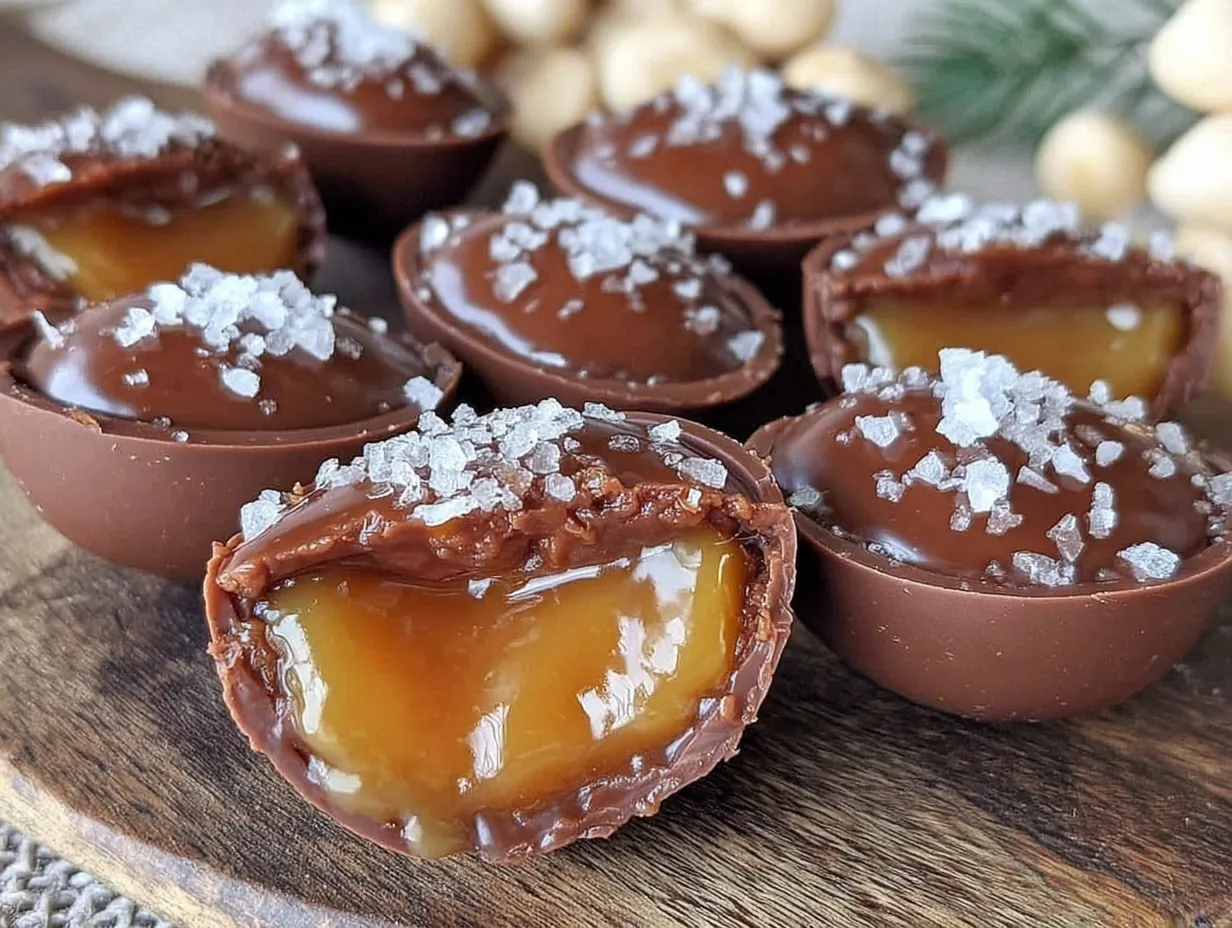
- Prepare your molds: Make sure your chocolate egg molds are clean and dry. Lightly warm them by holding over warm water briefly to prevent chocolate from seizing.
- Melt the chocolate: Use a double boiler or microwave in 30-second bursts stirring in between until smooth. Temper the chocolate by cooling slightly, then warming gently to about 88-90°F (31-32°C). This step ensures a shiny finish and snap.
- Coat the molds: Spoon or brush a thin layer of tempered chocolate into each mold, making sure to cover all sides evenly. Tap gently to remove air bubbles. Place molds upside down over parchment to drain excess chocolate and chill in the fridge for 10 minutes.
- Repeat coating: Apply a second layer of chocolate the same way to strengthen the shell. Chill again to set fully (about 15 minutes).
- Make the caramel: In your heavy-bottomed saucepan, combine sugar and corn syrup over medium heat. Stir gently until sugar dissolves, then stop stirring and let it simmer until the mixture turns a deep amber (about 8-10 minutes). Watch carefully to avoid burning!
- Add butter and cream: Remove from heat and quickly whisk in butter pieces until melted. Slowly pour in warmed cream while stirring constantly (be careful, it will bubble vigorously). Return to medium-low heat and cook until the caramel reaches 235-240°F (soft-ball stage) on your thermometer.
- Flavor the caramel: Stir in vanilla extract. Let caramel cool slightly but not harden.
- Fill the egg shells: Spoon caramel into each chocolate shell, leaving a small gap at the top for sealing.
- Seal the eggs: Cover caramel with a final layer of tempered chocolate. Smooth the surface and chill until fully set (at least 30 minutes).
- Demold and finish: Carefully pop the eggs out of molds. Sprinkle with flaky sea salt immediately to stick to the chocolate. If desired, add edible decorations while chocolate is still tacky.
Pro tip: Keep a damp cloth nearby to wipe any sugar crystals off your utensils as you go, and never leave the caramel unattended—those few minutes make all the difference!
Cooking Tips & Techniques
Making caramel can be intimidating, but a few tricks make all the difference. First, use a heavy-bottomed pan so heat distributes evenly, preventing hot spots that burn the sugar. Stirring only at the start helps the sugar dissolve, then let it bubble undisturbed to develop color. It’s tempting to rush, but patience pays off here.
When adding butter and cream, be ready for a vigorous bubble-up—slowly pouring warm cream helps reduce splattering. Using a candy thermometer is a lifesaver to hit exactly that soft-ball stage without guesswork. If you don’t have one, test the caramel by dropping a bit into cold water—it should form a soft, pliable ball that you can shape with your fingers.
Tempering chocolate might sound fancy, but it’s mostly about controlling temperature. If you skip it, chocolate can look dull or melt too easily. A simple method is to melt two-thirds of the chocolate, then stir in the remaining third off heat to cool it down. This stabilizes the cocoa butter crystals for a glossy finish.
One lesson I learned the hard way: always dry your molds completely. Any trace of water causes chocolate to seize and ruin the finish. Also, when sealing the eggs, smooth the final chocolate layer quickly before chilling to avoid uneven surfaces.
Variations & Adaptations
These chocolate caramel Easter eggs are versatile, so feel free to get creative:
- Nutty twist: Add finely chopped toasted pecans or almonds to the caramel before filling for a delightful crunch. I often toss in some of my crispy candied pecans for an extra treat.
- Dairy-free version: Swap butter for coconut oil and use coconut cream instead of heavy cream for a luscious vegan caramel.
- Flavored caramel: Stir in a tablespoon of espresso or a pinch of cinnamon for a subtle flavor twist that cuts through the sweetness.
- Chocolate variations: Use white chocolate for the shell and sprinkle with crushed freeze-dried strawberries for a spring vibe.
- Mini eggs: Use smaller molds to make bite-sized treats perfect for party favors or Easter baskets.
Once, I tried swirling in some homemade hot cocoa bomb mix into the caramel for a chocolaty surprise—definitely worth a try if you want to impress!
Serving & Storage Suggestions
Serve these chocolate caramel Easter eggs chilled or at room temperature. The chocolate shell should have that satisfying snap when bitten, revealing the soft, chewy caramel inside. Presentation-wise, arrange them on a pretty plate or nestle them in colorful paper cups for gifting.
They pair beautifully with a cup of rich coffee or a light, floral tea to balance the sweetness. For an Easter brunch, they make a stunning sweet addition alongside dishes like cinnamon roll casserole or cranberry-orange bread.
Store the eggs in an airtight container in the refrigerator for up to two weeks. If you want to keep them longer, they freeze well for up to three months—just thaw in the fridge overnight before serving. Reheating isn’t necessary, but if you prefer softer caramel, let them sit out at room temperature for about 15 minutes.
Over time, the flavors deepen—salt becomes more pronounced and the caramel mellows, making leftovers even more enjoyable.
Nutritional Information & Benefits
Each chocolate caramel Easter egg contains roughly 150-200 calories depending on size, with most calories coming from sugars and fats. The dark chocolate offers antioxidants and minerals like iron and magnesium, while the sea salt provides trace minerals and balances blood sugar spikes by moderating sweetness.
Though indulgent, this treat can fit into a balanced diet when enjoyed in moderation. Using high-quality dark chocolate with at least 60% cocoa can provide a slightly lower sugar option. For dairy-free or vegan diets, the recipe adapts easily with coconut-based ingredients.
From a wellness perspective, the occasional rich treat like these eggs can boost mood and satisfy cravings, helping avoid overindulgence later.
Conclusion
These perfect homemade chocolate caramel Easter eggs with sea salt are a little labor of love that pays off every time. They strike the perfect balance of indulgence and simplicity, making them a standout treat for your Easter celebrations or any sweet occasion.
Feel free to tweak the recipe to suit your taste—whether that’s adding nuts, switching chocolates, or trying a dairy-free version. The process is forgiving and fun, especially if you have little helpers around.
For me, these eggs bring back that quiet kitchen moment with my kids and the sweet buzz of a holiday well-celebrated. I hope they bring a bit of that joy to your table, too. If you give them a try, I’d love to hear how you make them your own!
Frequently Asked Questions
How do I know when the caramel is done?
Use a candy thermometer to reach 235-240°F (113-116°C), which is the soft-ball stage. Alternatively, drop a small amount into cold water; it should form a soft, pliable ball that holds shape but is still chewy.
Can I make these eggs ahead of time?
Yes! They store well in the fridge for up to two weeks and can be frozen for up to three months. Just thaw overnight in the fridge before serving.
What if my chocolate doesn’t harden properly?
This usually means the chocolate wasn’t tempered correctly or the molds were damp. Try tempering again or make sure molds are completely dry before coating.
Can I use milk chocolate instead of dark chocolate?
Absolutely. Milk chocolate will give a sweeter, creamier shell. Just keep in mind the flavor balance may be sweeter overall, so you might want to reduce caramel sweetness slightly if desired.
Is there a vegan version of this recipe?
Yes! Replace butter with coconut oil and heavy cream with full-fat coconut cream. Use dairy-free chocolate to make the whole recipe vegan-friendly.
For more sweet holiday treats to try alongside these, you might enjoy the snowball cookies or the cranberry orange bread—both perfect for sharing and full of cozy flavors.
Pin This Recipe!
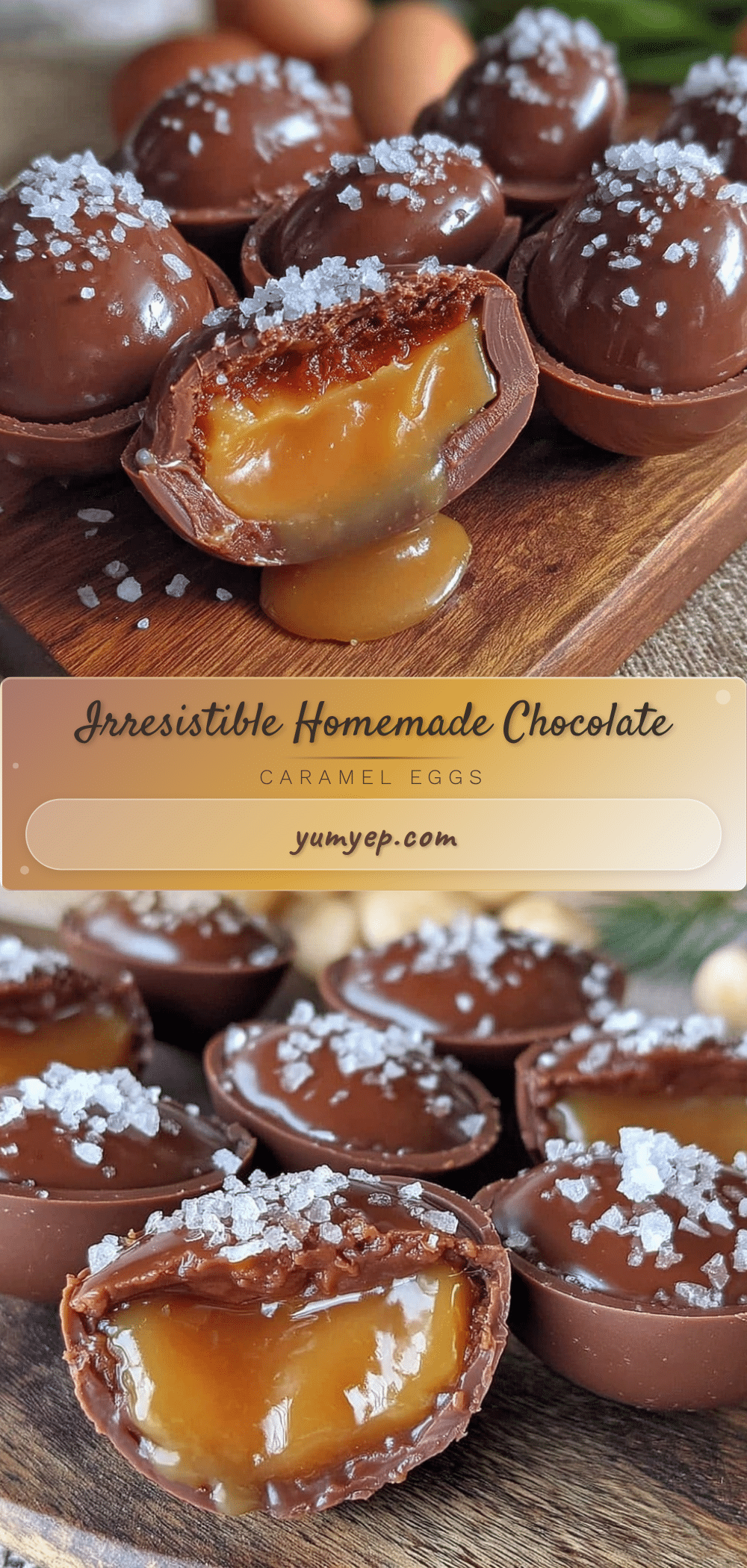
Perfect Homemade Chocolate Caramel Easter Eggs with Sea Salt

These homemade chocolate caramel Easter eggs feature a glossy tempered chocolate shell filled with luscious soft-ball stage caramel, finished with a sprinkle of flaky sea salt for a perfect balance of sweet and salty.
- Prep Time: 15 minutes
- Cook Time: 30 minutes
- Total Time: 45 minutes
- Yield: 12 eggs 1x
- Category: Dessert
- Cuisine: American
Ingredients
- 2 cups granulated sugar (400g)
- 6 tablespoons unsalted butter (85g), cut into pieces
- 1/2 cup heavy cream (120ml), warmed
- 1 teaspoon vanilla extract
- About 1 teaspoon flaky sea salt (Maldon or coarse finishing salt)
- 12 ounces good quality dark chocolate (340g), chopped
- 2 tablespoons corn syrup (30ml)
- Optional: edible gold leaf or colored sugar sprinkles for decoration
Instructions
- Prepare your molds: Make sure your chocolate egg molds are clean and dry. Lightly warm them by holding over warm water briefly to prevent chocolate from seizing.
- Melt the chocolate: Use a double boiler or microwave in 30-second bursts stirring in between until smooth. Temper the chocolate by cooling slightly, then warming gently to about 88-90°F (31-32°C) for a shiny finish and snap.
- Coat the molds: Spoon or brush a thin layer of tempered chocolate into each mold, covering all sides evenly. Tap gently to remove air bubbles. Place molds upside down over parchment to drain excess chocolate and chill in the fridge for 10 minutes.
- Repeat coating: Apply a second layer of chocolate the same way to strengthen the shell. Chill again to set fully (about 15 minutes).
- Make the caramel: In a heavy-bottomed saucepan, combine sugar and corn syrup over medium heat. Stir gently until sugar dissolves, then stop stirring and let simmer until mixture turns deep amber (8-10 minutes). Watch carefully to avoid burning.
- Add butter and cream: Remove from heat and quickly whisk in butter pieces until melted. Slowly pour in warmed cream while stirring constantly (be careful, it will bubble vigorously). Return to medium-low heat and cook until caramel reaches 235-240°F (soft-ball stage) on thermometer.
- Flavor the caramel: Stir in vanilla extract. Let caramel cool slightly but not harden.
- Fill the egg shells: Spoon caramel into each chocolate shell, leaving a small gap at the top for sealing.
- Seal the eggs: Cover caramel with a final layer of tempered chocolate. Smooth the surface and chill until fully set (at least 30 minutes).
- Demold and finish: Carefully pop the eggs out of molds. Sprinkle with flaky sea salt immediately to stick to the chocolate. Add edible decorations if desired while chocolate is still tacky.
Notes
Use a candy thermometer to ensure caramel reaches soft-ball stage (235-240°F). If no thermometer, test by dropping caramel in cold water to form a soft, pliable ball. Always dry molds completely to prevent chocolate seizing. Temper chocolate properly for a shiny finish and snap. Store eggs in airtight container in fridge up to 2 weeks or freeze up to 3 months.
Nutrition
- Serving Size: 1 egg
- Calories: 175
- Sugar: 18
- Sodium: 50
- Fat: 11
- Saturated Fat: 7
- Carbohydrates: 20
- Fiber: 2
- Protein: 2
Keywords: chocolate caramel Easter eggs, homemade Easter treats, sea salt chocolate eggs, caramel candy recipe, holiday chocolate recipe