Introduction
Let me tell you—nothing beats the mouthwatering aroma of a perfect prime rib roast slowly crisping in the oven, with garlicky herbs mingling in the air and that unmistakable scent of beef promising something truly special. The first time I made this prime rib roast with rich au jus, it was Christmas Eve, and the house felt alive with anticipation. I was instantly hooked after that first taste—the kind of moment where you pause, take a deep breath, and just smile because you know you’re onto something truly special.
When I was knee-high to a grasshopper, my grandma used to make Sunday roasts that pulled everyone to the table, forks ready and eyes wide. Years ago, I tried to recreate that magic for my own family, trying recipe after recipe until I stumbled upon this method—honestly, I wish I’d found it sooner. My crew couldn’t stop sneaking slices off the cutting board (and who could blame them? That crust is irresistible).
This isn’t just a recipe; it’s pure, nostalgic comfort—the kind that feels like a warm hug on a chilly holiday night. It’s perfect for potlucks, a showstopper for your Christmas or Easter feast, or just a way to brighten up your Pinterest board with something guaranteed to impress. The prime rib roast with rich au jus is dangerously easy to get right, and after testing it more times than I care to admit (in the name of research, of course), it’s become a staple for family gatherings, gifting, and cozy dinners. You know what? You’re going to want to bookmark this one—it’s that good.
Why You’ll Love This Recipe
After years of holiday dinners and more than a few trial runs, I can say with confidence: this perfect prime rib roast recipe with rich au jus is the one folks talk about long after the plates are cleared. Here’s why you’ll fall head over heels for this recipe (and why it’s become my go-to for celebrations).
- Quick & Easy: Though prime rib sounds fancy, this comes together with straightforward steps and minimal fuss—most of your time is hands-off, making it perfect for busy hosts.
- Simple Ingredients: No need for a specialty grocery run—just good beef, some pantry staples, and fresh herbs. You likely have everything you need already.
- Perfect for Special Occasions: This roast is made for holidays, big family meals, or any moment that needs a little extra wow-factor. It’s the centerpiece you’ll be proud to serve.
- Crowd-Pleaser: Even picky eaters seem to go back for seconds—the juicy meat and savory au jus win over kids, adults, and everyone in between.
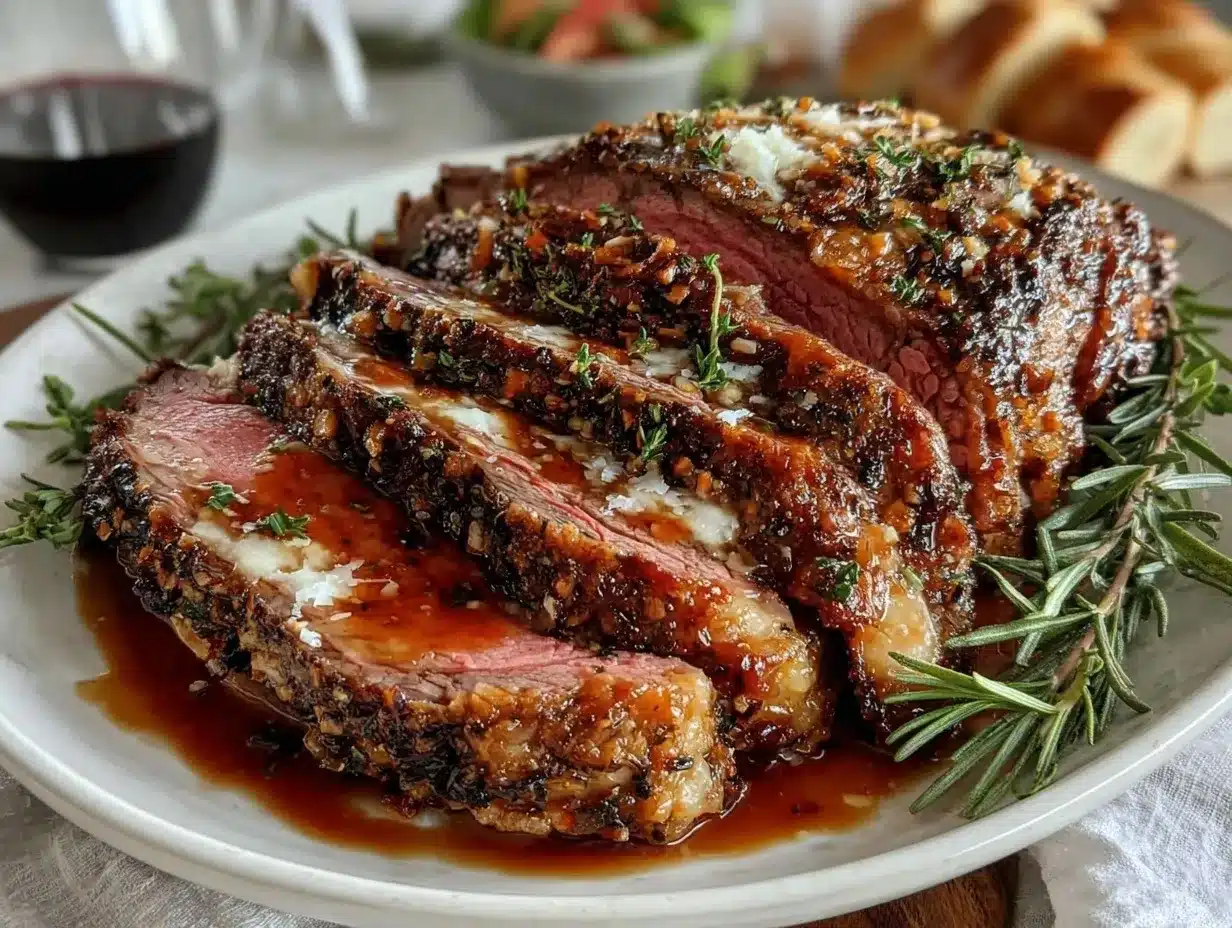
- Unbelievably Delicious: The crust is salty, fragrant, and crisp, while the inside stays melt-in-your-mouth tender. The au jus is so good you’ll want to drizzle it on everything.
What makes this perfect prime rib roast different? For starters, I use a reverse-sear technique—roasting low and slow, then finishing with a blast of high heat. This locks in juices and creates unbeatable texture. The au jus isn’t just a side—it’s crafted from pan drippings, beef stock, and a splash of red wine, so every bite bursts with deep, rich flavor.
This isn’t just good—it’s the kind of recipe that makes you close your eyes after the first bite. Comfort food, reimagined for the holidays: faster, easier, and just as soul-soothing. You’ll impress guests without breaking a sweat, and even weeknight dinners feel special.
What Ingredients You Will Need
This perfect prime rib roast with rich au jus uses simple, wholesome ingredients to deliver bold flavor and a satisfying texture—no complicated prep or hard-to-find items. Most are pantry staples or easy to swap if needed, so you can focus on what matters: a show-stopping roast.
- For the Prime Rib Roast:
- 5-6 lbs (2.25-2.75 kg) bone-in prime rib (also called standing rib roast) – ask your butcher for a well-marbled roast
- 2 tablespoons kosher salt – for perfect seasoning and crust
- 2 tablespoons freshly ground black pepper – adds zing
- 2 tablespoons garlic powder – classic flavor
- 1 tablespoon onion powder – subtle sweetness
- 2 tablespoons fresh rosemary, finely chopped (or 2 teaspoons dried) – for herby aroma
- 2 tablespoons fresh thyme leaves (or 2 teaspoons dried) – earthy and bright
- 1/4 cup unsalted butter, softened – helps herbs stick and browns beautifully
- Optional: 2-3 cloves fresh garlic, minced (for extra punch)
- For the Rich Au Jus:
- 2 cups (480 ml) beef stock – I prefer low-sodium, homemade if you have time
- 1 cup (240 ml) dry red wine – Cabernet Sauvignon or Merlot works best
- Pan drippings from roast – the secret to deep flavor
- 1 small shallot, finely chopped – adds a gentle sweetness
- 1 tablespoon Worcestershire sauce – umami boost
- Salt and pepper to taste
Ingredient tips: Look for beef with an even fat cap and plenty of marbling. If you need a gluten-free option, all ingredients here are naturally gluten-free—just double-check your stock and Worcestershire. You can swap the wine for extra stock if you prefer alcohol-free.
Brands I trust: For beef stock, I like Kitchen Basics or Better Than Bouillon for consistent flavor. If you’re lucky enough to have access to quality local beef, that’s always my first choice.
For herbs, fresh is best, but dried works in a pinch. In summer, swap in fresh parsley or chives for a lighter flavor profile.
Equipment Needed
- Large roasting pan with rack – helps the roast cook evenly and allows air to circulate.
- Instant-read thermometer or meat probe – absolutely essential for perfect doneness (I use Thermapen, but any reliable digital thermometer works).
- Chef’s knife – for carving the roast cleanly.
- Cutting board – preferably with a juice groove to catch drippings.
- Small saucepan – for preparing the au jus.
- Aluminum foil – to tent the roast while it rests.
- Mixing bowl – to blend the herb butter rub.
If you don’t have a roasting rack, you can improvise with thick-cut root vegetables (carrots, onions) under the roast, which adds flavor to the drippings. I’ve used a plain baking sheet in a pinch, but a sturdy pan helps with heat distribution.
My old thermometer gave me some trouble years back—always double-check yours for accuracy before the big day. If budget’s tight, there are plenty of affordable thermometers on Amazon that do the job (just read reviews!).
Keep your knives sharp and your roasting pan clean—these tools last for years with a little TLC.
Preparation Method
-
Prep the Prime Rib: Remove the roast from the fridge 2 hours before cooking to allow it to come to room temperature (this helps it cook evenly). Pat dry with paper towels.
Note: The meat should feel cool but not cold to the touch. -
Mix the Herb Butter: In a bowl, combine softened butter, salt, pepper, garlic powder, onion powder, rosemary, thyme, and minced garlic (if using). Blend until it forms a thick paste.
Tip: If your butter is too firm, microwave it for 10 seconds. -
Season the Roast: Rub the herb butter mixture all over the roast, pressing it into crevices. Make sure to coat the ends and fat cap generously.
Sensory cue: The roast should look glossy and speckled with herbs. - Preheat the Oven: Set oven to 225°F (107°C) for the reverse-sear method.
-
Roast Low and Slow: Place the roast bone-side down on a rack in your roasting pan. Insert a meat thermometer into the thickest part, avoiding bone.
Time estimate: Roast for about 3-4 hours, or until the internal temperature reaches 120°F (49°C) for rare, 130°F (54°C) for medium rare.
Troubleshooting: If the roast is browning too fast, tent loosely with foil. -
Rest the Roast: Remove from oven and tent with foil for 30-45 minutes. The internal temp will rise by 5-10°F (3-6°C).
Warning: Don’t skip resting—this keeps juices in and makes carving easier. -
Blast with High Heat: Increase oven temp to 500°F (260°C). Remove foil and return roast to oven for 8-10 minutes, just until the crust crisps up and turns deep golden brown.
Sensory cue: The crust should sizzle and smell irresistible. -
Prepare the Au Jus: While the roast rests, pour pan drippings into a small saucepan. Add chopped shallot, beef stock, and red wine. Bring to a simmer and reduce by half, about 10-12 minutes. Stir in Worcestershire sauce, then strain if desired.
Tip: Skim off excess fat for a lighter sauce. -
Carve and Serve: Slice the prime rib against the grain into thick pieces (about 1/2-inch or 1.25 cm). Serve with warm au jus on the side.
Personal tip: I always sneak the end piece—it’s the crustiest and most flavorful!
Efficiency tip: Prep your herb butter and set the table while the roast cooks. If your oven runs hot, keep an eye on the crust during the final blast of heat.
Cooking Tips & Techniques
Here’s where years in the kitchen pay off—let’s face it, prime rib can be intimidating, but these tips will keep you on the right track.
- Reverse Sear for Consistency: Starting low and finishing with high heat gives you perfect doneness edge to edge. I learned this after a few too many gray, overcooked roasts early on.
- Thermometer Is Non-Negotiable: Eyeballing is a gamble—use a reliable thermometer and check multiple spots for accuracy.
- Resting Is Key: Don’t rush carving. Letting the roast rest makes juices settle and keeps the meat tender.
- Skim the Au Jus: Beef drippings are delicious but can be fatty. Skim with a spoon for a smoother sauce.
- Pan Troubles: If your pan is thin, double it up to avoid scorching. Heavy pans hold heat better.
- Herb Butter Mess: If the butter slips off, press it in with your hands (messy, but worth it!).
Common mistakes? Undercooking or overcooking—always trust your thermometer. Multitasking tip: Start your au jus while the roast rests, and use that time to prep sides. My biggest lesson learned: don’t skip the high-heat finish, or you’ll miss out on that crave-worthy crust.
For consistent results, use a timer for each stage and jot down your oven’s quirks. Every oven is a little different, but with this method, you’ll nail it every time.
Variations & Adaptations
No two holiday tables are alike, so here are some ways you can tweak this perfect prime rib roast recipe for any occasion, dietary need, or flavor craving.
- Gluten-Free & Dairy-Free: The recipe is naturally gluten-free. For dairy-free, swap the butter for olive oil or a vegan buttery spread—I’ve tried it, and the crust stays crisp!
- Herb Variations: Try swapping rosemary and thyme for sage and parsley for a more autumnal vibe. In summer, lemon zest brightens things up.
- Different Cooking Methods: If you prefer a grill, sear the roast over indirect heat with a drip pan to catch juices for the au jus. For smaller gatherings, a sous-vide approach works wonders (finish with a quick roast for crust).
- Low-Sodium Adaptation: Use unsalted stock and skip added salt for a heart-healthier option.
- Red Wine-Free Au Jus: Substitute with extra beef stock or a splash of balsamic vinegar for depth.
I once swapped in smoked paprika and chipotle for a Tex-Mex twist—surprisingly good if you’re feeling adventurous. For allergies, double-check your stock and Worcestershire for hidden gluten or soy.
Customize your roast to fit your table. The core technique works for all sorts of flavor themes!
Serving & Storage Suggestions
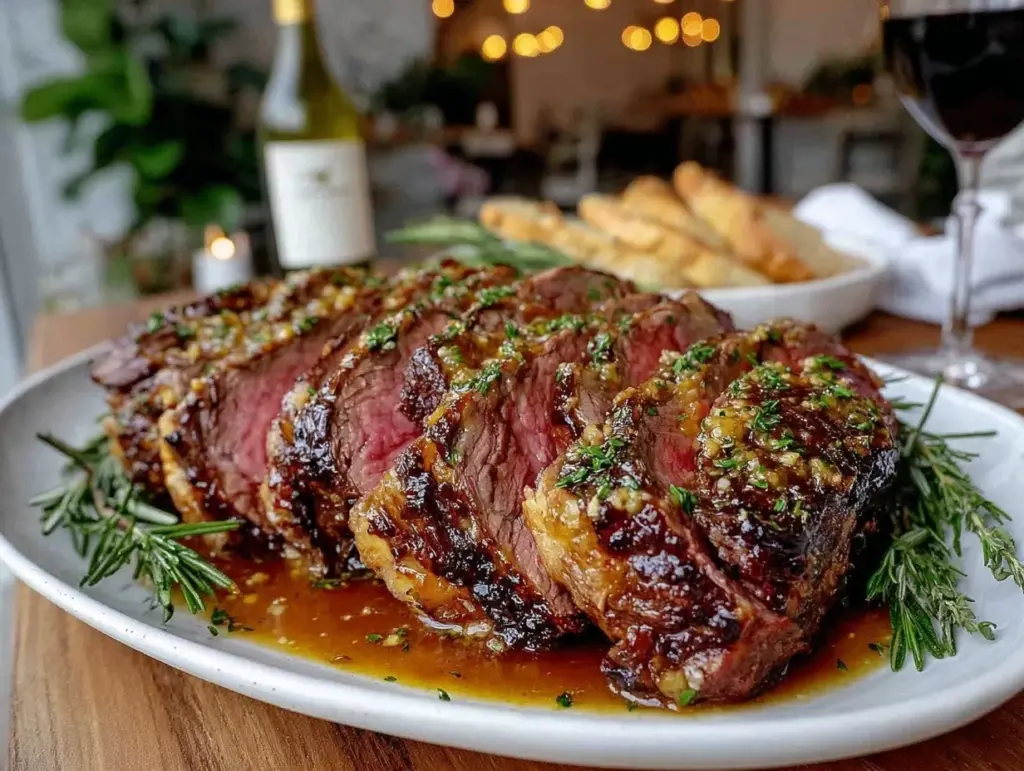
This prime rib roast is best served hot, straight from the oven with a generous drizzle of rich au jus. For holiday presentation, slice and fan out on a large platter, garnish with fresh rosemary sprigs, and keep a bowl of au jus handy for dipping.
Pair with classic sides like creamy mashed potatoes, Yorkshire pudding, roasted vegetables, or a crisp green salad. A bold red wine or sparkling cider complements the flavors beautifully.
Leftovers store well in the fridge for up to 4 days—wrap tightly in foil or an airtight container. For freezing, slice and wrap portions individually; thaw overnight in the fridge before reheating.
To reheat, gently warm slices in a 300°F (150°C) oven covered with foil and a splash of au jus to prevent drying out. Honestly, the flavors deepen overnight, and a prime rib sandwich the next day is pure magic.
If you make extra au jus, it’s perfect for dipping French bread or ladling over rice. Don’t forget to save the bones for a future stock!
Nutritional Information & Benefits
This recipe provides approximately (per serving, based on 8 servings): 680 calories, 55g protein, 48g fat, 3g carbs. The beef is a great source of iron, zinc, and B vitamins—perfect for a boost during busy holiday weeks.
The herb rub adds antioxidants from fresh rosemary and thyme, while the au jus keeps things leaner than heavy gravy. It’s gluten-free and can be made dairy-free for those with sensitivities.
Allergens to note: Contains dairy (butter), and possible soy/gluten in Worcestershire or stock—always check labels!
From a wellness perspective, prime rib is rich and filling—enjoy in moderation, and pair with veggie sides for balance. For me, it’s a satisfying treat that brings everyone together.
Conclusion
There’s a reason this perfect prime rib roast recipe with rich au jus is my holiday hero—it’s easy, reliable, and makes any occasion feel extra special. The technique delivers a juicy, flavorful roast every time, and that au jus is the final flourish everyone loves.
Don’t be afraid to make it your own—switch up the herbs, go dairy-free, or adjust the doneness to your family’s tastes. That’s the beauty of a classic recipe like this.
Personally, I love how this roast turns even a regular weeknight into something memorable. If you try it, let me know how it turns out—drop your questions, adaptations, or secret twists in the comments! Bookmark it, pin it, and share with fellow food lovers. Here’s to more cozy dinners, laughter, and plates cleaned down to the last bite!
FAQs
How do I know when my prime rib roast is perfectly cooked?
Use an instant-read thermometer and aim for 120°F (49°C) for rare, 130°F (54°C) for medium rare. The roast will continue cooking as it rests.
Can I make the prime rib roast ahead of time?
Yes! Roast, rest, and carve the meat, then gently reheat slices in a low oven with au jus. The flavors actually deepen overnight.
What’s the best way to get a crispy crust?
The high-heat blast at the end is key—don’t skip it! Make sure your herb butter is well-pressed into the meat for maximum browning.
Can I substitute red wine in the au jus?
Of course—use extra beef stock or try a splash of balsamic vinegar for depth. The flavor will still be rich and delicious.
Is this recipe gluten-free?
Yes, as written! Just double-check your beef stock and Worcestershire for hidden gluten if you’re sensitive.
Pin This Recipe!
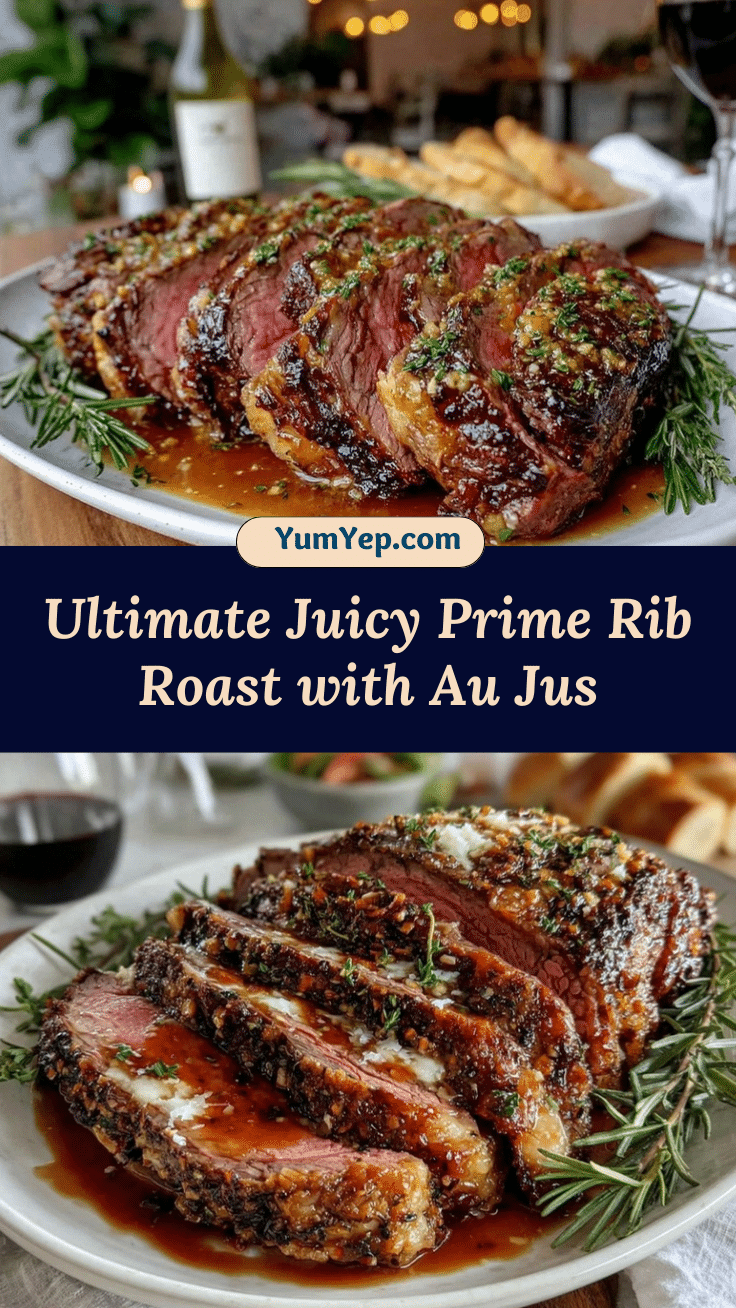
Perfect Prime Rib Roast Recipe with Rich Au Jus for Holidays

This prime rib roast features a juicy, tender beef center with a crisp, herby crust and is paired with a rich, savory au jus made from pan drippings, beef stock, and red wine. It’s a show-stopping centerpiece for holidays and special occasions, yet simple enough for any family gathering.
- Prep Time: 20 minutes
- Cook Time: 3 hours 30 minutes
- Total Time: 4 hours 30 minutes
- Yield: 8 servings 1x
- Category: Main Course
- Cuisine: American
Ingredients
- 5–6 lbs bone-in prime rib (standing rib roast), well-marbled
- 2 tablespoons kosher salt
- 2 tablespoons freshly ground black pepper
- 2 tablespoons garlic powder
- 1 tablespoon onion powder
- 2 tablespoons fresh rosemary, finely chopped (or 2 teaspoons dried)
- 2 tablespoons fresh thyme leaves (or 2 teaspoons dried)
- 1/4 cup unsalted butter, softened
- Optional: 2-3 cloves fresh garlic, minced
- 2 cups beef stock (low-sodium preferred)
- 1 cup dry red wine (Cabernet Sauvignon or Merlot)
- Pan drippings from roast
- 1 small shallot, finely chopped
- 1 tablespoon Worcestershire sauce
- Salt and pepper to taste
Instructions
- Remove the prime rib roast from the fridge 2 hours before cooking to bring to room temperature. Pat dry with paper towels.
- In a mixing bowl, combine softened butter, salt, pepper, garlic powder, onion powder, rosemary, thyme, and minced garlic (if using) to form a thick paste.
- Rub the herb butter mixture all over the roast, coating the ends and fat cap generously.
- Preheat oven to 225°F (107°C).
- Place the roast bone-side down on a rack in a large roasting pan. Insert a meat thermometer into the thickest part, avoiding bone.
- Roast for 3-4 hours, or until the internal temperature reaches 120°F for rare or 130°F for medium rare. Tent loosely with foil if browning too fast.
- Remove roast from oven and tent with foil for 30-45 minutes to rest. The internal temperature will rise by 5-10°F.
- Increase oven temperature to 500°F (260°C). Remove foil and return roast to oven for 8-10 minutes, until the crust is deep golden brown.
- While the roast rests, pour pan drippings into a small saucepan. Add chopped shallot, beef stock, and red wine. Simmer and reduce by half, about 10-12 minutes. Stir in Worcestershire sauce, then strain if desired. Skim off excess fat.
- Slice the prime rib against the grain into thick pieces (about 1/2-inch). Serve with warm au jus on the side.
Notes
For best results, use a well-marbled prime rib and a reliable meat thermometer. Resting the roast is crucial for juicy meat. The reverse-sear technique ensures even doneness and a crispy crust. Au jus can be made alcohol-free by substituting wine with extra beef stock. The recipe is naturally gluten-free; check labels for stock and Worcestershire if sensitive. Leftovers are excellent for sandwiches and store well for up to 4 days.
Nutrition
- Serving Size: 1/8 of roast with au
- Calories: 680
- Sugar: 1
- Sodium: 900
- Fat: 48
- Saturated Fat: 20
- Carbohydrates: 3
- Protein: 55
Keywords: prime rib, roast beef, holiday recipe, au jus, Christmas dinner, Easter, beef, reverse sear, gluten-free, special occasion, family meal