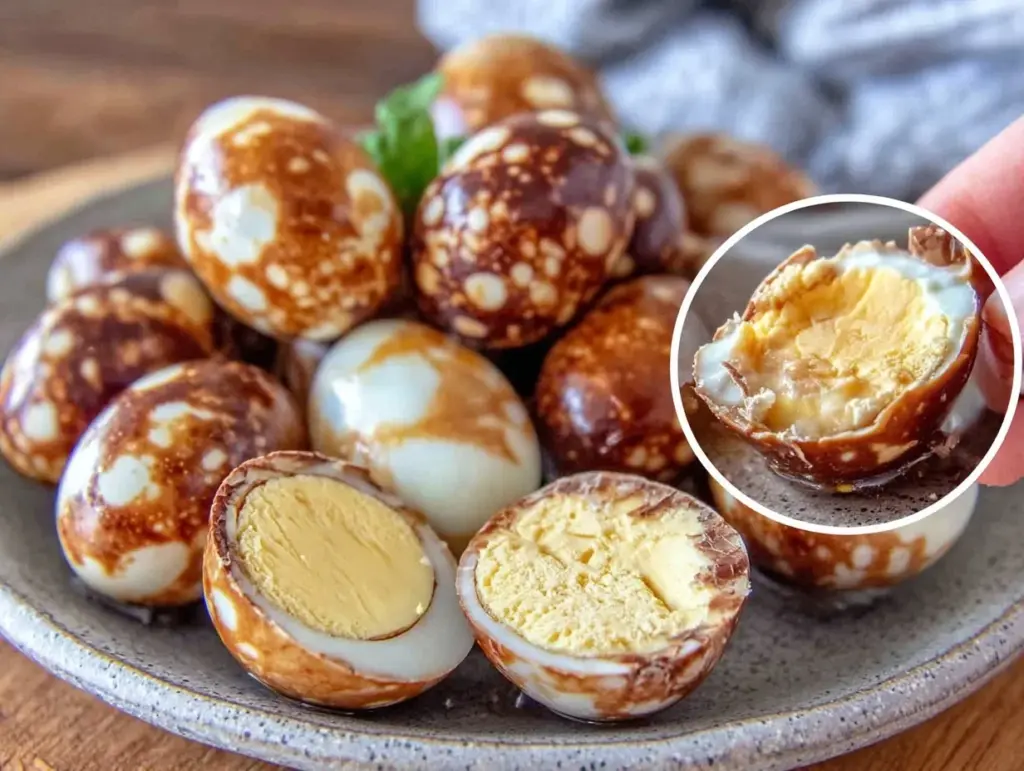
Let me tell you, the scent of cracked eggs simmering in a fragrant blend of dark soy sauce, star anise, and cinnamon sticks is enough to make anyone’s mouth water. The first time I made savory tea eggs, I was instantly hooked—the kind of moment where you pause, take a deep breath, and just smile because you know you’re onto something truly special. Years ago, when I was knee-high to a grasshopper, my grandma would always have a batch of these marbled delights ready in her kitchen. Their delicate patterns and deep, rich flavor reminded me of cozy afternoons spent listening to her stories. I stumbled upon this recipe during a rainy weekend, trying to recreate that nostalgic taste, and honestly, I wish I had discovered it years ago.
My family couldn’t stop sneaking those tea eggs off the cooling rack (and I can’t really blame them). Let’s face it, these savory tea eggs are dangerously easy to whip up and offer pure, nostalgic comfort. Perfect for breakfast on a lazy Sunday, a protein-packed snack at work, or a unique addition to your bento box. You know what? Whether you’re a tea egg veteran or a curious newbie, this recipe is going to brighten up your Pinterest cookie board and become a staple for family gatherings and gifting. After testing this recipe multiple times (in the name of research, of course), I promise it feels like a warm hug in every bite—and you’re going to want to bookmark this one.
Why You’ll Love This Savory Tea Eggs Recipe
Having cooked and tweaked this recipe many times, I can confidently say it hits all the right notes. Here’s why this savory tea eggs recipe stands apart:
- Quick & Easy: It comes together in about an hour, with most of the work being hands-off simmering—perfect for busy weeknights or last-minute cravings.
- Simple Ingredients: No fancy grocery trips needed; you likely already have soy sauce, black tea leaves, and spices in your pantry.
- Perfect for Any Occasion: Great for brunch, snack time, or adding a flavorful twist to your lunchbox or picnic.
- Crowd-Pleaser: Always receives rave reviews from kids and adults alike—trust me on this one.
- Unbelievably Delicious: The texture of the eggs, with their marbled skins and aromatic, savory flavor, is next-level comfort food.
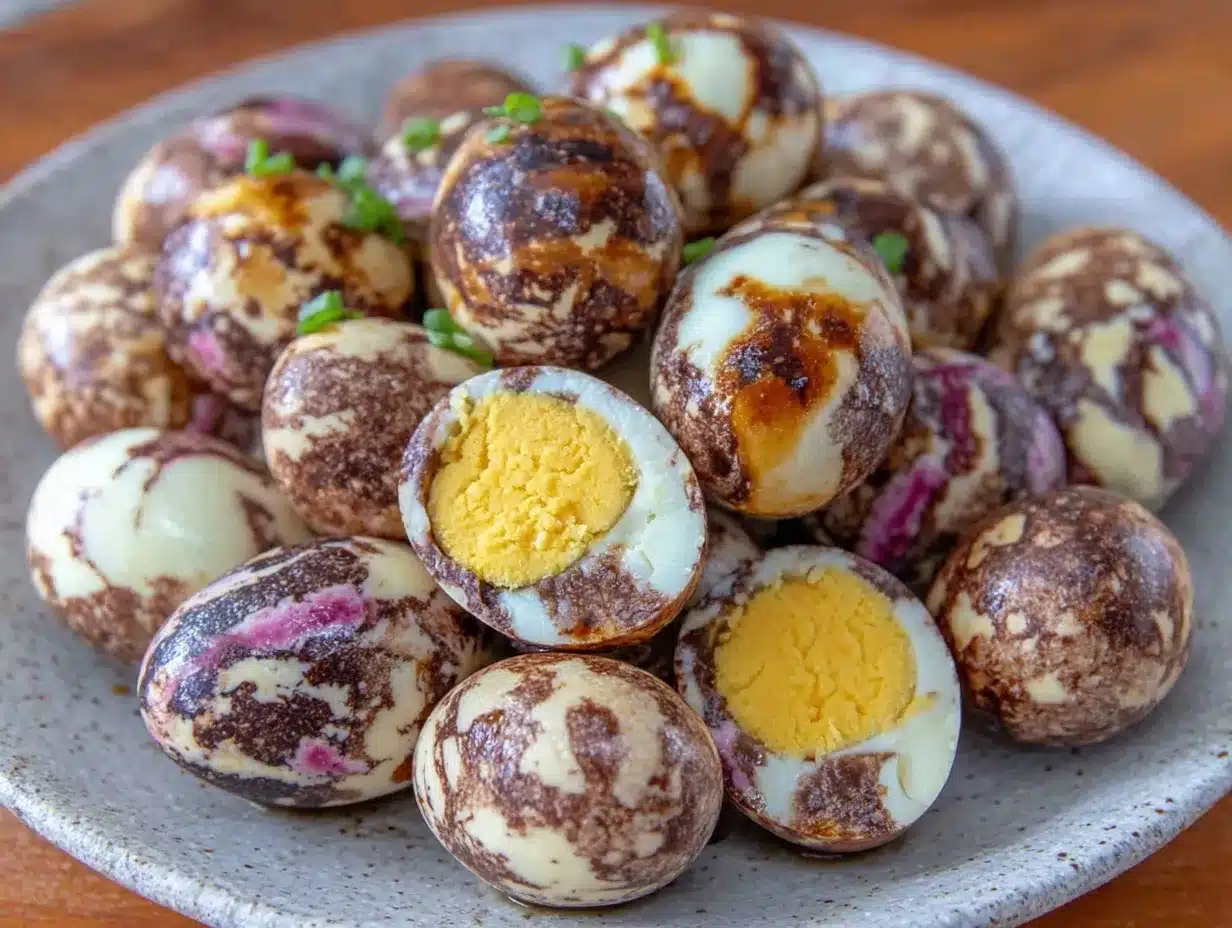
This isn’t just another soy egg recipe—it’s a carefully balanced symphony of Chinese spices and tea that seeps right into the egg, creating a flavor explosion. The secret? A slow simmer with black tea leaves and whole spices, plus cracking the shells gently to create those gorgeous marbled patterns. Honestly, after the first bite, you’ll close your eyes and feel that calming warmth ripple through you. It’s comfort food reimagined—simple, healthy, and soul-soothing all at once. Whether you want to impress guests without fuss or just treat yourself, these savory tea eggs have got your back.
What Ingredients You Will Need
This recipe uses simple, wholesome ingredients to deliver bold flavor and satisfying texture without the fuss. Most are pantry staples, and substitutions are straightforward if needed.
- Large eggs (6-8, preferably organic or free-range for best taste)
- Black tea leaves or 2-3 black tea bags (assam or pu-erh works great; I recommend Twinings for consistent flavor)
- Soy sauce (1/2 cup / 120 ml, use low sodium if preferred)
- Dark soy sauce (1 tablespoon / 15 ml, adds rich color and depth)
- Star anise (2 whole pieces, essential for that signature aroma)
- Cinnamon stick (1 small stick, adds warmth)
- Chinese five-spice powder (1 teaspoon, optional but recommended for extra complexity)
- Cracked Sichuan peppercorns (1 teaspoon, adds a subtle tingling spice; omit if sensitive to spice)
- Rock sugar or brown sugar (1 tablespoon, balances the salty and bitter flavors)
- Water (enough to cover eggs in pot, about 4 cups / 1 liter)
- Optional additions: dried orange peel (a small strip), fresh ginger slices (2-3 thin slices) for extra fragrance
Substitution tips: If you want a gluten-free version, use tamari instead of soy sauce. For a caffeine-free twist, you can try using black tea alternatives like roasted barley tea, though the flavor will differ slightly.
Equipment Needed
- Medium-to-large pot with a lid (big enough to hold eggs in a single layer)
- Slotted spoon or tongs for handling hot eggs
- Bowl filled with cold water or ice water for cooling eggs quickly
- Small mixing bowl for cracking the egg shells gently after boiling
- Measuring cups and spoons
- Optional: fine mesh strainer if you prefer to strain the tea leaves before simmering
If you don’t have a pot large enough, a slow cooker works beautifully for keeping the eggs warm in the tea marinade over an extended period. I use one of those budget-friendly non-stick pots, and it’s held up well after multiple uses. Just remember to clean it well after simmering the soy sauce mixture to avoid any sticky residue.
Preparation Method
- Boil the Eggs (10-12 minutes): Place 6-8 large eggs in a medium pot and cover with cold water (about 4 cups / 1 liter). Bring to a rolling boil over medium-high heat, then lower the heat and simmer for 10-12 minutes until hard-boiled.
- Cool and Crack the Shells (5 minutes): Remove eggs with a slotted spoon and transfer to a bowl of ice water to cool for 5 minutes. Once cool, gently crack the shells all over with the back of a spoon or by tapping against the counter—you want to create a cracked pattern without peeling the eggshells off.
- Prepare the Tea Marinade (5 minutes): In the same pot, combine 4 cups (1 liter) water, 1/2 cup (120 ml) soy sauce, 1 tablespoon (15 ml) dark soy sauce, 2-3 black tea bags or 2 tablespoons loose black tea leaves, 2 star anise, 1 cinnamon stick, 1 teaspoon Chinese five-spice powder, 1 teaspoon cracked Sichuan peppercorns, and 1 tablespoon rock sugar or brown sugar. Add optional ginger slices or dried orange peel if using.
- Simmer the Marinade (10 minutes): Bring the mixture to a gentle simmer over medium heat, stirring occasionally to dissolve the sugar and blend the flavors.
- Add the Eggs & Simmer (1-2 hours): Carefully add the cracked eggs back into the pot. Reduce heat to low and let the eggs simmer gently in the tea marinade for at least 1 hour, turning occasionally to ensure even coloring and flavor absorption. The longer you simmer, the stronger the flavor and marbling effect.
- Cool in Marinade (Optional overnight): For extra depth, turn off the heat and let the eggs steep in the marinade overnight in the refrigerator. Bring to room temperature before serving.
- Peel and Serve: Peel the eggs to reveal the beautiful marbled patterns. Serve warm or cold, as a snack or part of a meal.
Tip: If you notice the liquid level dropping during simmering, add a splash of water to keep the eggs submerged. Also, don’t rush cracking the shells—you want cracks, not chunks falling off!
Cooking Tips & Techniques
When making savory tea eggs, timing and gentle handling are key to that perfect texture and marbled look. Don’t boil the eggs for too long; overcooking leads to a rubbery texture. Cooling them quickly in ice water stops the cooking process and makes peeling easier.
Cracking the shells gently is an art in itself. I learned the hard way that too much force peels the egg completely, ruining the marbling. A few light taps and a slow roll on a hard surface work wonders.
Simmering the eggs in the tea marinade low and slow allows the flavors to seep in without toughening the whites. If you’re short on time, a minimum of one hour is fine, but honestly, an overnight soak in the refrigerator is where the magic happens.
Also, don’t skip the dark soy sauce—it’s what gives the eggs that deep, rich color and umami boost. If you want to multitask, prepare the tea marinade while the eggs boil to save time. Experimenting with different black teas can subtly change the flavor profile, so feel free to try your favorites.
Variations & Adaptations
- Vegetarian Version: Skip the soy sauce and try a mushroom-based broth with tea and spices for a plant-friendly alternative.
- Spicy Twist: Add a dried chili or two to the marinade for a subtle heat that pairs beautifully with the aromatic spices.
- Herbal Infusion: Swap black tea for jasmine or oolong tea to add floral or fruity notes to the eggs.
- Pressure Cooker Shortcut: Use a pressure cooker to hard boil and infuse the eggs in a fraction of the time—just be careful not to overcook.
- Personal Variation: I once added a splash of Shaoxing rice wine to the marinade, which gave the eggs a slightly sweet, complex undertone that my family loved.
Serving & Storage Suggestions
Savory tea eggs are best served slightly warm or at room temperature to enjoy the full depth of their aromatic flavor. They make a perfect protein-packed snack, an addition to a bento box, or a savory side for congee or rice bowls.
Pair with a cup of green tea or jasmine tea for a traditional Chinese tea-time experience. For brunch, serve alongside steamed buns or pickled vegetables for a balanced plate.
Store leftover tea eggs in their marinade in an airtight container in the refrigerator for up to one week. The flavors deepen over time, so they taste even better the next day! To reheat, briefly warm them in hot water or microwave for 20-30 seconds.
Nutritional Information & Benefits
Each savory tea egg contains approximately 70-80 calories, with 6 grams of protein and minimal carbohydrates. Eggs provide high-quality protein, essential vitamins like B12, and healthy fats. The spices used—star anise, cinnamon, and Sichuan peppercorns—offer antioxidants and anti-inflammatory properties.
This recipe is naturally gluten-free (if using gluten-free tamari) and low-carb, making it suitable for many dietary preferences. Just a heads up: soy sauce contains soy and wheat, so be mindful if you have allergies.
From a wellness perspective, these eggs provide a comforting, nutrient-rich snack that feels indulgent without the guilt. Plus, the spices may aid digestion and circulation—pretty neat for such a humble snack!
Conclusion
If you’re looking for a savory snack that’s packed with flavor, easy to make, and carries a bit of Chinese tradition in every bite, this savory tea eggs recipe is definitely worth trying. Customize the spices and tea to suit your taste, and don’t be shy about making it your own. I love how these eggs bring a little magic to simple ingredients and how they always spark conversation at the table.
Give this recipe a go, and let me know what variations you come up with! Share your photos, tips, or stories—you never know who you might inspire to try these aromatic savory tea eggs next. Happy cooking!
FAQs About Savory Tea Eggs
How long can I store savory tea eggs?
Store them in their marinade in the fridge for up to one week. The flavors actually improve after a day or two!
Can I use green tea instead of black tea?
Yes, green or jasmine tea can be used for a lighter, floral flavor, but black tea gives the traditional deep color and taste.
Do I have to crack the eggshells?
Yes, gently cracking the shells allows the marinade to seep in and create the signature marbled effect and flavor.
Can I make tea eggs without soy sauce?
You can try a mushroom broth or tamari for gluten-free options, but soy sauce is key for that classic savory flavor.
What is the best way to peel tea eggs?
Peel them under running water or in a bowl of water to help loosen the skin and reveal the marbled pattern beautifully.
Pin This Recipe!
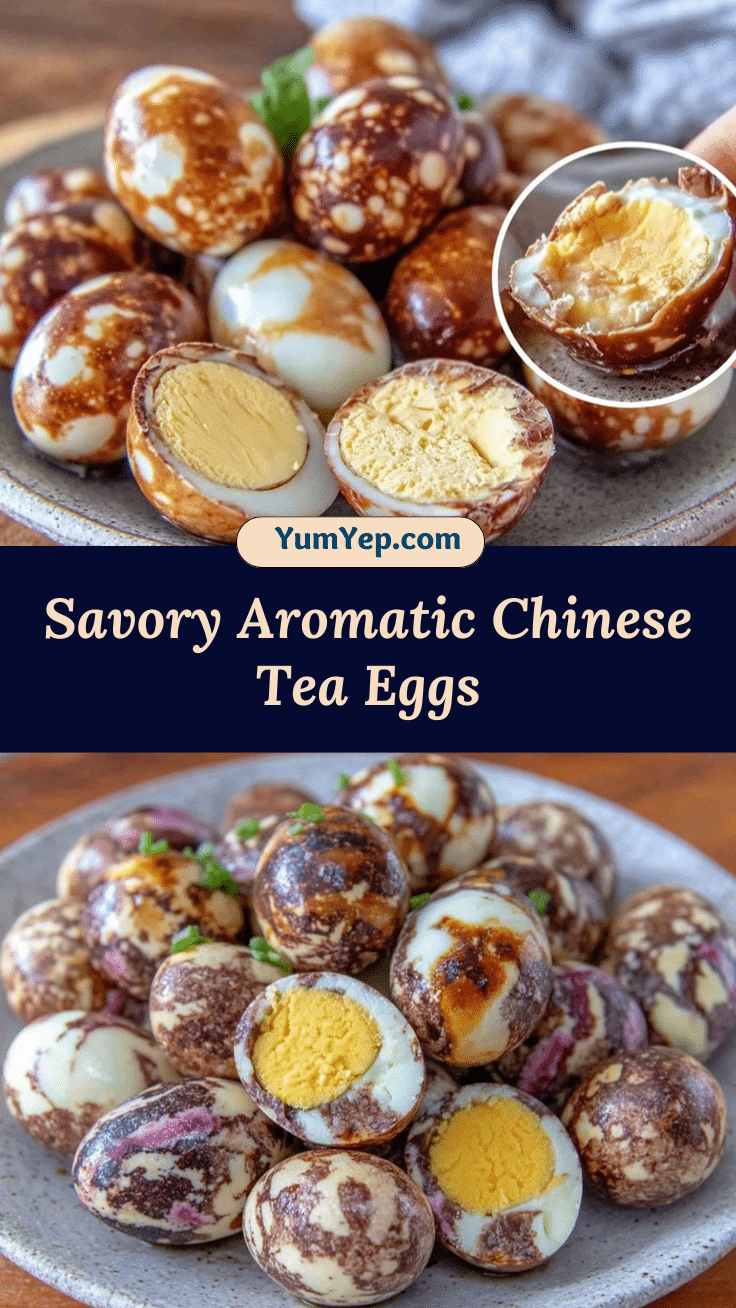
Savory Tea Eggs Recipe Easy Homemade Aromatic Chinese Flavors

A comforting and aromatic Chinese snack featuring hard-boiled eggs simmered in a fragrant blend of soy sauce, black tea, and spices, creating beautiful marbled patterns and rich flavors.
- Prep Time: 15 minutes
- Cook Time: 1 hour 15 minutes
- Total Time: 1 hour 30 minutes to overnight (optional)
- Yield: 6-8 servings 1x
- Category: Snack
- Cuisine: Chinese
Ingredients
- 6–8 large eggs (preferably organic or free-range)
- 2–3 black tea bags or 2 tablespoons loose black tea leaves (assam or pu-erh recommended)
- 1/2 cup (120 ml) soy sauce (low sodium preferred)
- 1 tablespoon (15 ml) dark soy sauce
- 2 whole star anise
- 1 small cinnamon stick
- 1 teaspoon Chinese five-spice powder (optional)
- 1 teaspoon cracked Sichuan peppercorns (optional)
- 1 tablespoon rock sugar or brown sugar
- About 4 cups (1 liter) water
- Optional: small strip dried orange peel
- Optional: 2-3 thin slices fresh ginger
Instructions
- Place 6-8 large eggs in a medium pot and cover with about 4 cups (1 liter) cold water. Bring to a rolling boil over medium-high heat, then reduce heat and simmer for 10-12 minutes until hard-boiled.
- Remove eggs with a slotted spoon and transfer to a bowl of ice water to cool for 5 minutes. Once cool, gently crack the shells all over with the back of a spoon or by tapping against the counter to create a cracked pattern without peeling the shells off.
- In the same pot, combine 4 cups (1 liter) water, 1/2 cup (120 ml) soy sauce, 1 tablespoon (15 ml) dark soy sauce, 2-3 black tea bags or 2 tablespoons loose black tea leaves, 2 star anise, 1 cinnamon stick, 1 teaspoon Chinese five-spice powder, 1 teaspoon cracked Sichuan peppercorns, and 1 tablespoon rock sugar or brown sugar. Add optional ginger slices or dried orange peel if using.
- Bring the mixture to a gentle simmer over medium heat, stirring occasionally to dissolve the sugar and blend the flavors.
- Carefully add the cracked eggs back into the pot. Reduce heat to low and let the eggs simmer gently in the tea marinade for at least 1 hour, turning occasionally to ensure even coloring and flavor absorption.
- For extra depth, turn off the heat and let the eggs steep in the marinade overnight in the refrigerator. Bring to room temperature before serving.
- Peel the eggs to reveal the beautiful marbled patterns. Serve warm or cold, as a snack or part of a meal.
Notes
Gently crack the eggshells to create marbled patterns without peeling the shell off. Simmering low and slow allows flavors to seep in without toughening the egg whites. For stronger flavor and marbling, steep eggs overnight in the marinade in the refrigerator. Add water if liquid level drops during simmering. Use dark soy sauce for rich color and umami. Peeling under running water helps reveal marbled pattern.
Nutrition
- Serving Size: 1 tea egg
- Calories: 75
- Sugar: 1
- Sodium: 600
- Fat: 5
- Saturated Fat: 1.5
- Carbohydrates: 2
- Protein: 6
Keywords: savory tea eggs, Chinese tea eggs, marbled eggs, soy sauce eggs, aromatic eggs, Chinese snack, easy tea eggs recipe